The Pilgrimage Road Shekel: an 11-year-old sifting soil in Jerusalem found silver struck by rebels against Rome
Famous find Struck in year two of the revolt, AD 67 to 68 · Found in 2021 See it on the timeline →
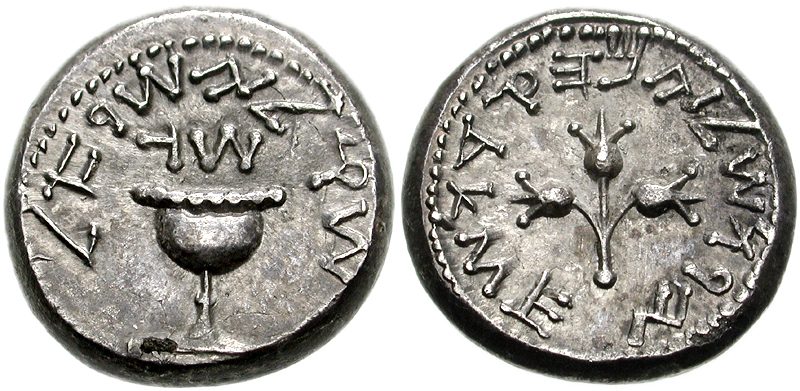
In 2021 Liel, an 11-year-old from Petah Tikva, was sifting soil from the Pilgrimage Road in Jerusalem's City of David with her family when she spotted a silver coin. It was a shekel struck in the second year of the Jewish revolt against Rome, AD 67 to 68.
In 2021, Liel, an 11-year-old girl from Petah Tikva, came with her parents and sister to the Emek Tzurim sifting project in Jerusalem, where visitors help to sift soil dug by archaeologists. Their buckets came from the Israel Antiquities Authority's excavation of the Pilgrimage Road in the City of David, the main street of Jerusalem in the time of the Second Temple. "We poured the bucket with the dirt on the strainer," she said, "and as we filtered the stones that were inside, I saw something round."
It was a silver shekel weighing about 14 grams. On one side is a cup with the words "Shekel of Israel" in the old Hebrew script, and above it the letters for "year two". On the other side is a stem with three pomegranates and the words "Jerusalem the Holy". The coin was struck in the second year of the Great Revolt of the Jews against Rome, AD 67 to 68. The rebels chose the ancient script, which had long gone out of everyday use, to recall Israel's independent past.
The Pilgrimage Road ran from the Pool of Siloam up to the Temple Mount, and thousands of pilgrims walked it on their way to the Temple. The excavation director, Dr Ari Levy, said the many weights and bronze coins found there showed it had been a busy place for trade, but a rebel coin of pure silver was very special. Dr Robert Kool, head of the Authority's coin department, said that of the many thousands of coins found in excavations so far, only about 30 were silver coins of the revolt. He suggested, with caution, that the silver came from the Temple's own reserves and that the coin was struck on the Temple Mount, perhaps by a priest working with the rebel leaders. If so, it is one of the few objects today that may have come from the Temple itself. Three years later, in AD 70, Roman legions destroyed the Temple and much of the city.
Under Israeli law, every antiquity found belongs to the State. The coin was cleaned in the Authority's laboratories, and it was to be shown to the public at Emek Tzurim during Hanukkah.
Written for Global Finds from Sci.News (2021), quoting the Israel Antiquities Authority, and the City of David Foundation (2021). Photo: another silver shekel of the revolt, from year three, not the Pilgrimage Road coin, Classical Numismatic Group, Wikimedia Commons, CC BY-SA 3.0.
Linked finds
Source: Sci.News (2021)