The Marblehead Hoard: builders digging a kitchen foundation in Massachusetts found a merchant's coins from nine countries
Famous find Buried in or soon after 1814 · Found in 2023 See it on the timeline →
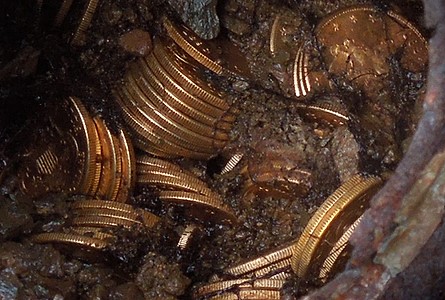
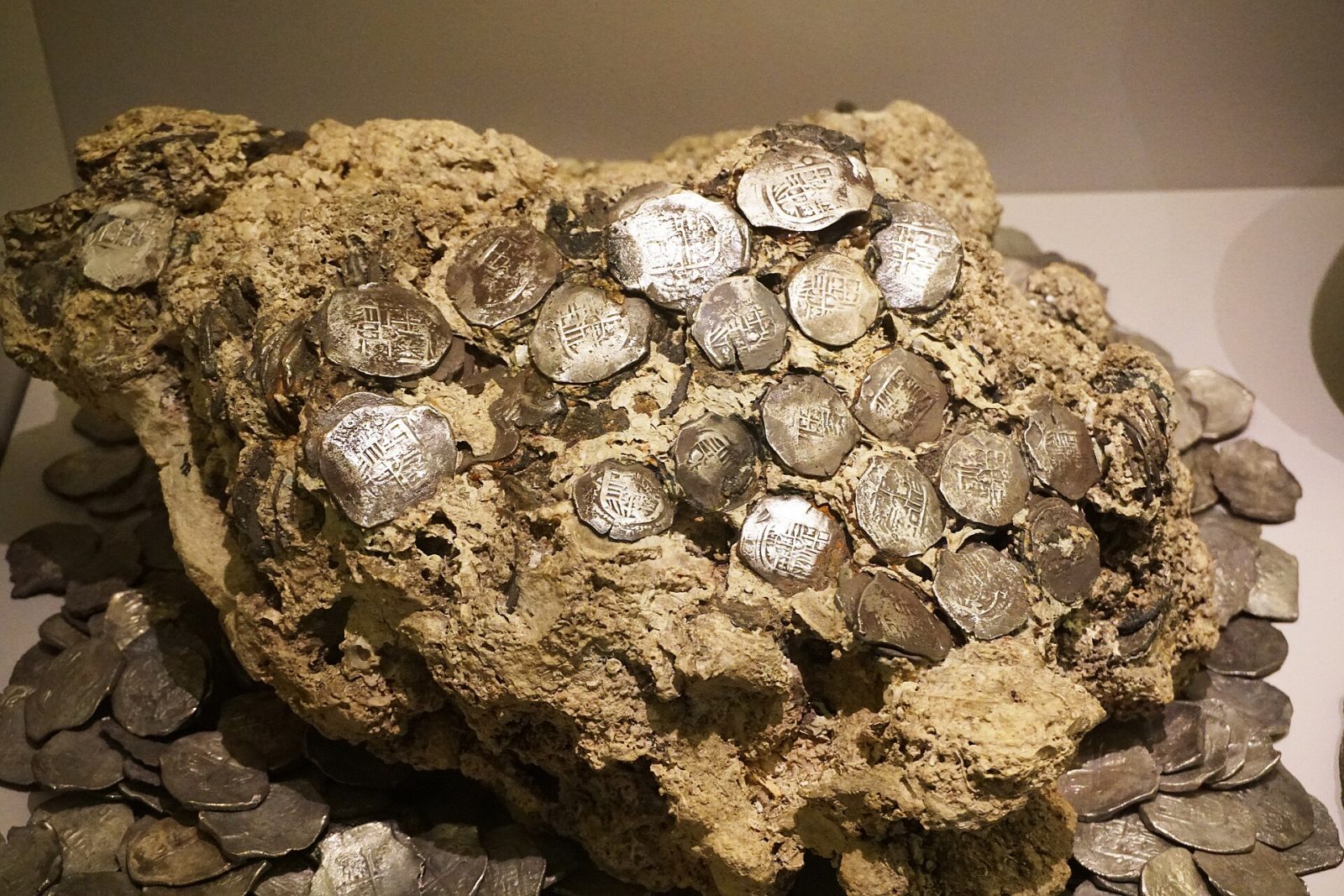
Workers digging four feet down for a new kitchen foundation at a colonial-era house in Marblehead, Massachusetts, found more than 80 gold and silver coins dated 1726 to 1814. Struck in nine countries, they show the foreign money Americans relied on after independence.
Marblehead is an old fishing and trading town on the coast just north of Boston, full of colonial houses. Shortly before the summer of 2023, one of them was having its kitchen rebuilt, and workers digging about four feet (1.2 metres) down for a new foundation found a cache of gold and silver coins. The find was announced in July 2023 by the coin grading company NGC, which certified 82 of the coins with a special "Marblehead, MA Hoard" label.
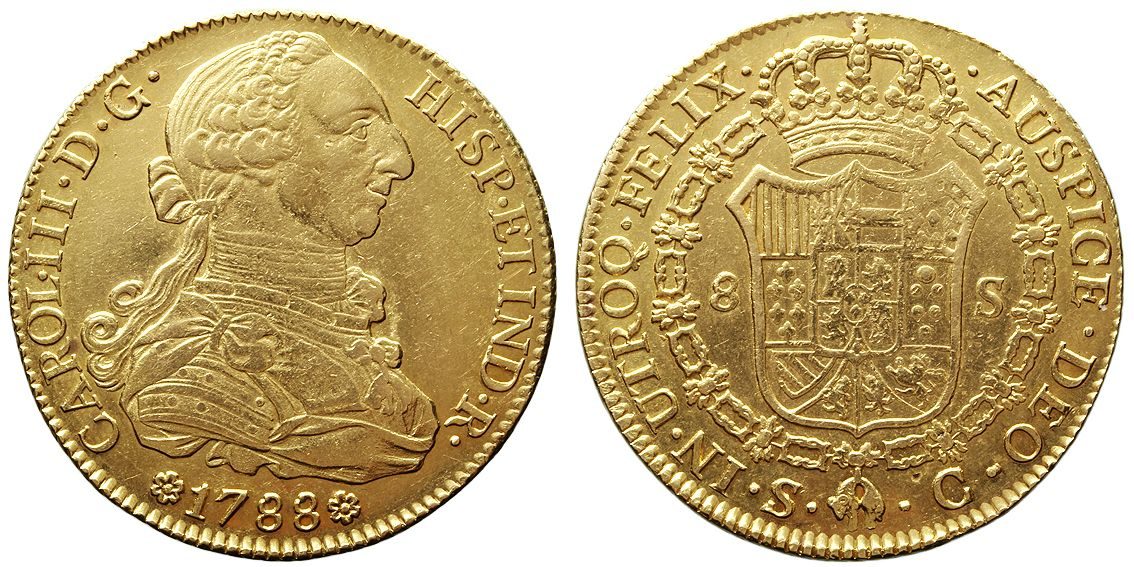
The coins are dated from 1726 to 1814, and only one of them was made in the United States: a 1798 silver dollar. Almost all the rest came from the mints of the Spanish Empire in Mexico, Colombia, Spain, Chile, Peru and Bolivia, with a few from France and Brazil. Among them was a French écu dated 1789, the year the Revolution began. The finest piece was a large gold eight-escudo coin struck in Mexico City in 1764, with the portrait of Charles III of Spain. NGC said it was one of only three of its kind that it had graded. The coins were sold by the auction house Stack's Bowers in August 2023, where the gold coin was estimated at $7,000 to $10,000.
Why so little American money? The young republic's own mint, founded in Philadelphia in 1792, could not strike enough coins for years. An act of Congress of 1806 made foreign gold and silver legal tender at fixed rates, and foreign coins stayed legal tender until 1857. A Marblehead trader's savings would naturally have been mostly Spanish.
The auction catalogue points to a likely owner: John Sparhawk, a merchant who owned the house from the 1790s to the 1830s. He owned at least two vessels probably trading with the West Indies, one of which came home in 1798 "laden with molasses and brown sugar". The newest coin means the hoard cannot have been buried before 1814, and the catalogue thinks it went into the ground soon after. But nobody knows for certain who hid it, or why it was never recovered.
Written for Global Finds from NGC (2023), the Stack's Bowers catalogue as reported by Ecoticias (2026) and the United States Mint. Photo: a gold eight escudos of Charles III struck at Seville in 1788, the same denomination and king as the hoard's top coin but not from the hoard, Numismática Pliego, Wikimedia Commons, CC BY-SA 3.0.
Linked finds
Source: NGC (2023)