The Oswestry Locket: a detectorist took it for a bit of horse harness, but it mourned the execution of Charles I
Famous find Made after the execution of Charles I in 1649 · Found in 2025 See it on the timeline →
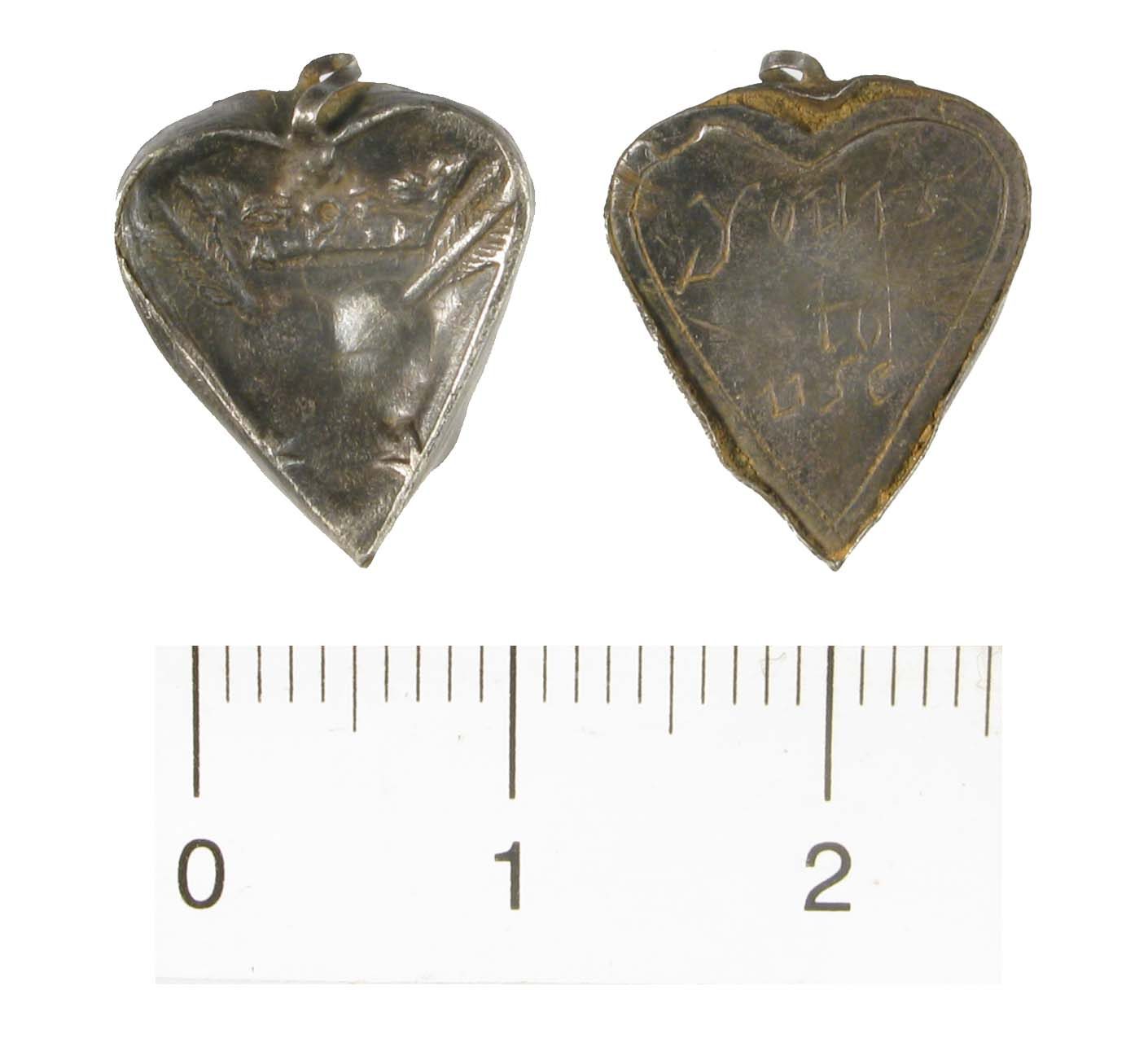
In 2025 Shropshire detectorist Chris Langston dug up a small heart-shaped piece in a field outside Oswestry, engraved with a heart pierced by two arrows and a drop of blood. It is thought to be the front of a Royalist locket mourning Charles I, and it was declared Treasure in 2026.
In 2025, the Shropshire metal detectorist Chris Langston was searching a field outside Oswestry, close to the Welsh border, when his detector gave what he thought was an ordinary signal. Out of the ground came a small heart-shaped object, and his first thought was that it had fallen off a horse's harness. Looking more closely, he saw that it was engraved with a heart pierced by two crossed arrows, with a single drop of blood falling beneath it, and he realised it might be something special.
It is the front of a locket. The back, which would have hung from a chain and held the precious part, a tiny portrait of King Charles I, is missing. Langston was told by an official that it appears to be a memento mori locket made to commemorate the death of Charles I. After his defeat in the Civil War, Charles was tried and beheaded outside the Banqueting House in Whitehall on 30 January 1649. England became a republic, and those who stayed loyal to the dead king had to keep their feelings to themselves.
Royalists, or Cavaliers, kept small medals, rings and heart-shaped lockets carrying the king's portrait, sometimes with inscriptions such as "I live and die in loyaltie" or "Prepared bee to follow me". The British Museum describes them as "intimate expressions of loyalty in a period when Royalist belief sat uneasily within the new political order". They were worn or kept close to the body, out of sight. "You'd get into a lot of trouble having one of these now the Commonwealth had taken over," Langston said. Oswestry itself had been a Royalist garrison town until Parliamentary forces took it in 1644.
In 2026 a coroner's inquest declared the locket Treasure, which gave museums the chance to acquire it. The British Museum already has a similar example and did not need it, so it was returned to Langston, who waives his share of any reward on all his Treasure finds. "I get so much out of the hobby without taking any money from it," he said. He planned to give it straight to Oswestry Town Museum, to be shown alongside many of his other finds.
Written for Global Finds from BBC News (2026), quoting the finder and the British Museum. Photo: another 17th-century silver heart-shaped locket engraved with a heart and crossed arrows, not the Oswestry locket, Tom Brindle, Birmingham Museums Trust, Portable Antiquities Scheme, Wikimedia Commons, CC BY-SA 2.0.
Linked finds
Source: BBC News (2026)