The Goddess on the Throne: a 7,000-year-old clay figure from a Pristina building site that became the symbol of a city
Famous find Made about 5700-4500 BC (Vinča culture) · Found in 1956 See it on the timeline →
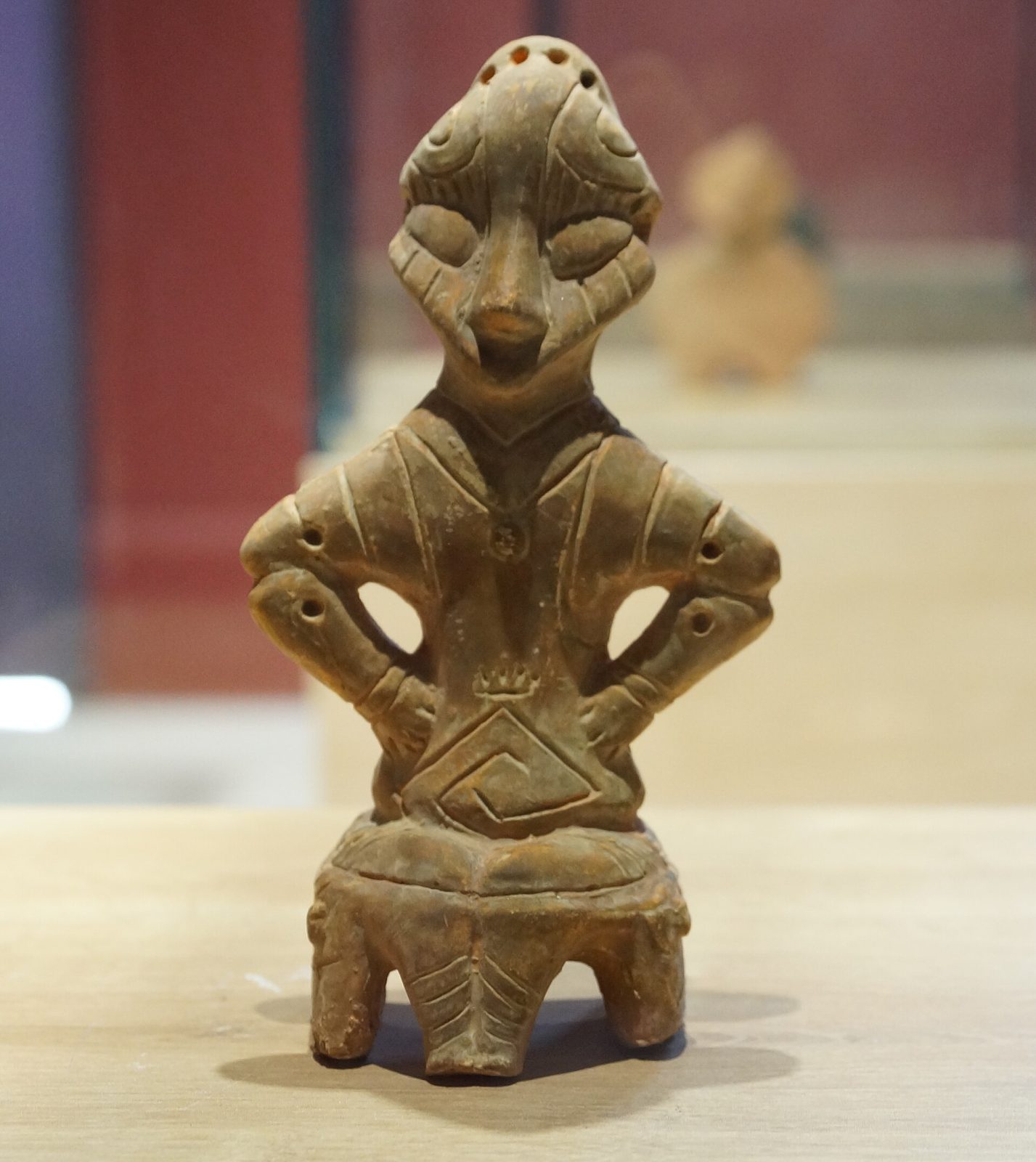
In 1956, excavations at Tjerrtorja, a Neolithic settlement found while a textile factory was being built on the edge of Pristina, uncovered a small terracotta woman seated on a stool. The Goddess on the Throne is now the emblem of Kosovo's capital.
In the 1950s, builders putting up a textile factory on the edge of Pristina came down on the remains of a Neolithic village. The site is still known as Tjerrtorja, "the spinning mill", after the factory, and it was protected as a monument from 1955. In 1956 the excavations there produced the small clay figure that would become the best-known object in Kosovo. The sources do not record who found it, or on what day.
She is only 18.5 centimetres tall, made of fired clay, and sits upright on a four-legged stool with her hands on her hips. Her face is a flat, five-sided mask with a pointed nose, and her body is covered with incised geometric lines that may show clothing or decoration. She was made by people of the Vinča culture, the farming communities of the central Balkans, who are known for their clay figurines with mask-like faces. Dates for her vary between sources, from about 5700 to 4500 BC, but she is generally described as at least 6,000 years old. Nobody knows for certain whether she shows a goddess, an ancestor or someone of rank, and the name "Goddess on the Throne" is a modern one.
She has also had a modern adventure. In 1998, shortly before the war in Kosovo, she was one of about 1,200 objects from Kosovo's museum taken to Belgrade for an exhibition. Kosovo says the objects were stolen; Serbia's position is that they were loaned. In 2002, after pressure from the United Nations administration in Kosovo, the Goddess came home. She is the only one of those objects that has ever been returned.
Today she is the emblem of the Kosovo Museum in Pristina and the symbol of the city, appearing on its flag. When the museum held its "Return Us Home" exhibition in 2022, calling for the rest of the collection to come back, she was at the centre of it.
Written for Global Finds from Prishtina Insight (2022), the Claremont Graduate University cultural property disputes database and Balkan Insight (2022). Photo: the Goddess on the Throne in the Kosovo Museum, Albinfo, Wikimedia Commons, CC BY-SA 4.0.
Source: Prishtina Insight (2022)