The Khinisli Hoard: Azerbaijani vineyard workers dug up silver from Athens to Parthia, with home-made copies of Alexander's coins
Famous find Buried about 50-25 BC · Found in 1958 See it on the timeline →
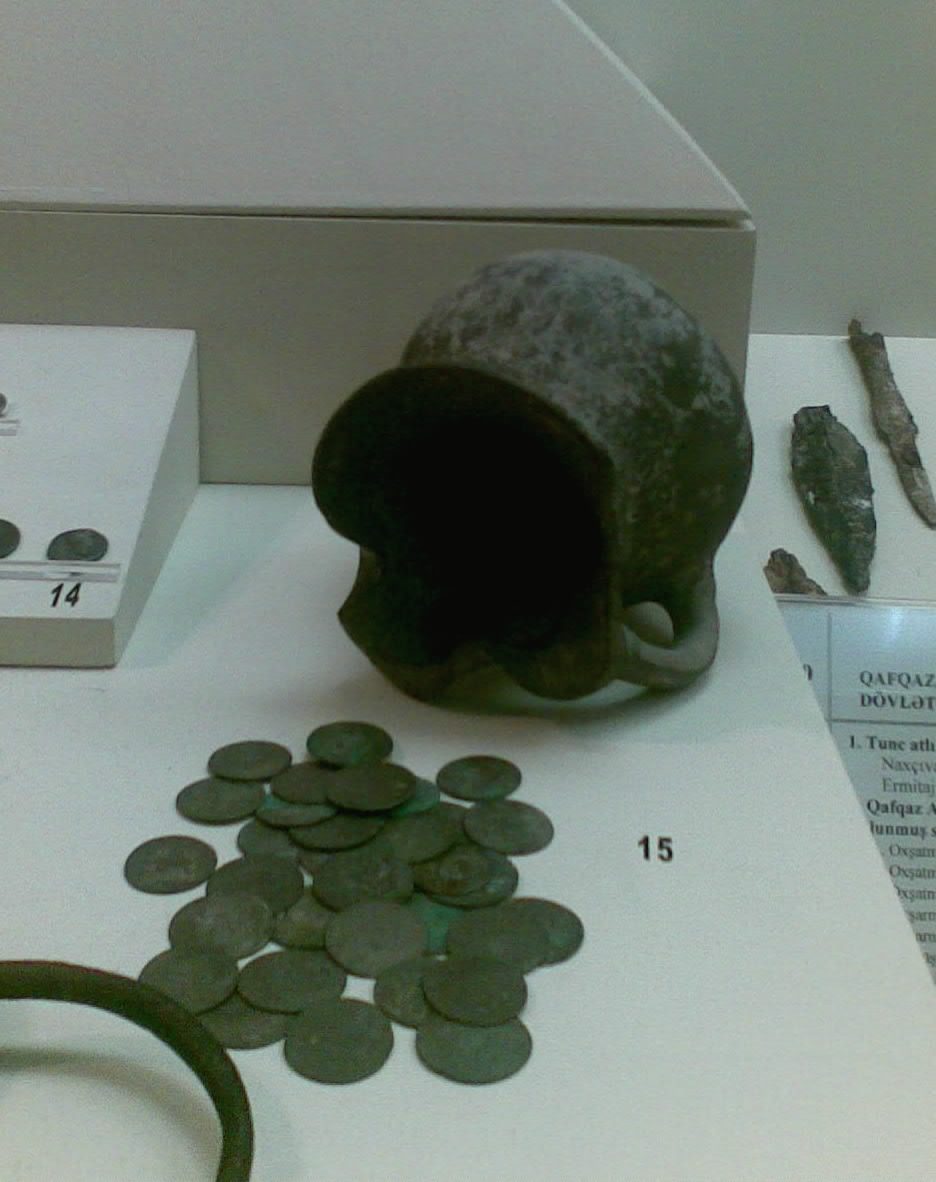
In 1958, farm work to plant a vineyard on a hill near Dere Khinisli in Azerbaijan's Shamakhi district uncovered about 335 silver coins and pieces of silver, buried around 50 to 25 BC. They include Greek, Seleucid, Parthian and Roman coins and local copies of Alexander the Great's drachms.
In 1958 a hill near the village of Dere Khinisli, in the Shamakhi district of Azerbaijan, was being prepared for a vineyard. The farm work cut into the remains of an ancient settlement, and with them came a hoard of silver. The finders' names have not been recorded, but the coins reached the museum in Baku and were published by the numismatist Yevgeny Pakhomov in 1962.
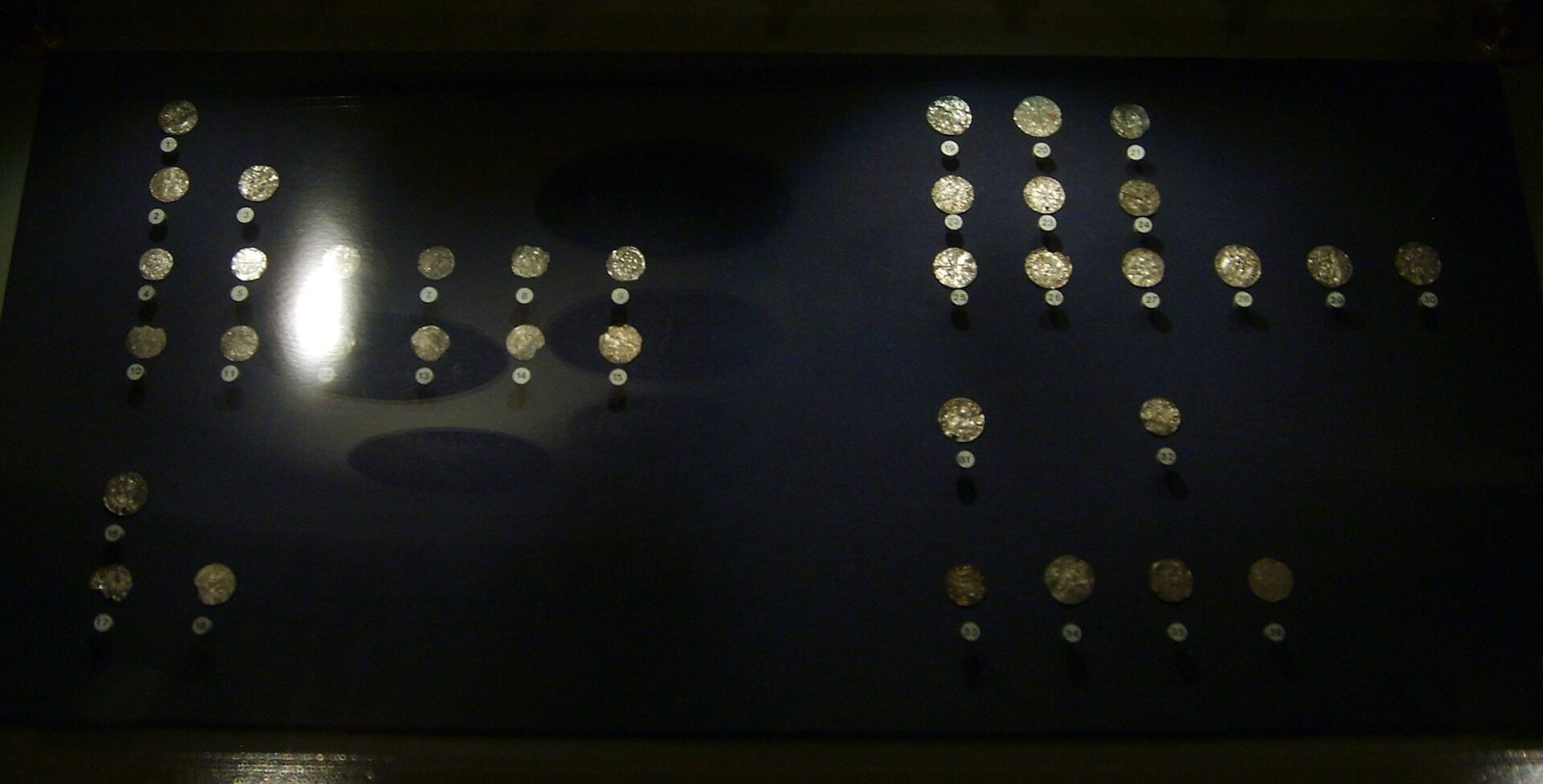
The hoard held about 335 silver coins, together with silver objects and an ingot. It is a cross-section of the Hellenistic world. There are tetradrachms of Athens, of the kings of Bithynia and of Mithradates VI of Pontus. There are dozens of tetradrachms of the Seleucid kings of Syria, more than fifty of them of Antiochus VII, and about 160 drachms of the kings of Parthia, most of Mithradates II. A single Roman Republican denarius had travelled all the way from Italy. The earliest coin is said to be a tetradrachm of Lysimachus, one of Alexander the Great's generals. The latest are of the Parthian king Phraates III, who died in 57 BC.
The most local part of the hoard is a group of more than seventy drachms in the name of Alexander the Great. They were not struck by Alexander. They are copies made in Caucasian Albania, the ancient kingdom in what is now Azerbaijan, long after his death, by people who wanted a coinage that traders would recognise. The hoard was probably buried between about 50 and 25 BC, when Rome and Parthia were both pressing on the region.
Like many hoards, Khinisli did not stay together. The standard catalogue of Greek coin hoards records 217 coins in Baku, seven in the Shamakhi regional museum, some in Tbilisi and 48 in a private collection. The main part is held by the National Museum of History of Azerbaijan in Baku, where coins from the hoard have been displayed.
Written for Global Finds from the Inventory of Greek Coin Hoards (IGCH 1745, American Numismatic Society) and the publications of E. A. Pakhomov (1962) it cites. Photo: coins and a jug displayed as part of the Khinisli hoard in Baku, Sefer ibrahim, Wikimedia Commons, public domain.