The Concepción Silver: a Spanish treasure ship found twice, by William Phips in 1687 and Burt Webber in 1978
Famous find Coins struck up to 1641; wrecked 1641 · Found in 1978 See it on the timeline →
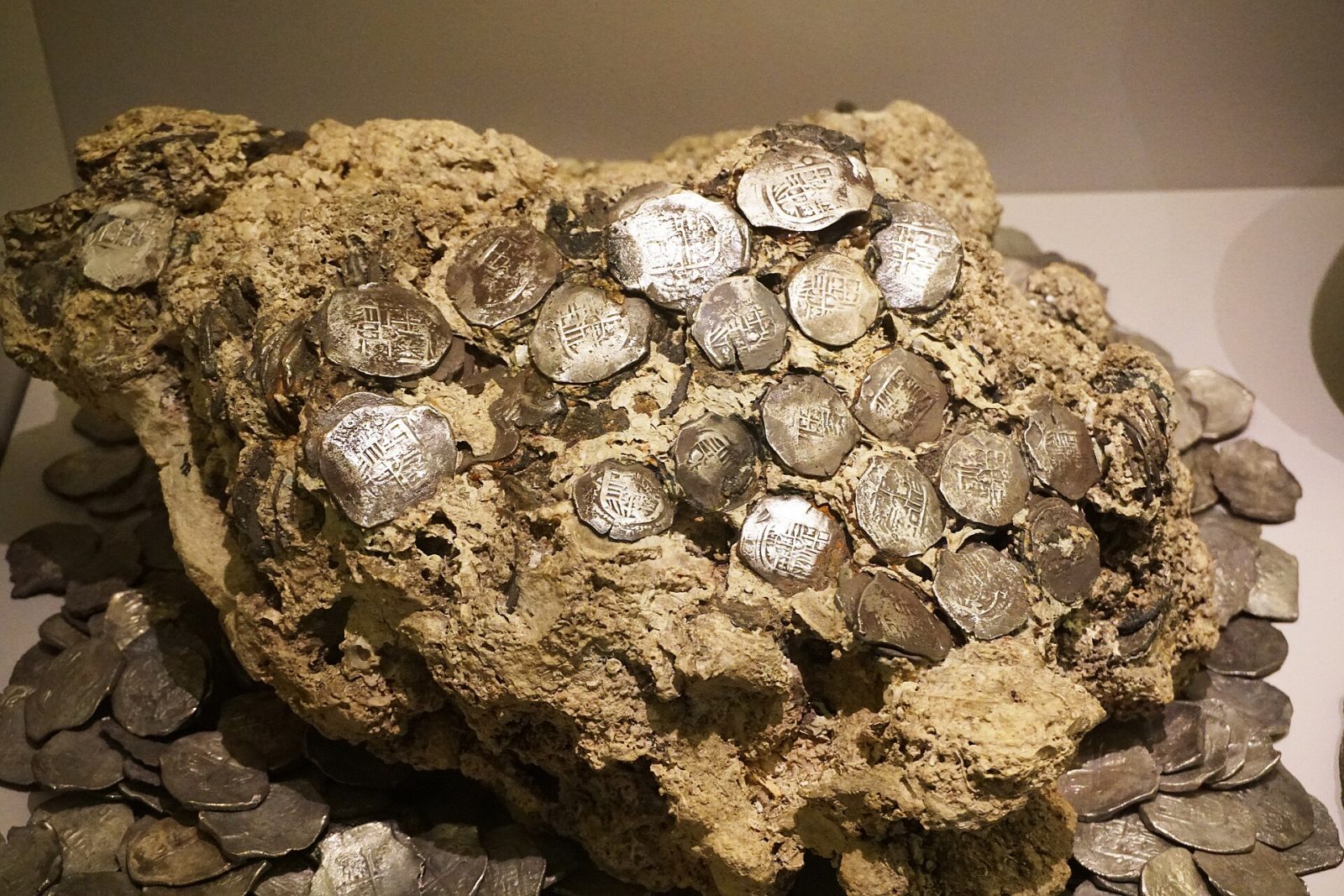
The Spanish galleon Nuestra Señora de la Concepción sank on the Silver Bank north of Hispaniola in 1641. William Phips raised tons of her silver in 1687, and in 1978 Burt Webber's team found the wreck again, recovering tens of thousands more coins.
In the autumn of 1641 the Nuestra Señora de la Concepción, second flagship of the New Spain treasure fleet, left Havana for Spain. A storm off Florida took her masts, and weeks later she ran onto the reefs of the Silver Bank, a maze of coral some sixty to eighty-five miles north of Hispaniola. Only a few hundred of the people on board survived, and her navigators placed the wreck more than a hundred miles from where it really was.
Forty-five years later an American-born sea captain, William Phips, went looking. In 1687 his men found her, free-diving for two weeks before a diving bell arrived, and raised silver then valued at about £300,000. Phips was knighted, the first American-born knight, and James II had a medal struck reading "Naufraga reperta", "the wreck found". But coral had sealed the stern, and much of the treasure stayed down.
In November 1978 the American salvor Burt Webber Jr., with Jack Haskins and the company Seaquest International, found the wreck again. The historian Peter Earle had traced the logbook of the Henry, one of Phips's ships, and a magnetometer did the rest. Over eleven months the divers removed some 300 tons of coral. They recovered tens of thousands of silver coins, by one count about 60,000, mostly Mexican eight- and four-real pieces and many struck between 1639 and 1641. There were also gold chains, Ming porcelain cups, astrolabes and a smuggler's chest with a false bottom.
Under its agreement with the salvors, the Dominican Republic took half of the finds, including the artefacts. They toured museums in the United States from 1980 to 1982, and Seaquest's coins were sold through Tiffany's in 1981. In Santo Domingo, the Museo de las Atarazanas Reales has a gallery dedicated to the Concepción. Part of the stern is still reported unfound.
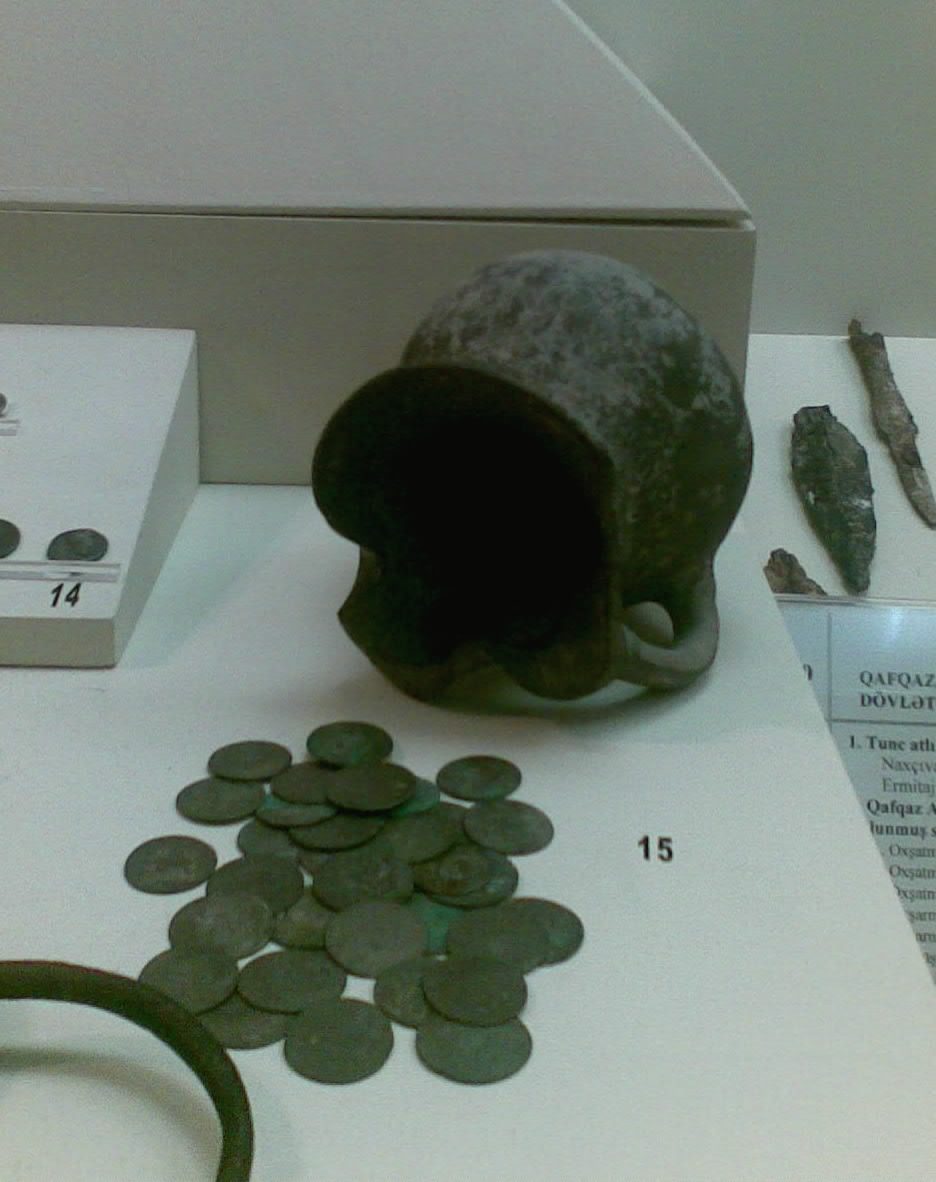
Written for Global Finds from the Christian Science Monitor (1980 and 1981), ShipLAB at Texas A&M University and Royal Museums Greenwich. Photo: 17th-century silver coins fused in coral, from the Silver Bank, in the Museo de las Atarazanas Reales, Santo Domingo, Mariordo, Wikimedia Commons, CC BY-SA 4.0.
Linked finds
Source: Christian Science Monitor (1981)