The Luzira Head: prisoners levelling a hilltop in Kampala dug up one of Africa's oldest clay sculptures
Famous find Buried about AD 900-1100 · Found in 1929 See it on the timeline →
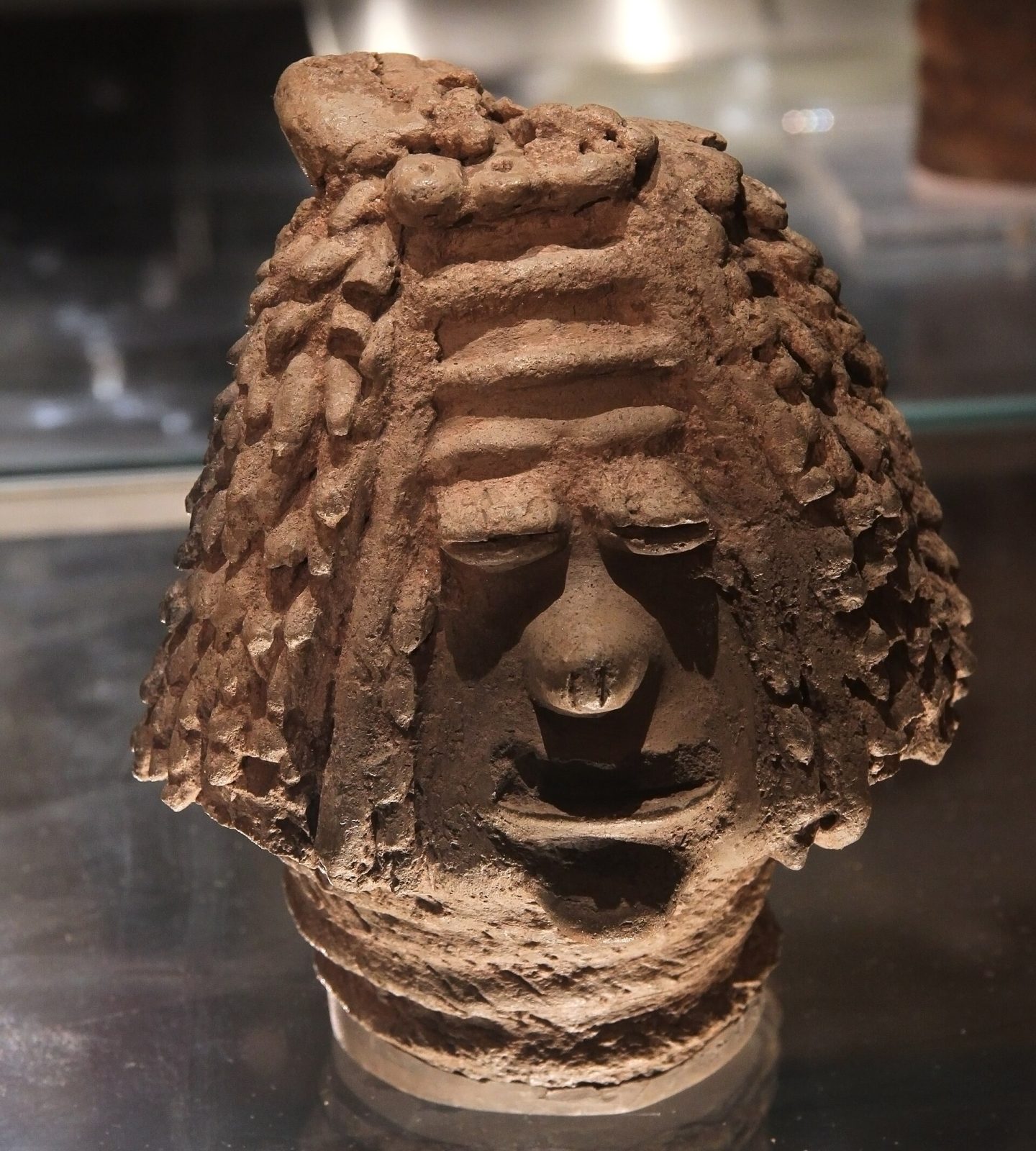
In 1929 a gang of prisoners levelling a hilltop to enlarge Luzira prison, near Kampala in Uganda, dug up broken clay figures. Among them was a hollow terracotta head with three scars across its brow, about a thousand years old. It has been in the British Museum since 1931.
In 1929 the prison at Luzira, on the edge of Kampala close to the shore of Lake Victoria, needed more room. A gang of prisoners was set to work levelling the top of a hill to enlarge the compound. As they dug, their spades turned up pieces of fired clay, and among them was a human head. The geologist E. J. Wayland came to see the site, and it was excavated in 1929 and 1930. Wayland published the finds in the Uganda Geological Survey's report for 1930 and, with colleagues, in the journal Man in 1933.
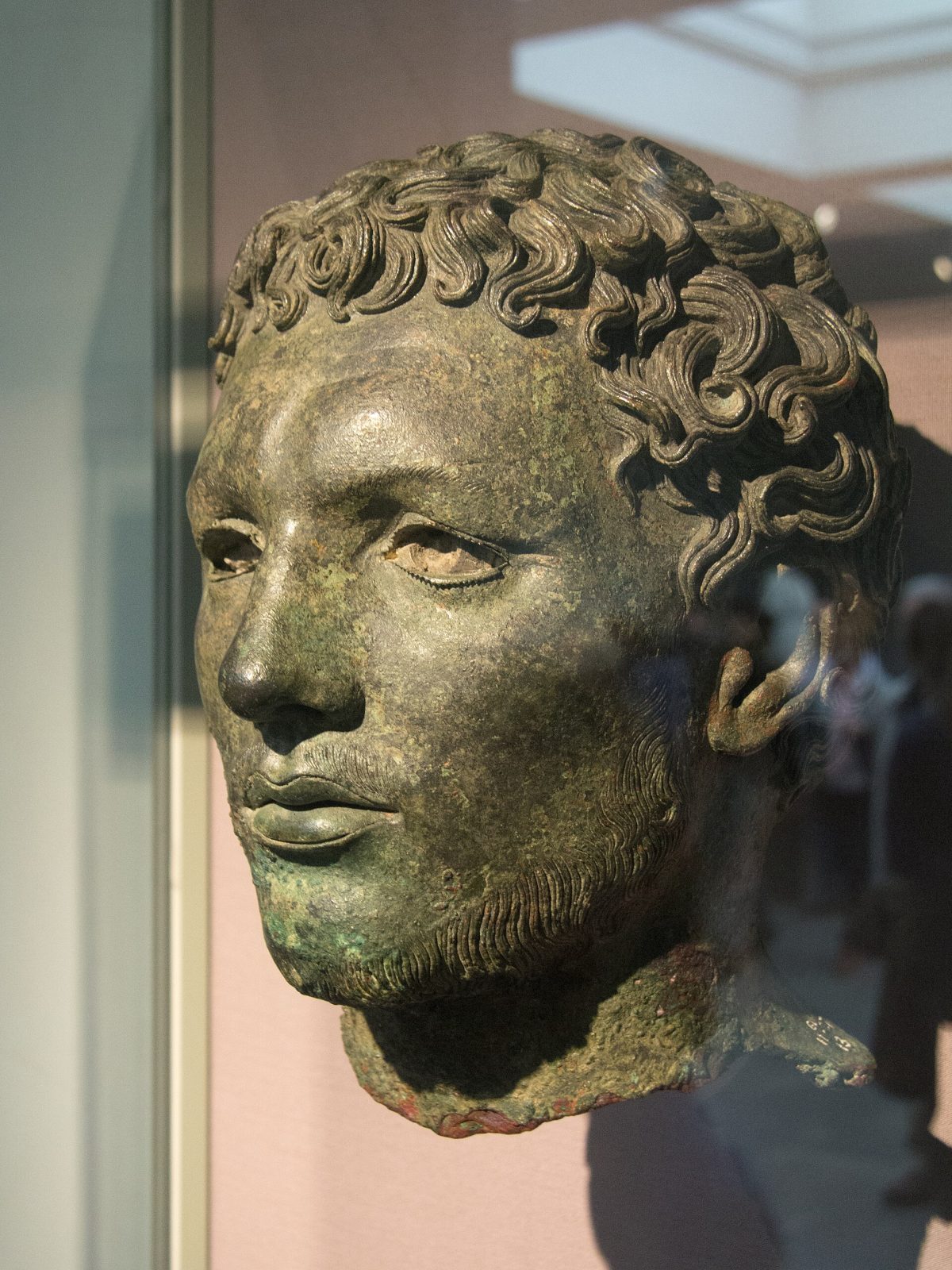
The head is hollow terracotta, 17 cm tall. The narrow eyes and mouth stand out from the face and the nose is tiny. Three raised scars run across the forehead, and hair falls on either side. Below the chin are five coils, perhaps a necklace. Around it lay two clay torsos, a tripod-shaped base and other fragments, perhaps from four figures in all, together with more than a hundred sherds of pottery, a pot, an iron spearhead and a polished stone axe. The figures seem to have been broken before they were put into a pit.
For decades nobody knew how old the head was, and the British Museum's old catalogue entry suggested the 18th century. In 2008 the archaeologists Ceri Ashley and Andrew Reid went back to the pottery found with it. Comparing it with excavated sequences around Lake Victoria, they placed the burial at the end of the first millennium AD or the start of the second, about a thousand years ago. That makes the Luzira Head one of very few clay figures known from the Great Lakes region before colonial times, and one of the oldest known sculptures from sub-Saharan Africa. Why the figures were broken and buried is unknown; a shrine is one suggestion.
The head went to the British Museum in 1931 and is shown in its African galleries. Ugandan commentators say it was only lent and that it still belongs to Uganda, and there have been calls for its return. The Uganda Museum in Kampala displays a replica.
Written for Global Finds from Reid and Ashley in Antiquity (2008), Ashley and Reid in Azania (2008), the British Museum collection record and The Observer, Uganda (2022). Photo: the Luzira Head in Room 25 of the British Museum, Vassil, Wikimedia Commons, CC0.