The La Pérouse relics: a silver sword guard on a Pacific island solved the 18th century's great maritime mystery
Famous find Expedition of 1785-1788, wrecked 1788 · Found in 1826 See it on the timeline →
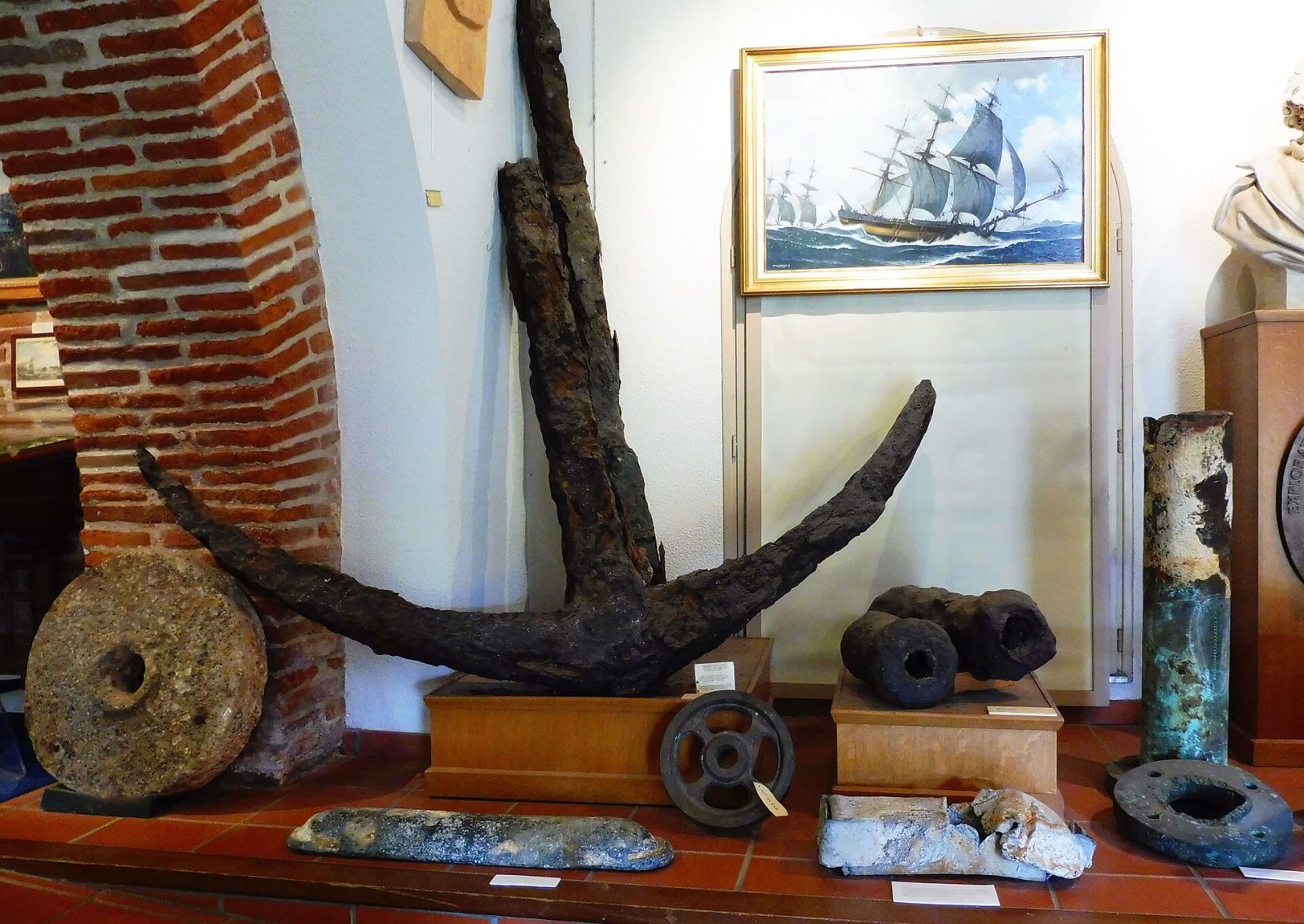
In 1826 the trader Peter Dillon was shown a French silver sword guard on Tikopia. It led him to Vanikoro in the Solomon Islands, where the explorer La Pérouse's two ships had vanished in 1788. Bells, cannon, anchors and a sextant have since been raised from the reefs.
In May 1826 the Irish-born trader Peter Dillon called at the small Pacific island of Tikopia in his ship the St Patrick. Martin Buchert, a Prussian whom Dillon had landed there thirteen years before, showed him a silver sword guard. It had come from Vanikoro, an island to the north-west, where islanders traded in European iron and silver. Dillon suspected at once what it was: a relic of the lost French expedition of Jean-François de La Pérouse.
La Pérouse had left Brest on 1 August 1785 with two frigates, the Boussole and the Astrolabe, and 220 men, on a voyage of exploration ordered by Louis XVI. After leaving Botany Bay early in 1788 they were never seen again. Both ships, it turned out, were wrecked on the reefs of Vanikoro, probably in a storm that year. Survivors built a small boat and sailed away, and were not heard of again.
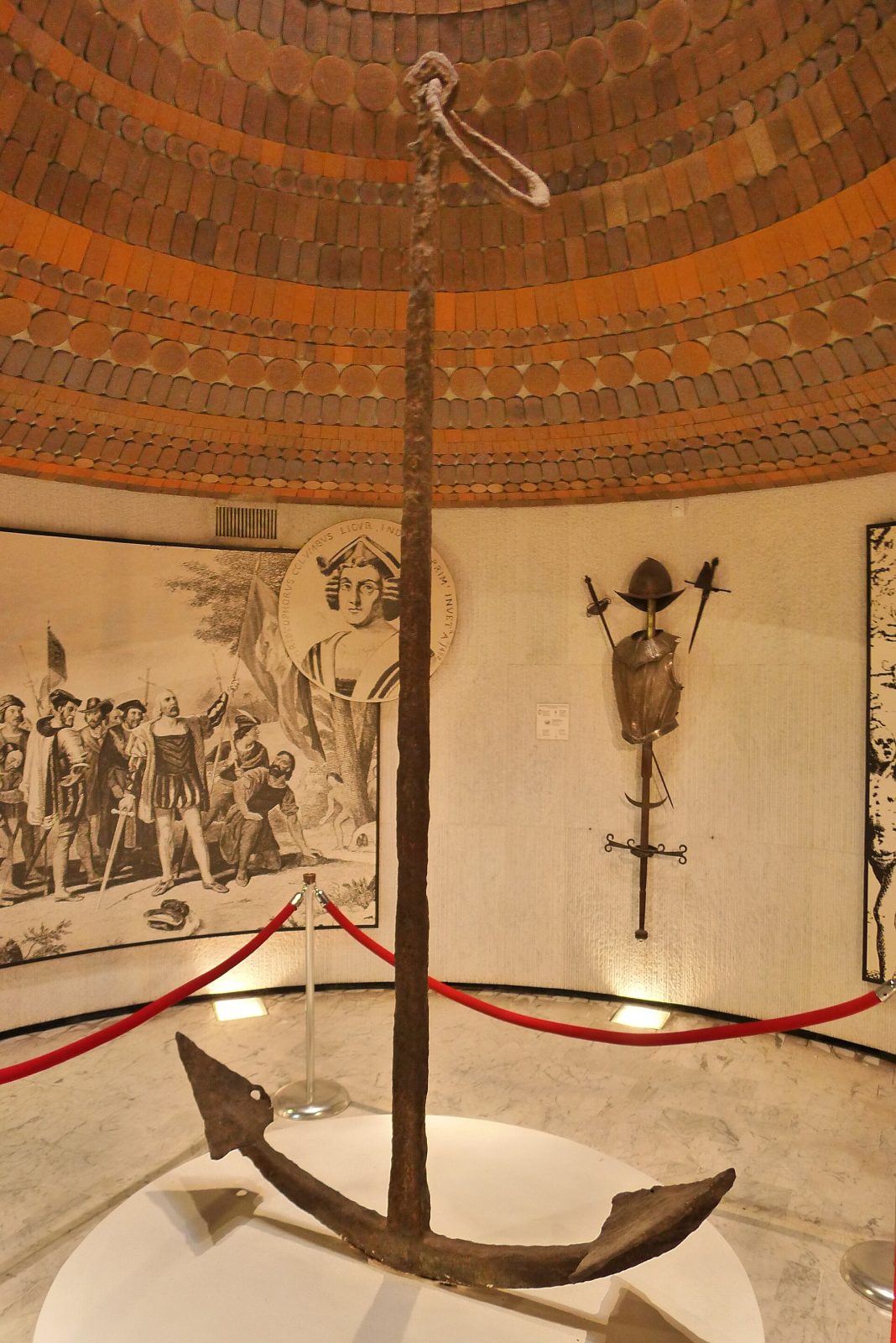
Dillon showed his relics in Calcutta, and the East India Company gave him a ship, the Research. He reached Vanikoro on 7 September 1827 and recovered a ship's bell, a small bronze cannon, a copper cauldron and a millstone. On 30 September he found a carved fleur-de-lys from one of the frigates being used to bar a door in a village. The Musée national de la Marine says it is the only piece of the ships' own woodwork to survive. In Paris, Barthélemy de Lesseps, who had left the expedition with dispatches in 1787, identified the finds. Dillon was given the Légion d'honneur and a pension. The French navigator Dumont d'Urville arrived in February 1828 and raised anchors and cannon.
The wrecks were not identified for certain until much later. Divers placed the Astrolabe in 1959 and the Boussole in 1964, and from 1981 the Association Salomon of Nouméa excavated on land and underwater. In 2003 it found a skeleton aboard the Boussole, buried at Brest in 2011. In 2005 a sextant signed by its maker, Mercier, confirmed which wreck was the flagship. The relics are now shared between the Musée national de la Marine, the Maritime Museum of New Caledonia and the Musée Lapérouse in Albi, the explorer's home town.
Written for Global Finds from the Musée national de la Marine, the Maritime Museum of New Caledonia, the Linda Hall Library and the Dictionary of New Zealand Biography. Photo: anchor, millstone and cannon from Vanikoro at the Musée Lapérouse, Albi, Als33120, Wikimedia Commons, CC BY-SA 4.0.
Source: Musée national de la Marine