The Santa María anchor: Columbus lost his flagship off Haiti in 1492, and an anchor turned up a kilometre inland three centuries later
Famous find Late 15th century, lost in 1492 · Found in 1796 See it on the timeline →
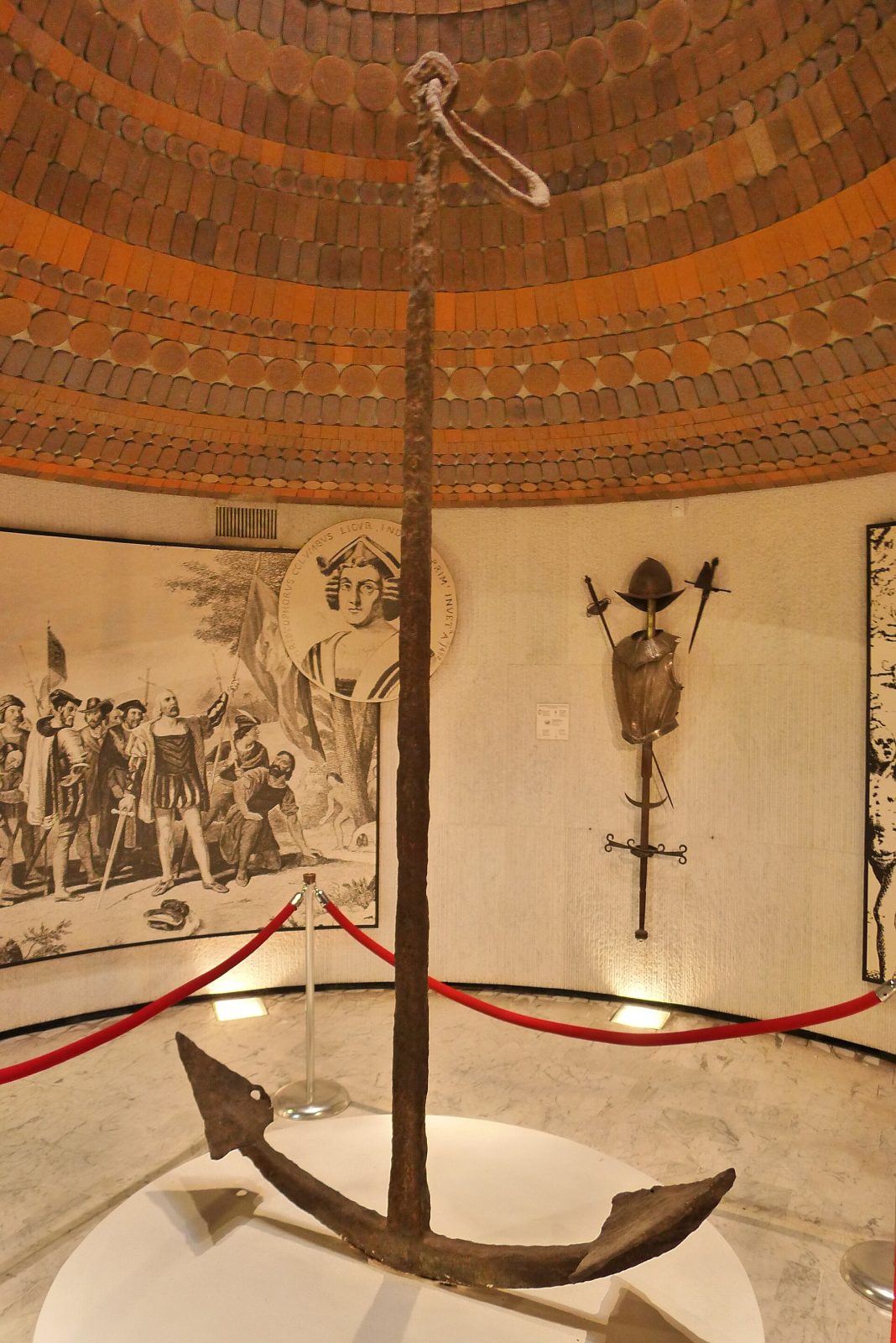
Columbus's flagship, the Santa María, ran aground off the north coast of Haiti at Christmas 1492. In 1796, Haitian accounts say, a great iron anchor was dug up on a plantation about a kilometre from the sea. It is traditionally identified as hers and is held in Port-au-Prince.
On Christmas Eve 1492, on his first voyage across the Atlantic, Christopher Columbus lost his flagship. The Santa María ran aground in the night off the north coast of Hispaniola, near what is now Cap-Haïtien in Haiti. She could not be saved. Columbus had her timbers taken ashore to build a small fort, La Navidad, left part of his crew there, and sailed home in the Niña.
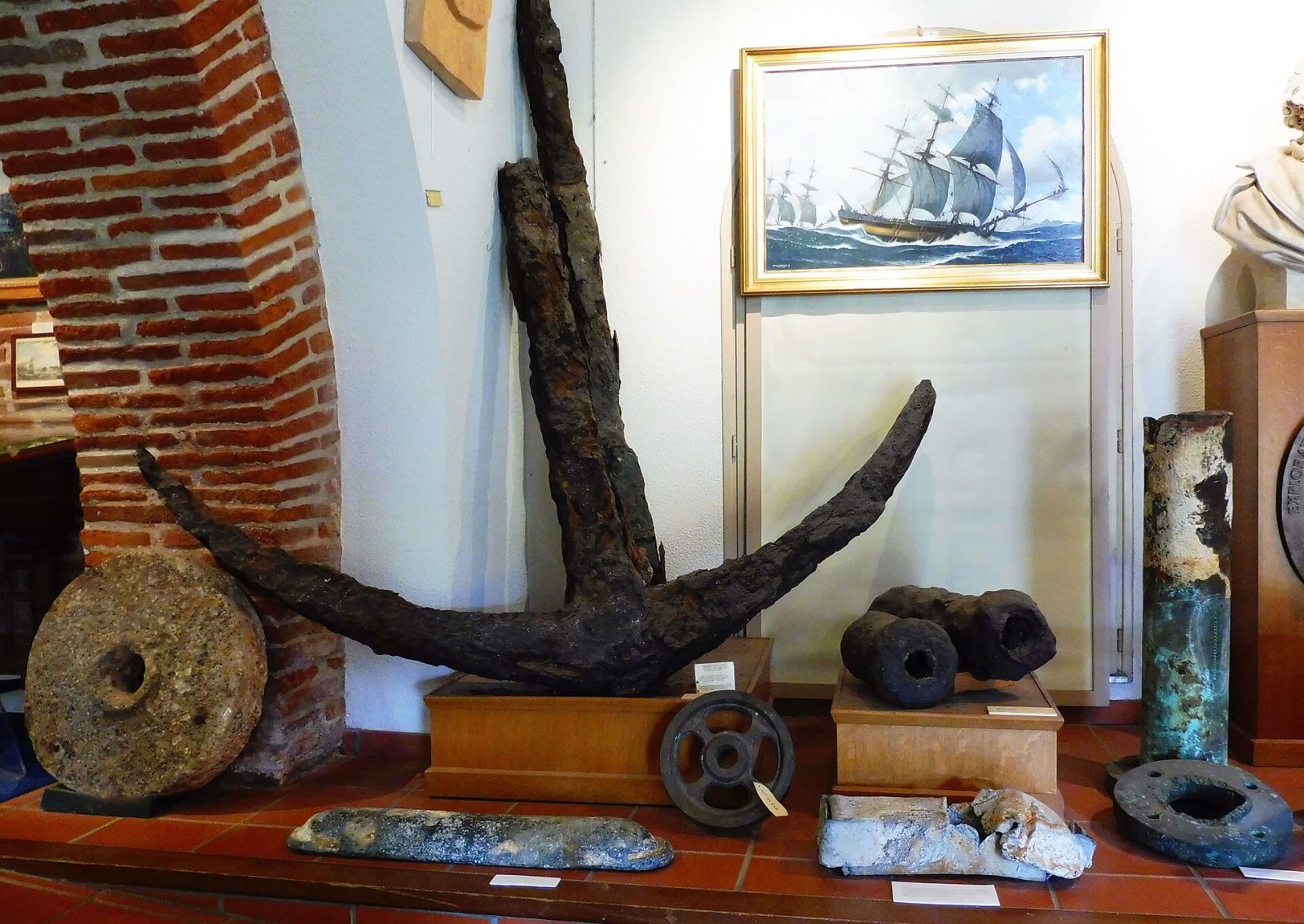
About three hundred years later, in 1796 according to Haitian accounts, a large iron anchor came out of the ground on the Fournier-Bellevue plantation, near Limonade. It lay about 1.2 m down, and about 1,000 m from the sea. The records do not say who found it. It is a great wrought-iron anchor without its wooden stock, and visitor guides give its shank as about four metres tall. A stone monument now marks where it was found.
An anchor in a field sounds unlikely, but the coast here has moved. The Grande Rivière du Nord has carried silt into the bay for centuries, and land has grown out over what was once shallow water. In 2014 three Spanish naval archaeologists visited the findspot, and they concluded that what remains of the Santa María probably lies under silted-up land rather than at sea. The same year, a claim by the American explorer Barry Clifford to have found the wreck on the reef was rejected by UNESCO's experts. Is the anchor really hers? Haiti's national museum displays it as the Santa María's anchor, and the press repeats that, but no published study has proved it. The ship probably carried several anchors, and another anchor raised from the harbour in 1955 has also been claimed as hers.
The anchor has stood in the rotunda of the Musée du Panthéon National Haïtien (MUPANAH) in Port-au-Prince since the museum opened in 1983. Gang violence around the Champ de Mars, where the museum stands, made the area unsafe in 2024 and 2025, so anyone hoping to see it should check first.
Written for Global Finds from HaitiLibre (September 2014), Uncommon Caribbean, Visit Haiti and the Caribbean Journal (2014). Photo: the anchor at MUPANAH, Port-au-Prince, Sean Clowes, Wikimedia Commons, CC BY-SA 3.0.
Source: HaitiLibre (2014)