The Bounty relics: a mutineer's descendant raised the rudder, and it led a diver back to the wreck in Bounty Bay
Famous find Built 1784, burned in January 1790 · Found in 1933 See it on the timeline →
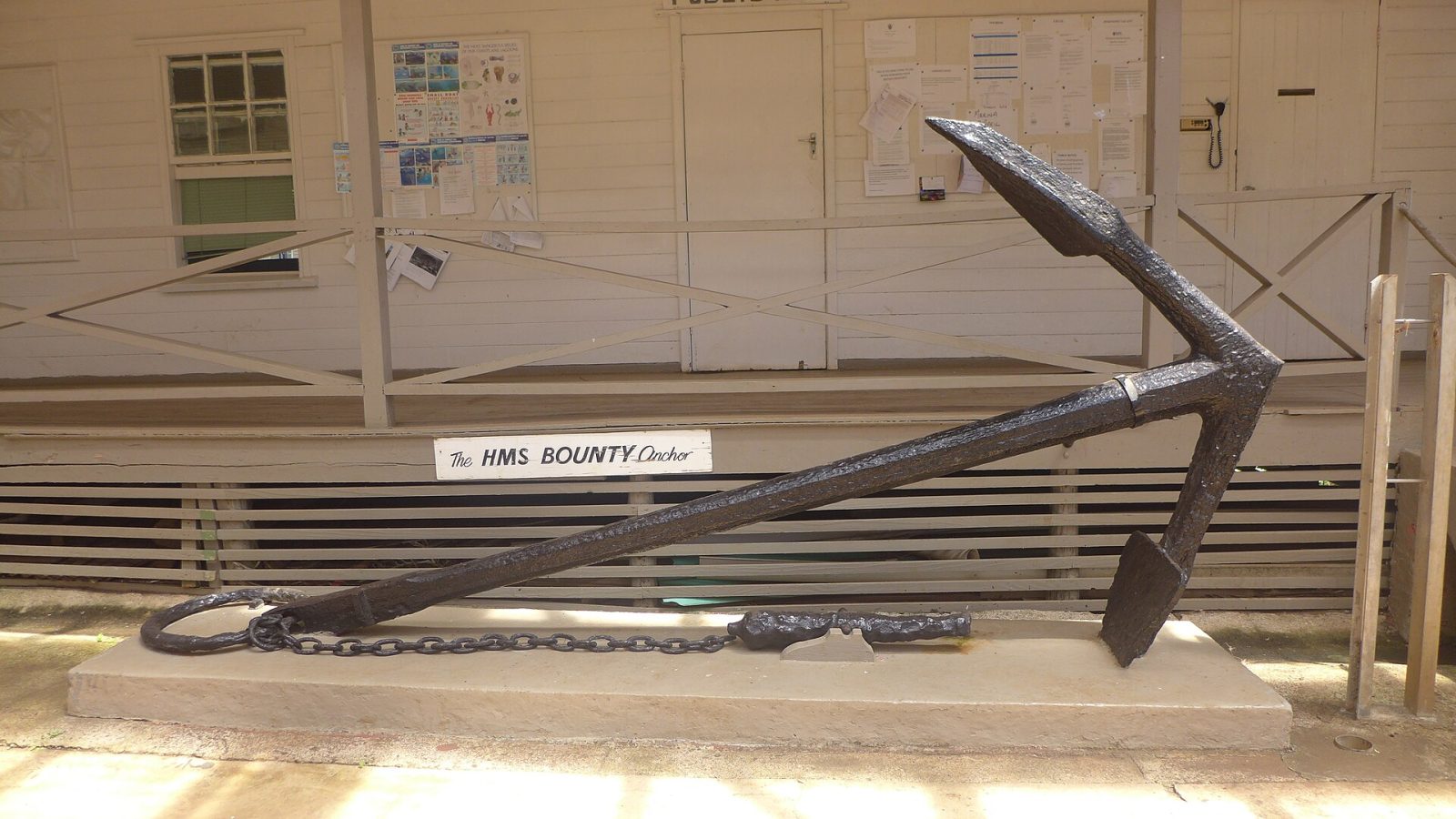
The mutineers burned HMS Bounty off Pitcairn Island in January 1790. In 1933 Parkin Christian, a descendant of Fletcher Christian, raised her rudder from Bounty Bay. It led Luis Marden of National Geographic to the wreck in 1957, and an anchor and a cannon followed.
On 15 January 1790 Fletcher Christian and the Bounty mutineers, with the Tahitian men and women who had come with them, reached Pitcairn, a remote island in the South Pacific. Eight days later they burned the ship in the bay below their new settlement, so that nobody could leave and no passing ship would spot her. She had been built at Hull in 1784 as a collier and bought by the Royal Navy in 1787.
More than 140 years later, in 1933, Parkin Christian raised her rudder from Bounty Bay. He was the island's Chief Magistrate and a descendant of Fletcher Christian. Royal Museums Greenwich gives the year as 1933; another account says 1932. The rudder still technically belonged to the Admiralty. It was kept in Pitcairn's post office, and in 1942 it was sent to Fiji for safe keeping. It is still on show in the Fiji Museum in Suva, one of the museum's most popular exhibits. Royal Museums Greenwich holds small pieces of it.
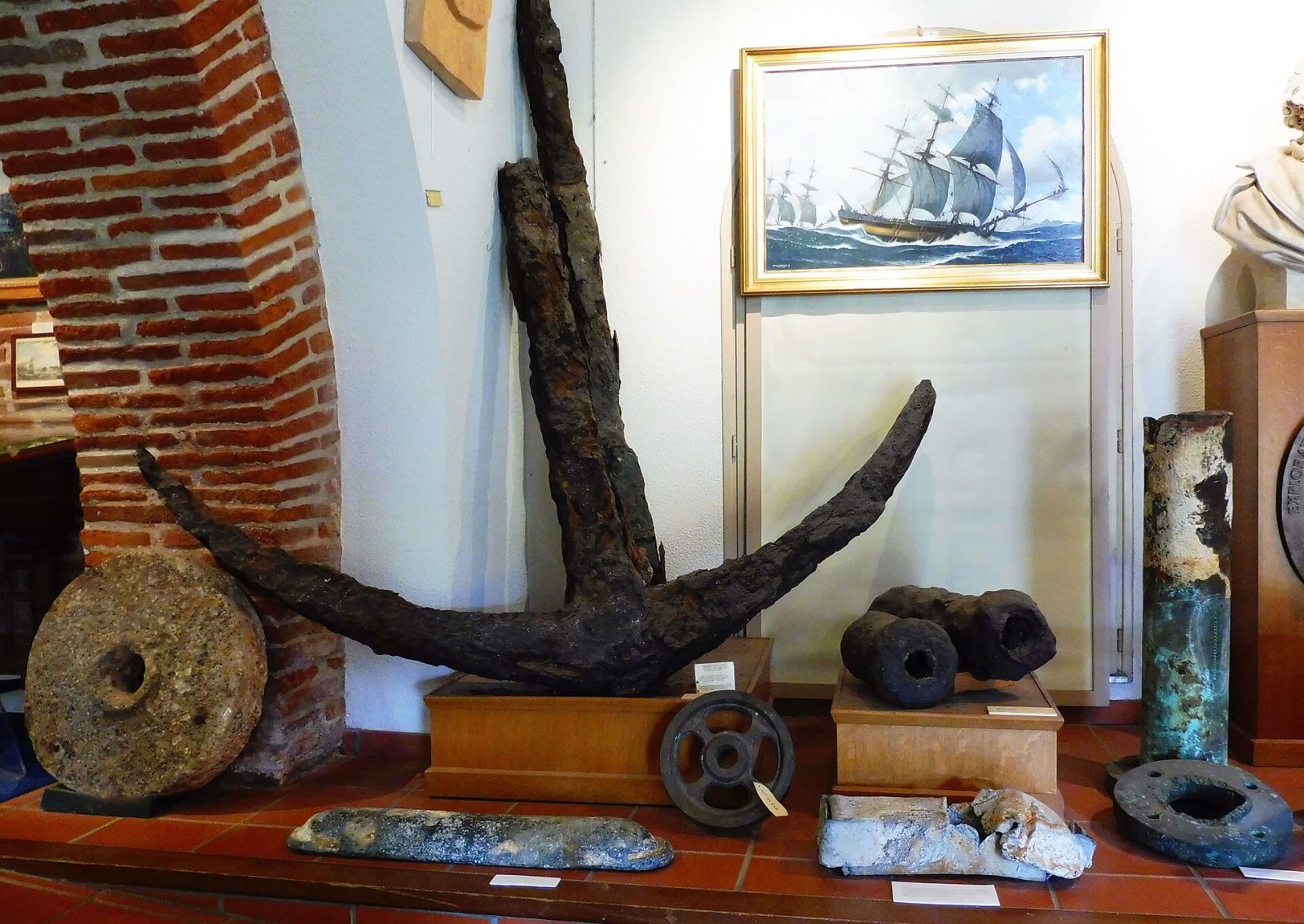
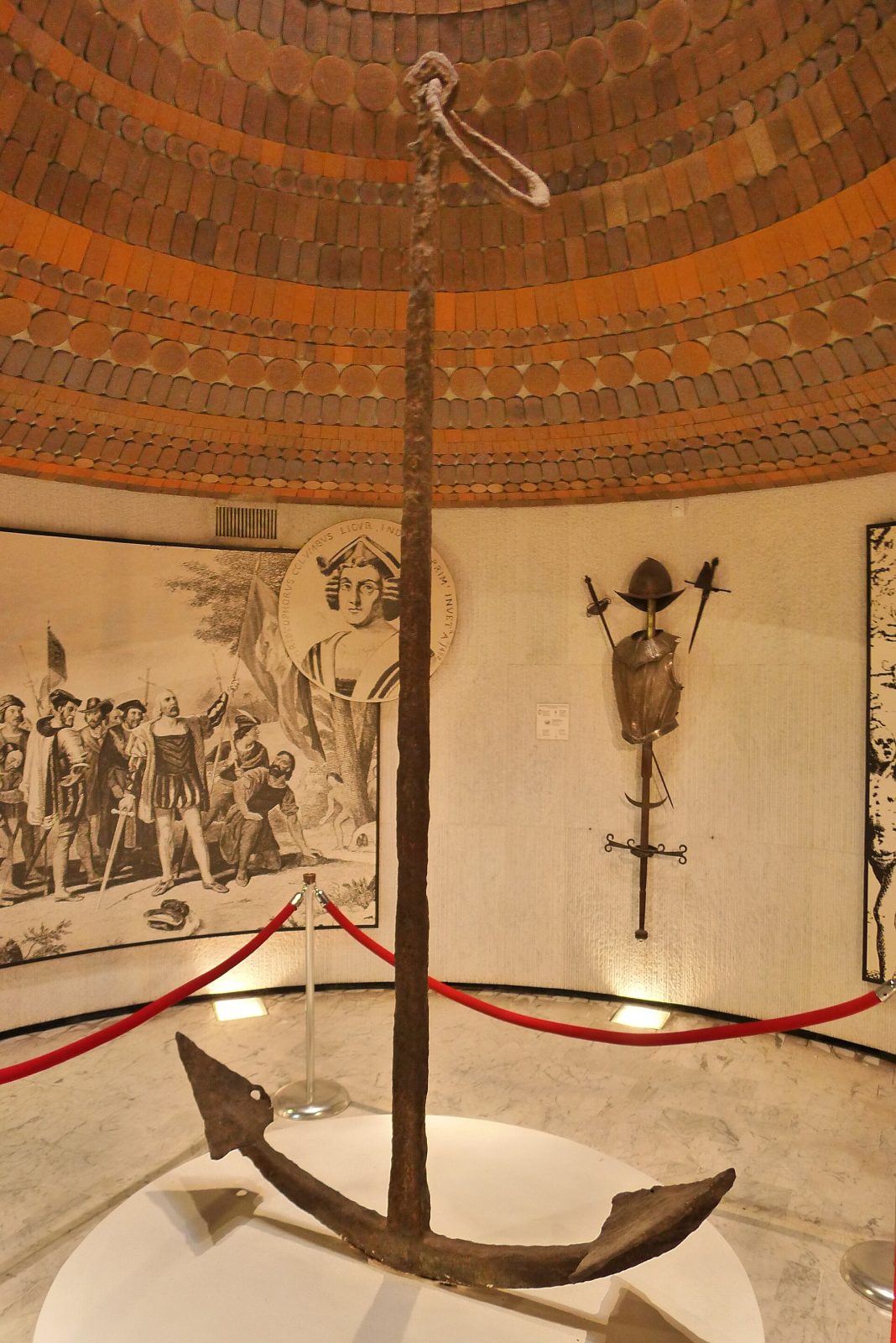
The rudder led to the wreck. Luis Marden, a photographer and diver for National Geographic, saw it in Fiji and went to Pitcairn. In January 1957, in the rough water of Bounty Bay, he found the wreck: pintles from the rudder fittings, oarlocks, bronze nails and copper sheathing. He told the story in the magazine that December as "I Found the Bones of the Bounty". The next month, February 1957, a diver from Captain Irving Johnson's brigantine Yankee spotted the fluke of an anchor at the outer edge of the bay. Johnson worked it free with the ship's winch. The anchor stands on a plinth in the Public Square at Adamstown, and was repainted in October 2025.
Later finds followed. The last of the Bounty's four small cannon was raised by a James Cook University team in 1998 or 1999, conserved in Townsville, Queensland, and returned to the island. Ballast stones can still be seen in the bay, and Pitcairn's law forbids taking Bounty relics off the island.
Written for Global Finds from Royal Museums Greenwich, Visit Pitcairn, the Government of the Pitcairn Islands, the Fiji Times (2015) and the Pacific Union College Pitcairn Islands Study Center. Photo: a Bounty anchor on Pitcairn Island, Gerold Steinhorst, Wikimedia Commons, CC BY-SA 4.0.
Source: Visit Pitcairn