The Pembrokeshire chariot: his usual field was flooded, so a detectorist tried another and found Wales's first chariot burial
Famous find Late Iron Age, 1st century AD · Found in 2018 See it on the timeline →
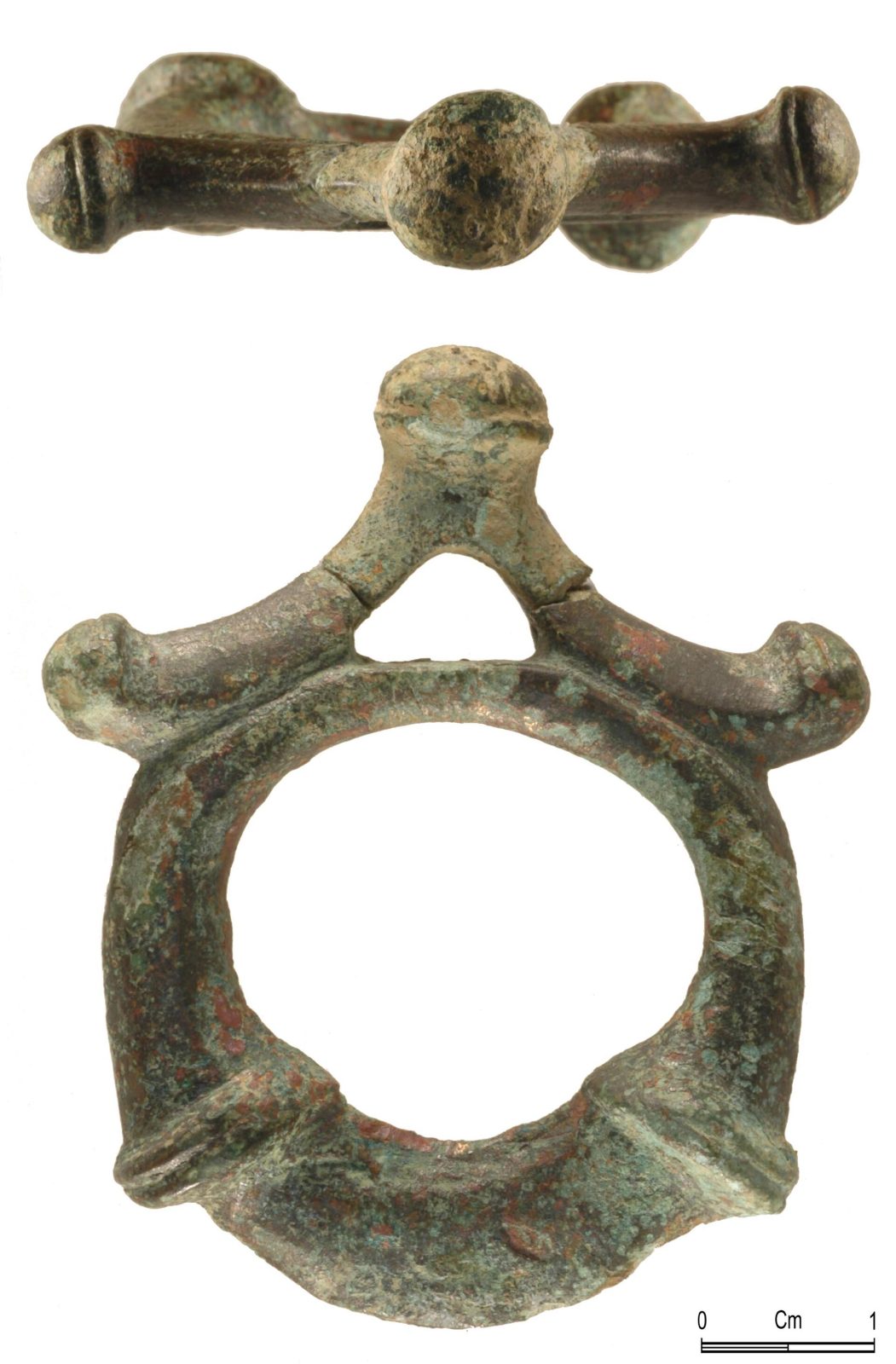
In February 2018 Mike Smith of Milford Haven, finding his usual field flooded, detected a different one in south Pembrokeshire and found enamelled bronze harness fittings. They led archaeologists to an Iron Age warrior buried with a chariot and a sword, the first chariot burial found in Wales.
In February 2018 Mike Smith, a metal detectorist from Milford Haven and a member of the Pembrokeshire Prospectors club, found his usual field under water. He tried a different one in south Pembrokeshire instead. One of his first signals was a piece of bronze inlaid with bright red enamel, which he took for a medieval brooch. He went back the next day and found more, and he reported his finds.
They were the fittings of a horse harness, made late in the Iron Age: a large horse brooch, a decorated terret (a ring that guided the reins), a bridle bit, bridle rings, a strap union and a harness mount. All are copper alloy set with red glass or enamel and decorated in a late Celtic style. They lay in two holes about 1.2 m apart, roughly half a metre down.
In June 2018 Dyfed Archaeological Trust and Amgueddfa Cymru – Museum Wales dug a trial trench. In the middle of a ring-ditch about 10 m across was a grave, and in slots cut into the rock lay the iron rims of two chariot wheels. A pony's tooth beside the bridle helped confirm what it was. In spring 2019 the excavators lifted the tyres and found an iron sword with traces of a horn handle and a wooden scabbard, lying beside the stain left by a body. Almost all of Britain's known chariot burials are in East Yorkshire. This is the first found in Wales, and the only complete chariot known from Wales. It dates from the 1st century AD, and the person buried in it lived through the Roman conquest of Wales.
The harness fittings were declared Treasure. Museum Wales acquired them in 2022 and the excavated finds in 2025. The findspot is still kept secret. In 2025 a £1.25 million research project led by the University of Manchester, with Museum Wales and Heneb, began studying the burial. A wheelwright, Robert Hurford, is building full-size reconstructions of the chariot. The finds themselves are in store for now, with a display planned at Oriel y Parc in St Davids and at St Fagans.
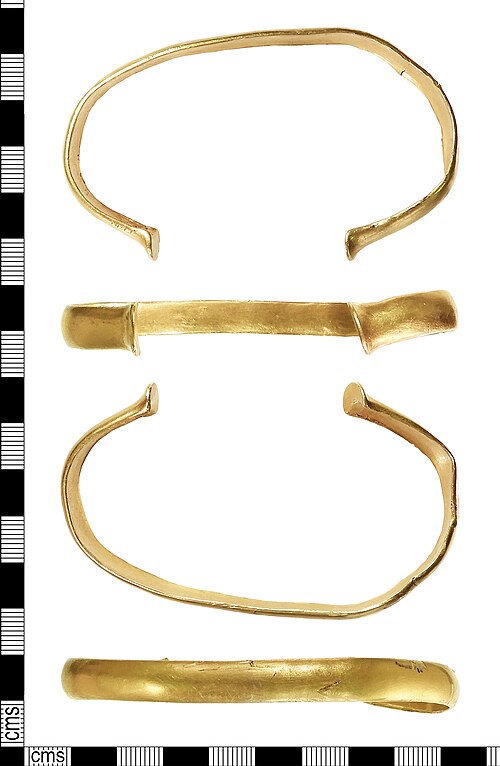
Written for Global Finds from Current Archaeology, Amgueddfa Cymru – Museum Wales collection records, the University of Manchester (2025), Heneb and the Pembrokeshire Herald (2018). Photo: a similar Late Iron Age bronze terret found in Glamorgan (a stand-in, not from the chariot burial), Mark Lodwick, Portable Antiquities Scheme, Wikimedia Commons, CC BY-SA 2.0.
Source: Current Archaeology