The Okey hoard: five friends on their club's third dig found 21 medieval silver coins near Okehampton Castle
Struck from about 1282; buried about 1430 · Found in 2023 See it on the timeline →
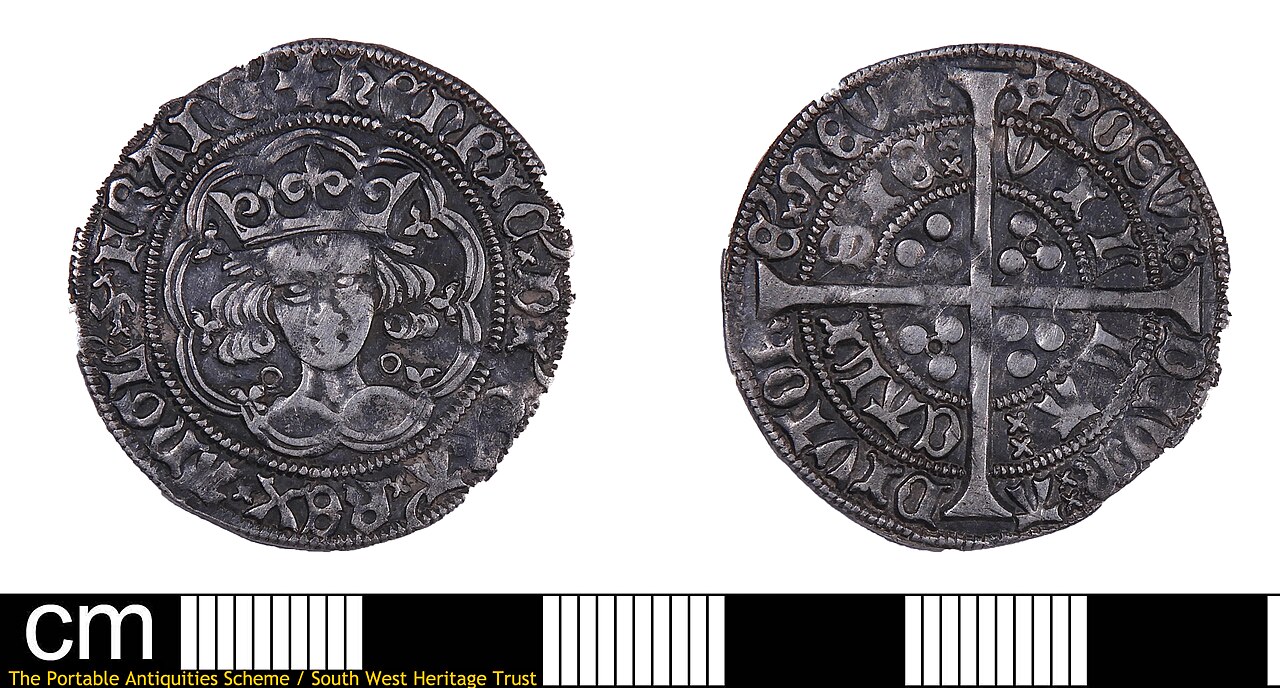
Five members of Teignbridge History Finders found 21 silver groats and pennies, spanning about 150 years, in a field a mile from Okehampton Castle in Devon. Declared Treasure, the hoard has been bought by the Museum of Dartmoor Life and is on show there until 7 November.
At the end of 2023, according to the first reports, the members of Teignbridge History Finders were on only their third or fourth hunt together. The Devon club was about a year old. That day they were searching a field on the edge of Dartmoor, about a mile from Okehampton Castle, and the coins began to come up about six inches down. Paul May found three silver groats, Neil King found eight coins, and Clive Hammett found a groat and four pennies. Some of the pennies gave only faint, doubtful signals on his Minelab Equinox 800, the kind many detectorists would walk past.
A few weeks later Hammett and the club's organiser, Jim Luxton, went back to check the area again. Luxton, who had not yet found a coin from the hoard, dug up a small, worn penny, the 21st coin. Pete Young was the fifth member of the group credited with the find.
The hoard is 13 groats and 8 pennies, 60 pence in all, or five shillings. That was roughly ten days' pay for a skilled craftsman of the time. The coins were struck under five different kings and span about a century and a half, from Edward I to Henry VI. Most of the pennies are clipped and worn coins of Edward III, and at least some were made at York. Most of the groats are coins of Henry VI from the mint at Calais, then an English possession, struck between 1422 and 1427 and still in good condition.
Why were they left in the ground? Kristy Turner, manager and curator of the Museum of Dartmoor Life, says the coins were buried around 1430, a hard time of bad weather, famine, returning plague and heavy taxes for the Hundred Years War. For most people, burying savings was "the closest thing you had to a bank". Julian Evan-Hart, editor of Treasure Hunting magazine, thought a lost purse more likely, its coins later spread through the soil by ploughing.
The club reported the find to the Devon Finds Liaison Officer, and after an inquest the coroner declared the coins Treasure. The museum asked to buy them so they could be shown close to where they were found. The purchase was paid for with the Arts Council England/V&A Purchase Grant Fund, National Lottery support and local grants from four West Devon Borough councillors. The hoard went on display at the museum in West Street, Okehampton, on 13 October 2026. The museum closes for the winter on 7 November.
Reported by the Mid Devon Advertiser (6 October 2026), with earlier reports in Dawlish Today and The Post (October 2024). Written for Global Finds from those reports. Photo: a silver groat of Henry VI from the Calais mint, 1422 to 1427, found in Devon and of the same type as most of the hoard's groats (not from the hoard), Lucy Shipley, Portable Antiquities Scheme, Wikimedia Commons, CC BY 2.0.
Source: Mid Devon Advertiser