The Asterix ship: a diver's Christmas Day find in St Peter Port harbour was a Roman merchant ship sunk by its own burning cargo
Famous find Sank about AD 280 · Found in 1982 See it on the timeline →
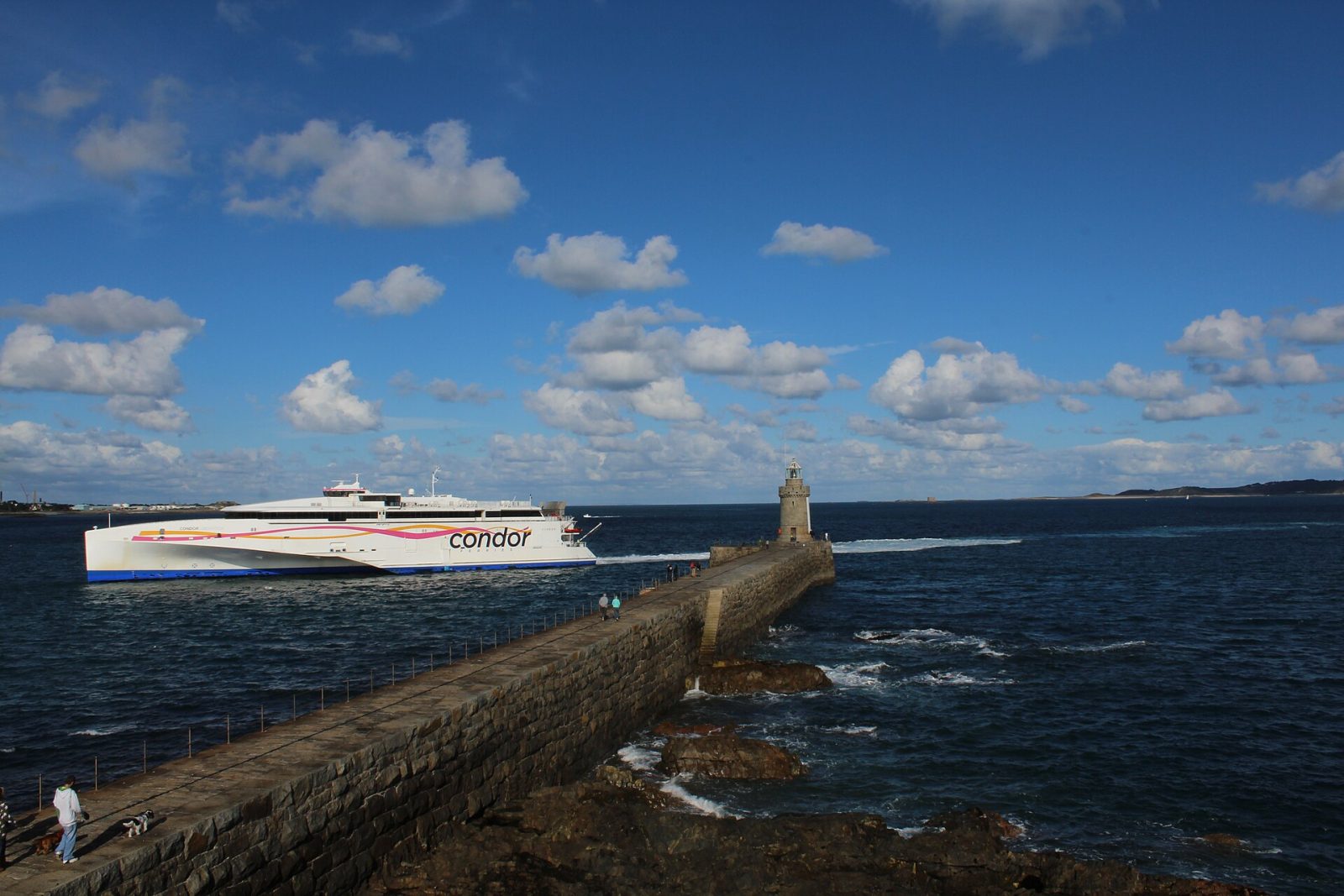
On Christmas Day 1982 local diver Richard Keen found old timbers on the seabed between the pierheads of St Peter Port, Guernsey. They were the hull of a Gallo-Roman merchant ship that caught fire and sank around AD 280, the most complete Roman sea-going wreck found outside the Mediterranean.
On Christmas Day 1982, Richard Keen, a diver from Guernsey, was exploring the seabed in the mouth of St Peter Port harbour, halfway between the two pierheads. The wash from ferry propellers had scoured away the silt there, and he saw heavy oak timbers fixed with large iron nails. They were the bottom of an ancient ship. The story goes that a local boy asked whether it was Asterix's ship, and the nickname stuck.
In the mid-1980s the Guernsey Maritime Trust raised and recorded the wreck, led by Dr Margaret Rule, the archaeologist who had raised the Mary Rose. About 18 m of the hull survived, from a ship that had been at least 22 m long and 6 m wide. It was a Romano-Celtic merchant ship, built in the local tradition of north-west Europe rather than the Mediterranean way, and it had been carrying blocks of pitch in its aft hold. Around AD 280 that cargo caught fire, and the ship burned and sank at its moorings. The melted pitch then helped hold the hull together on the seabed.
The crew's belongings went down with it. The divers recovered roof tiles, perhaps from a galley or cabin, pottery made in North Africa and Germany, coins, wooden spoons, gaming counters, and charred fruit stones, walnuts and wheat. Two cast bronze bearings probably came from the ship's bilge pump, a piece of Roman engineering in a Celtic-style hull. The wreck is often described as the largest and most complete Roman sea-going ship found outside the Mediterranean.
Waterlogged wood falls apart as it dries, so in 1999 the timbers went to the Mary Rose Trust in Portsmouth. They were soaked in a wax-like chemical that replaces the water in the wood and then freeze-dried, a process that took until 2011. The ship came home to Guernsey in January 2015. Its main timbers have since been kept in a store at Rocquaine, on the island's west coast, where visitors can see them through a viewing window, and a model of the ship is in the Maritime Museum at Castle Cornet.
Written for Global Finds from Guernsey Museums, Visit Guernsey and Bailiwick Express. Photo: a ferry passing the lighthouse at the mouth of St Peter Port harbour, where the ship lay (the site today, not the wreck), Dave Paterson, Wikimedia Commons, CC BY 2.0.
Source: Guernsey Museums