The Brunei shipwreck: an oil company's pipeline survey found a Ming-era trading ship 63 metres down, packed with 13,000 objects
Famous find Sank around 1500 · Found in 1997 See it on the timeline →
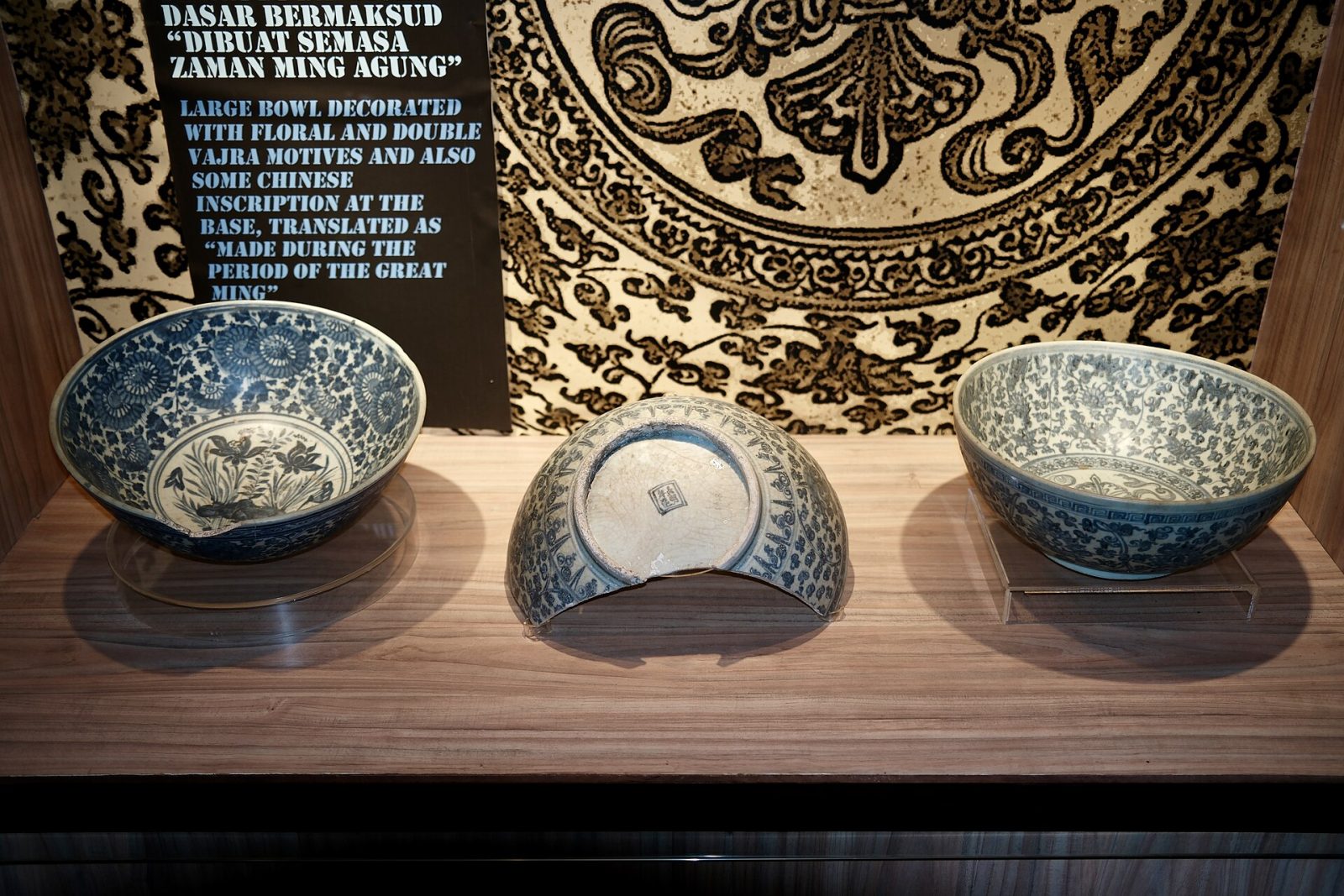
In 1997 crews from the oil company Elf, surveying the seabed off Brunei for a pipeline, found a wreck about 63 m down. French underwater archaeologists raised more than 13,000 objects in 1998, from Ming porcelain to bronze gongs and metal ingots, carried by a trading ship that sank around 1500.
In 1997 the oil company Elf Petroleum was surveying the seabed off the coast of Brunei, on the island of Borneo, to plan a pipeline. Its instruments picked up something unexpected about 32 nautical miles offshore, at a depth of 62 to 65 m: the remains of a wooden ship and its cargo, lying in thick mud.
Elf called in France's underwater archaeology service, DRASSM. In May 1998 a team led by Michel L'Hour began a three-month excavation, paid for by the oil company. It was difficult work. The water was so murky that a robot and two small submarines brought along for the job were of little use, and a team of about 175 people ended up sifting some 200 tonnes of sediment by hand and machine.
They recovered more than 13,000 objects. About a third of the cargo was blue-and-white porcelain from the kilns of Jingdezhen in China, much of it from the reign of the Ming emperor Hongzhi (1488 to 1505). There were also about 2,200 storage jars from China, Thailand and Vietnam, green-glazed celadon, Thai stoneware and white wares from Fujian. Metal goods were stowed among the pots: bronze gongs, metal bars, small pyramid-shaped ingots and cooking pots, together with glass bracelets, beads and grindstones. Nobody knows where the ship was built, or why it sank. It may have been caught in a storm or loaded too heavily. Either way, it gives a snapshot of the trade that linked China with the ports of South-East Asia around 1500, when Brunei was a powerful sultanate.
The finds were studied and catalogued, and many of them went on show in Brunei. Since 2015 they have filled the Shipwreck Gallery, the main permanent exhibition of the Brunei Darussalam Maritime Museum at Kota Batu, near the capital, Bandar Seri Begawan.
Written for Global Finds from the French Ministry of Culture (DRASSM), Xinhua (2018) and published accounts of the Brunei Darussalam Maritime Museum. Photo: Ming blue-and-white bowls in the Shipwreck Gallery of the Brunei Darussalam Maritime Museum (not confirmed to be from this wreck), Yu Chu Chin, Wikimedia Commons, CC BY-SA 4.0.