The Machtum treasure: a gravel dredger on the Moselle brought up Roman emperors' gold, and much of it went through a stone crusher
Famous find Latest coins struck AD 375-378 · Found in 1958 See it on the timeline →
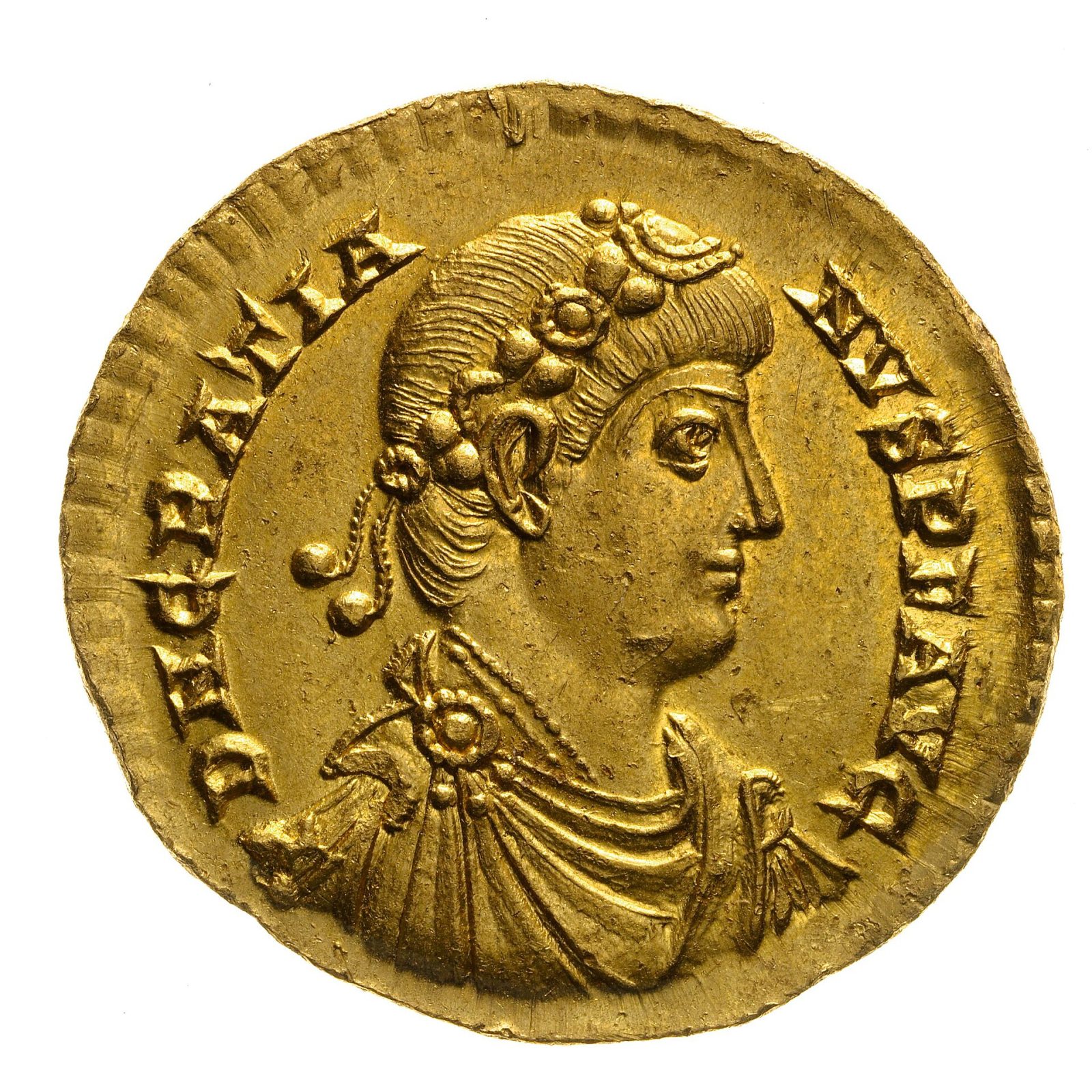
In April 1958 a dredger taking gravel from the Moselle between Ahn and Machtum, in Luxembourg, brought up more than 100 Roman gold coins and medallions. Mostly of the emperors Valentinian I, Valens and Gratian, they may have been an imperial gift lost in the river around AD 377.
At the end of April 1958 a dredger belonging to the Hein company of Machtum was taking gravel from the bed of the Moselle, the river that forms Luxembourg's border with Germany, between the villages of Ahn and Machtum. The gravel was carried to the company's yard and put through a stone crusher. Then people began to notice gold in it. Coins turned up scattered in the gravel at the yard, and more appeared at a roads department depot near Roodt-sur-Syre, where a lorry had dumped two loads of the same gravel.
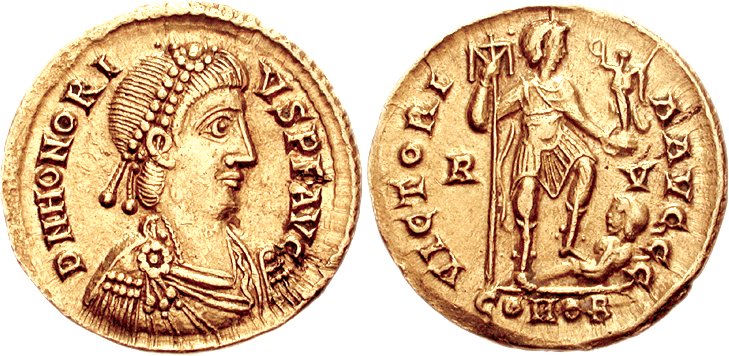
More than 100 gold coins were recovered. Almost all are of three emperors who ruled together in the 360s and 370s: Valentinian I, his brother Valens and his son Gratian, with a few earlier pieces of Constantine the Great and Constantius II. They include ordinary gold solidi and half-solidi, and rare large multiples worth one and a half, two and three solidi, several of them types never recorded before. Many of the coins, especially the big multiples, were bent and scratched by the crusher. No container, silver or bronze was found.
The latest coins were struck for Gratian between AD 375 and 378. Large gold multiples like these were not everyday money. Emperors handed them out as gifts to officers and officials on special occasions. The Coin Hoards of the Roman Empire database suggests they were a donative given out at Gratian's tenth-anniversary celebrations in 376 or 377, probably at Trier, the imperial capital just upriver. How the gold came to be in the Moselle is unknown. One idea is that it was lost when a boat from Trier sank.
Most of the coins vanished into private collections or were sold abroad. The National Museum of Archaeology, History and Art in Luxembourg City acquired a small group, including a gold medallion of Gratian struck at Trier, weighing 6.75 g. In 2008 and 2009 the museum held an exhibition about the find, Moselgold, presenting it as an imperial gift.
Written for Global Finds from the Coin Hoards of the Roman Empire database (Ashmolean Museum, Oxford), the National Museum of Archaeology, History and Art, Luxembourg, and Luxembourg's National Institute for Archaeological Research (INRA). Photo: a gold medallion of Gratian from the Machtum treasure, National Museum of Archaeology, History and Art, Luxembourg, Christof Weber, Wikimedia Commons, public domain.