The Baltimore Gold Hoard: two boys digging in a cellar to hide their club money struck gold, then fought the owners in court
Famous find Gold coins dated 1834 to 1856 · Found in 1934 See it on the timeline →
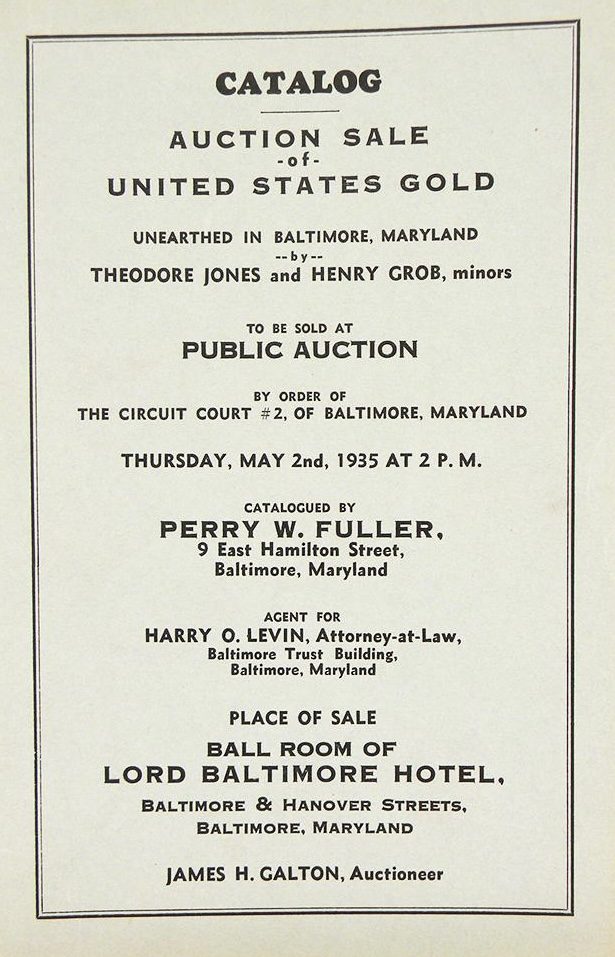
In August 1934 Theodore Jones and Henry Grob, both about fifteen, were digging in a Baltimore cellar when they found about 3,500 gold coins. The boys won them in court, and the sale raised nearly $20,000, but a second find and years of legal costs followed.
In August 1934, during the Great Depression, Theodore Jones and Henry Grob, both about fifteen, went down into the cellar of a tenement at 132 South Eden Street, Baltimore, where Jones lived with his widowed mother. Press reports give the date as 31 August. They were digging in a low, part-excavated corner to bury the dues of their club when they struck a copper container packed with gold coins. They carried it up to Mrs Jones's flat and began to divide it. Then the police ordered them to hand it over.
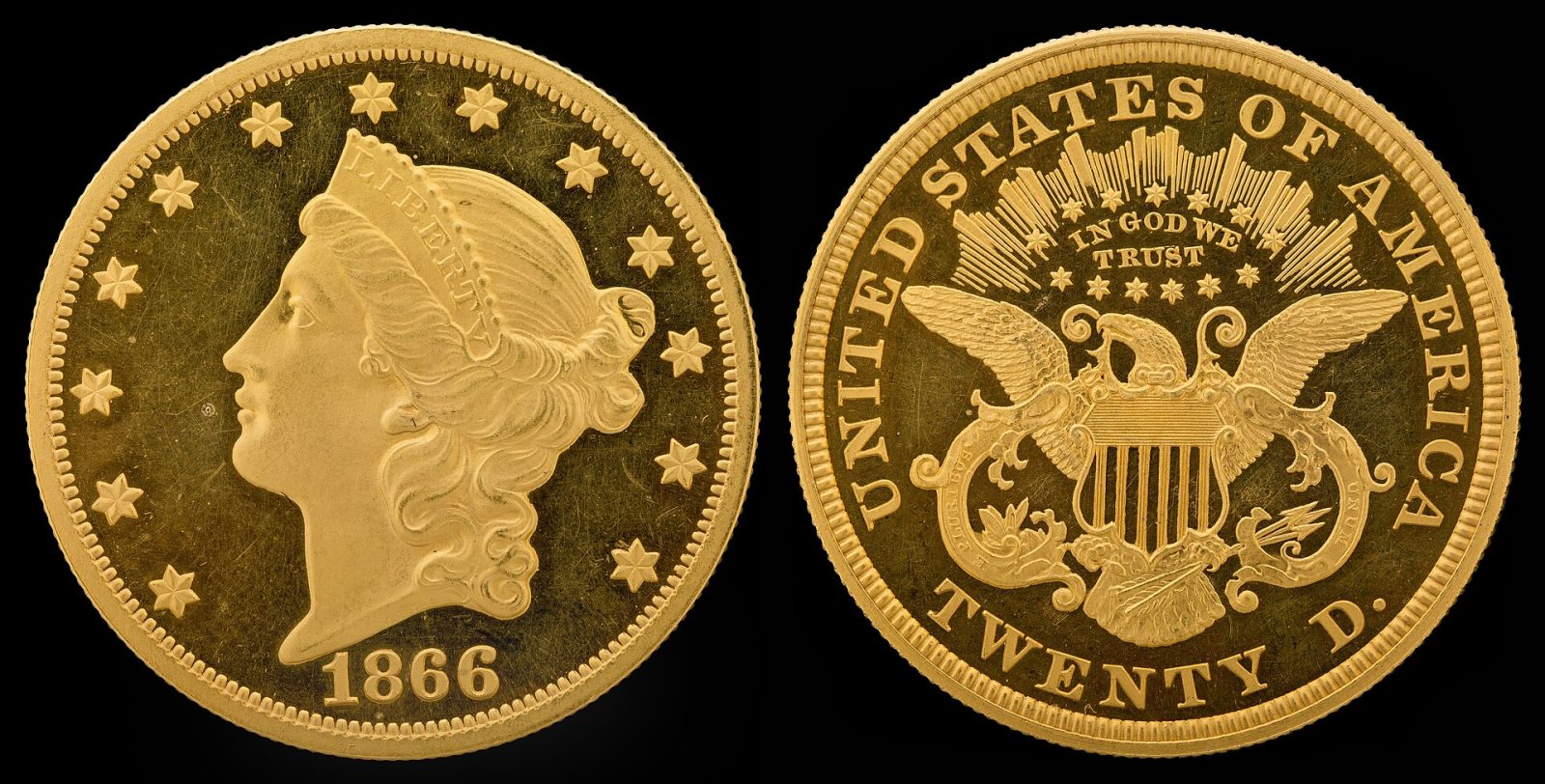
The court record describes about 3,500 gold coins, most of them $1 pieces, none later than 1856, with a face value of about $11,400. Press counts of 3,558 included more than 2,800 gold dollars and over 300 double eagles, while the auction catalogue listed 3,508. Police cleaned coins with coal oil and vinegar. Nobody knows who hid them. Stories of a sea captain are unproven, and one candidate is Andrew J. Saulsbury, who owned the house from 1865 until his death in 1873.
The police commissioner asked the courts to decide who owned the gold. The claimants were cut down to three groups: representatives of a former owner, the building's owners, Elizabeth French and Mary Findlay, and the boys. In February 1935 a decree gave the coins to the finders, and when the owners appealed, the eight judges split evenly, so the decree stood. Perry W. Fuller auctioned them at the Lord Baltimore Hotel on 2 May 1935, in 438 lots, for just under $20,000.
Then came a twist. The boys said that in May 1935 they had found a second container near the first, holding $8,000 to $10,000 in face value. It came out that September, after a burglary complaint by Jones's stepfather. The owners argued that it was gold held back from the first find, and the researcher Leonard Augsburger has concluded that the second find was a cover story. The Maryland court found no evidence of that, but it did not decide who owned the coins. Press reports say that the boys finally won, but Grob had died of pneumonia in 1937, and legal costs greatly reduced what was left. The hoard itself has long since been scattered among collectors.
Written for Global Finds from French v. Jones (Court of Appeals of Maryland, 1936), The E-Sylum, Coin World and Numismatic News. Photo: the auction flier for the Baltimore hoard, 1935, unknown creator, Wikimedia Commons, public domain.
Related guide: Permission to detect: who to ask, and what to agree
Source: French v. Jones, Court of Appeals of Maryland (1936)