The Kingmoor Ring: a gold ring found levelling a fence near Carlisle, carved with a runic spell nobody can read
Famous find Made in the 9th century AD · Found in 1817 See it on the timeline →
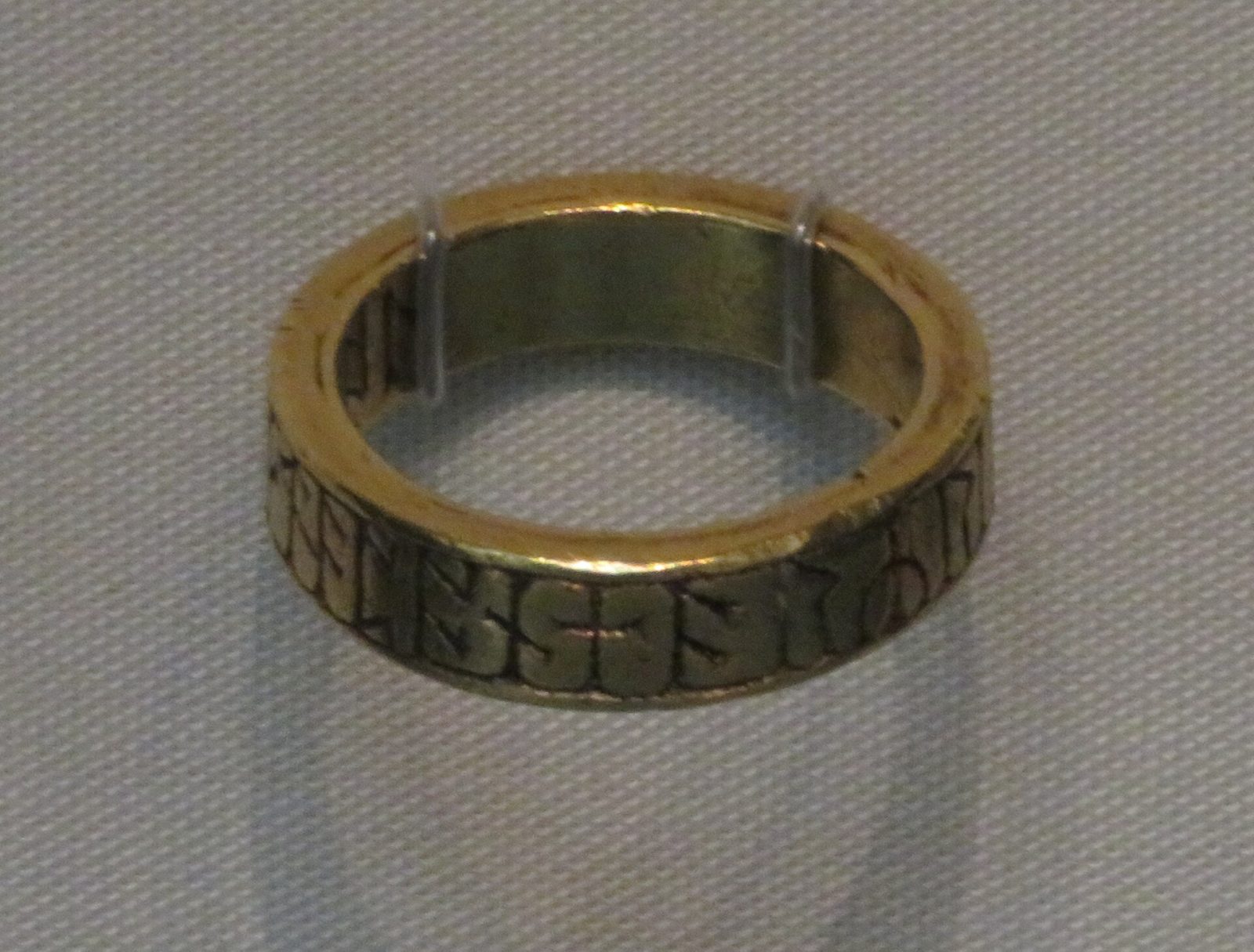
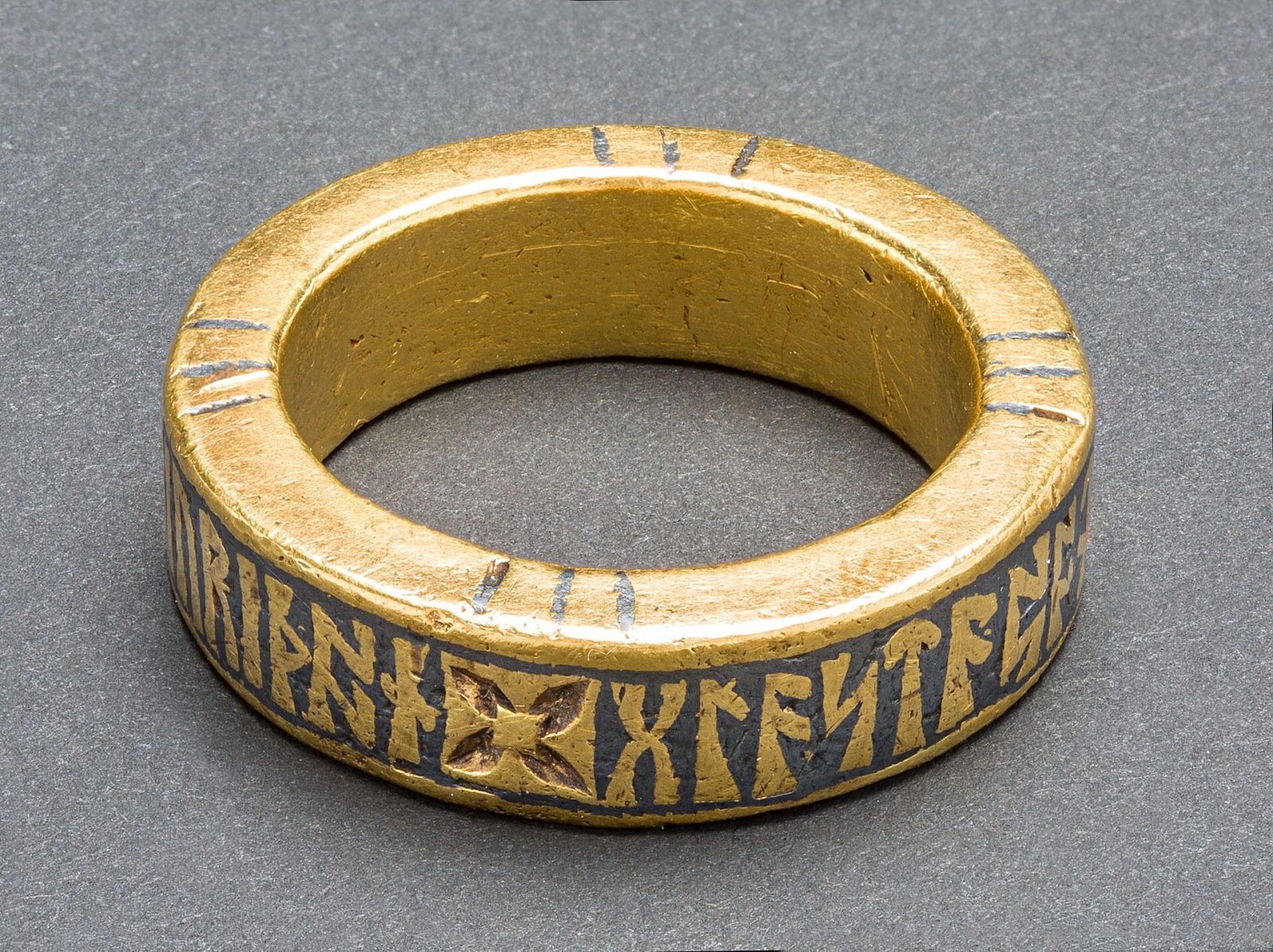
In June 1817 a young man levelling a fence on Greymoor Hill at Kingmoor, near Carlisle, found an Anglo-Saxon gold ring carved with 30 runes. They spell a charm that makes no sense in any language, and an almost identical ring was found on Bramham Moor in Yorkshire.
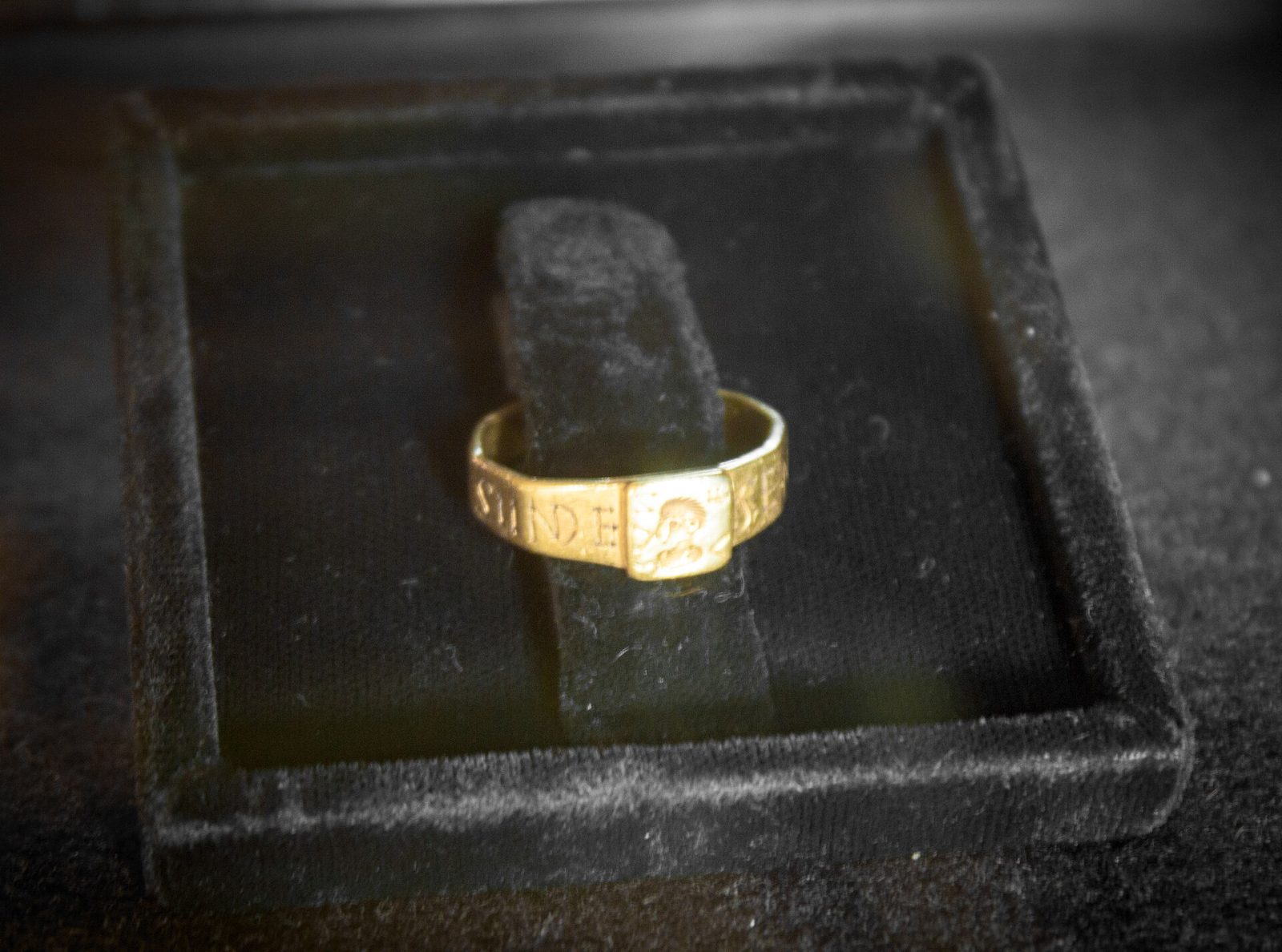
In June 1817, a young man levelling a fence on Greymoor Hill, in the hamlet of Kingmoor about two and a half miles from Carlisle, found a gold ring in the soil. His name was not recorded. The ring soon passed to the Earl of Aberdeen, a keen collector of antiquities, who later gave it to the British Museum.
It is a plain-looking band of gold, about 27 millimetres across, with letters inlaid in niello, a black metal compound. The letters are runes, 30 in all: 27 run around the outside, and the last three are hidden on the inside of the band. Read out, they give ærkriufltkriuriþonglæstæpontol, which means nothing in Old English, Latin or any other known language.
That is the point. Scholars think it is a charm, a string of powerful-sounding words meant to work by being worn. In 1935 the runologist Bruce Dickins compared its opening with a charm in Bald's Leechbook, a 10th-century English book of remedies, used to stop bleeding, so the Kingmoor ring may have been worn to protect against wounds or illness. It is usually dated to the 9th century.
The most remarkable thing is that it is not alone. A gold ring found on Bramham Moor in West Yorkshire, recorded by 1736, carries almost exactly the same spell in three groups of runes, and it is now in the National Museum of Denmark in Copenhagen. A third ring with the same words, carved in agate, is known from Linstock Castle, also near Carlisle. Three rings from places a hundred miles apart, all bearing the same meaningless words, suggest a charm that was widely known and trusted in Anglo-Saxon England.
The Kingmoor ring is in the British Museum in London, among its Anglo-Saxon collections.
Written for Global Finds from E. Okasha, "Anglo-Saxon Inscribed Rings", Leeds Studies in English (2003), R. I. Page, An Introduction to English Runes (1999), and the British Museum. Photo: the Kingmoor ring in the British Museum, BabelStone, Wikimedia Commons, CC BY-SA 3.0.
Linked finds
Source: E. Okasha, Anglo-Saxon Inscribed Rings, Leeds Studies in English (2003)