The Edward the Martyr Penny: one last signal after three bullets brought up a coin of a murdered boy king
Famous find Struck AD 975 to 978 · Found in 2018 See it on the timeline →
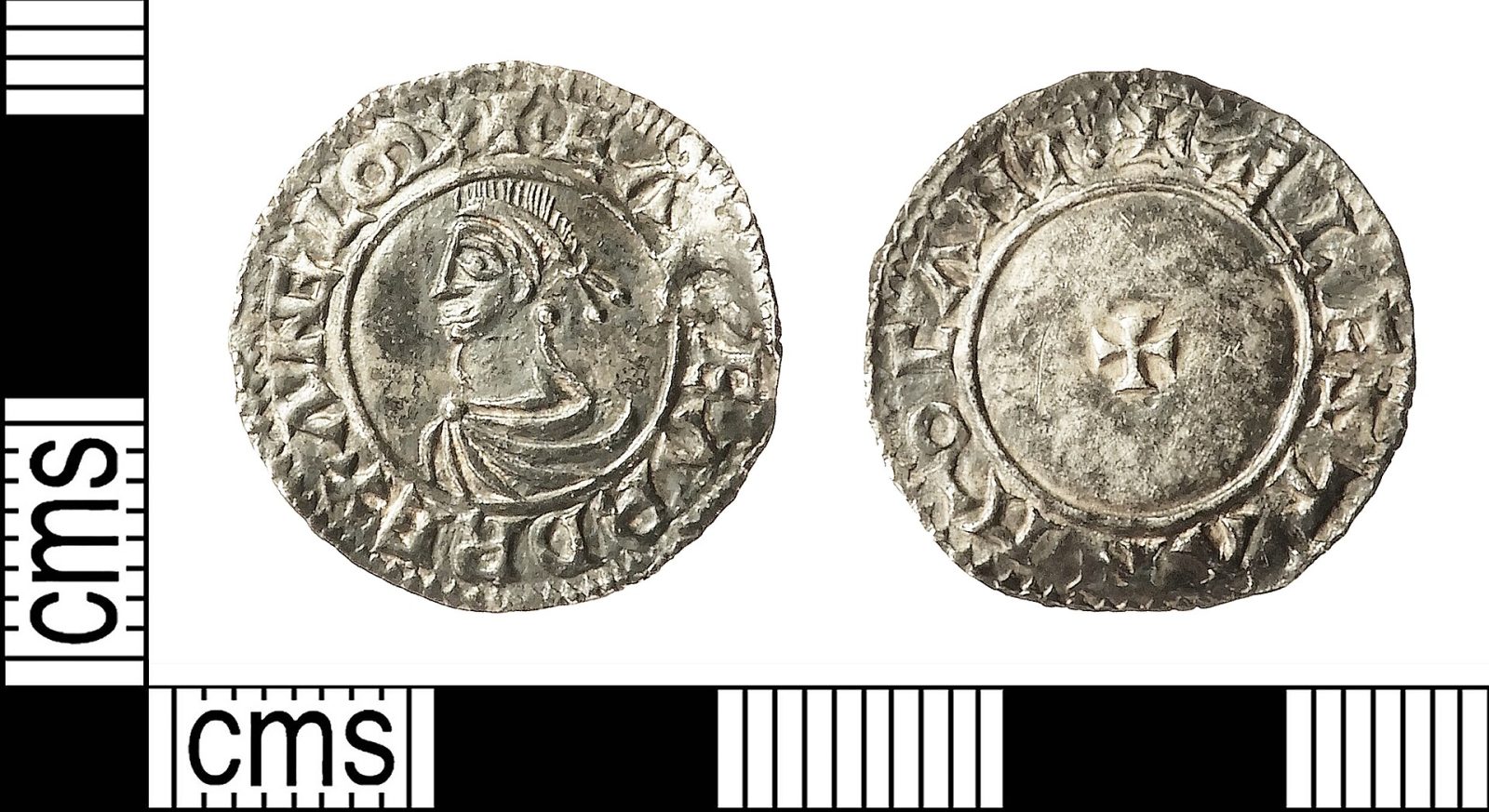
In March 2018 a retired council worker detecting with his club on the Isle of Wight was about to give up after digging three lead bullets in one spot. One more signal there gave him a silver penny of Edward the Martyr, the teenage king murdered at Corfe in 978.
In March 2018, a 68-year-old retired council worker who had been detecting for 28 years was out with his local club on a ploughed field on the Isle of Wight. In one spot he dug up three .22 lead bullets, one after another, and was ready to give up. He tried one more signal in the same place, dug down four or five inches, and found a silver penny. The finder asked not to be named. The coin was recorded with the Portable Antiquities Scheme by the island's Finds Liaison Officer.
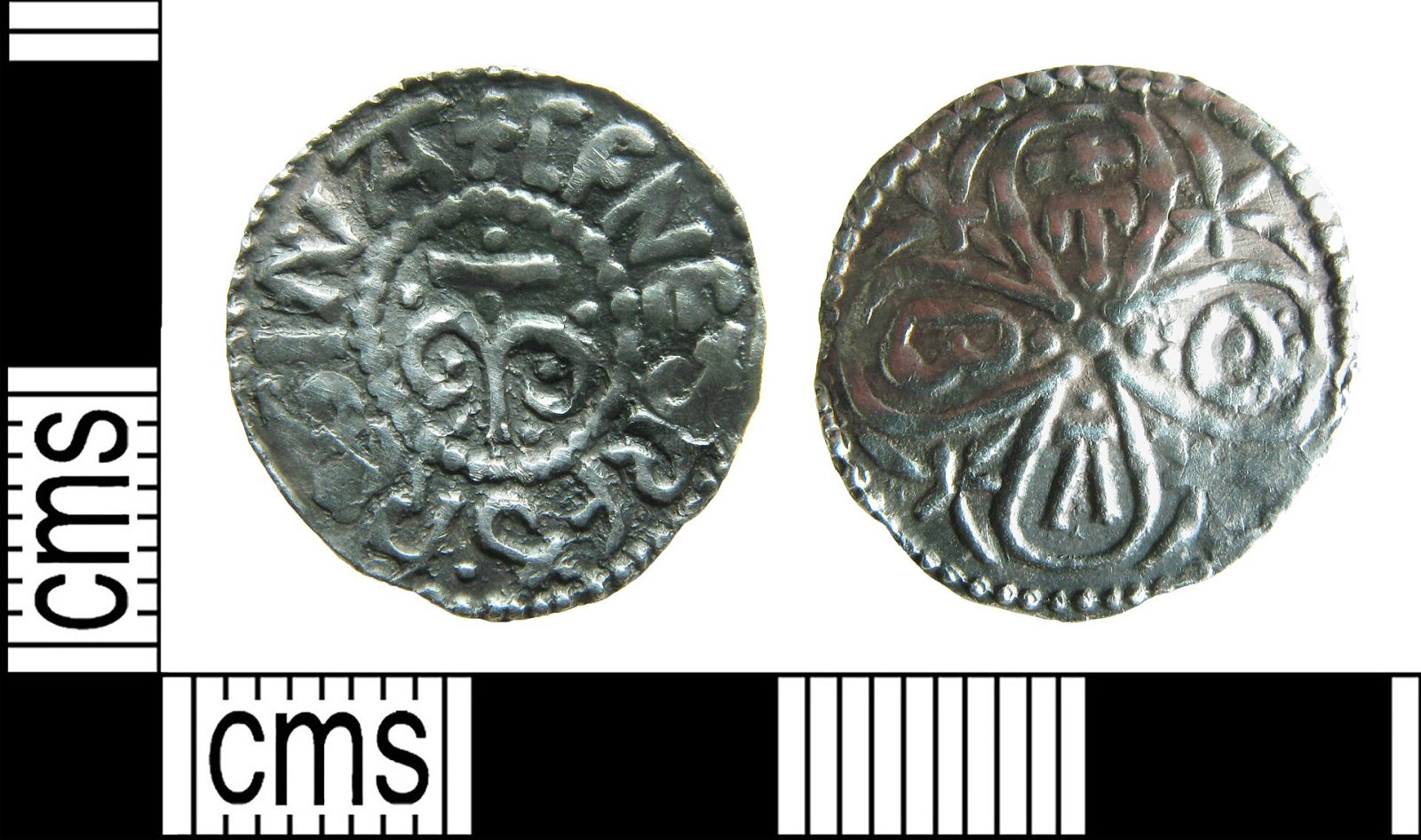
It is a penny of Edward, King of the English from 975 to 978. On the front is the king's head, facing left and wearing a diadem, with the words EADWEARD REX ANGLORUM, Edward King of the English. On the back is a small cross and the name of the moneyer, Ælfstan, at Canterbury. It is 19.5 millimetres across and weighs 1.47 grams.
Edward's story is one of the darkest in Anglo-Saxon history. He was about 13 when his father, King Edgar, died, and he was chosen as king over his younger half-brother Æthelred. On 18 March 978, aged about 16, Edward rode to visit Æthelred and his stepmother at their hall at Corfe, in Dorset, where Corfe Castle now stands. There he was killed by Æthelred's supporters. Æthelred, later known as the Unready, became king. Miracles were soon reported at Edward's grave, and he was venerated as a saint and martyr. His remains were moved to Shaftesbury Abbey, and bones believed to be his were found there in 1931; they are now kept at a church of the Russian Orthodox Church Outside Russia at Brookwood in Surrey.
Edward's coins come from a reign of only three years and are scarce. As a single silver coin, the penny was not Treasure, so it stayed with the finder. Dix Noonan Webb sold it on 22 April 2020 with an estimate of £5,000 to £7,000, and it made £11,160 including the buyer's premium, bought by a collector in the United Kingdom. It is in a private collection.
Written for Global Finds from Coin World (2020), the Dix Noonan Webb announcement in The E-Sylum (2020) and the Portable Antiquities Scheme. Photo: the Isle of Wight penny of Edward the Martyr, Frank Basford, Portable Antiquities Scheme, Wikimedia Commons, CC BY 2.0.
Linked finds
Source: Coin World (2020)