The Combe Bissett Penny: a coin of Queen Cynethryth, the only Anglo-Saxon queen to strike money in her own name
Famous find Struck about AD 770 to 792 · Found in 2013 See it on the timeline →
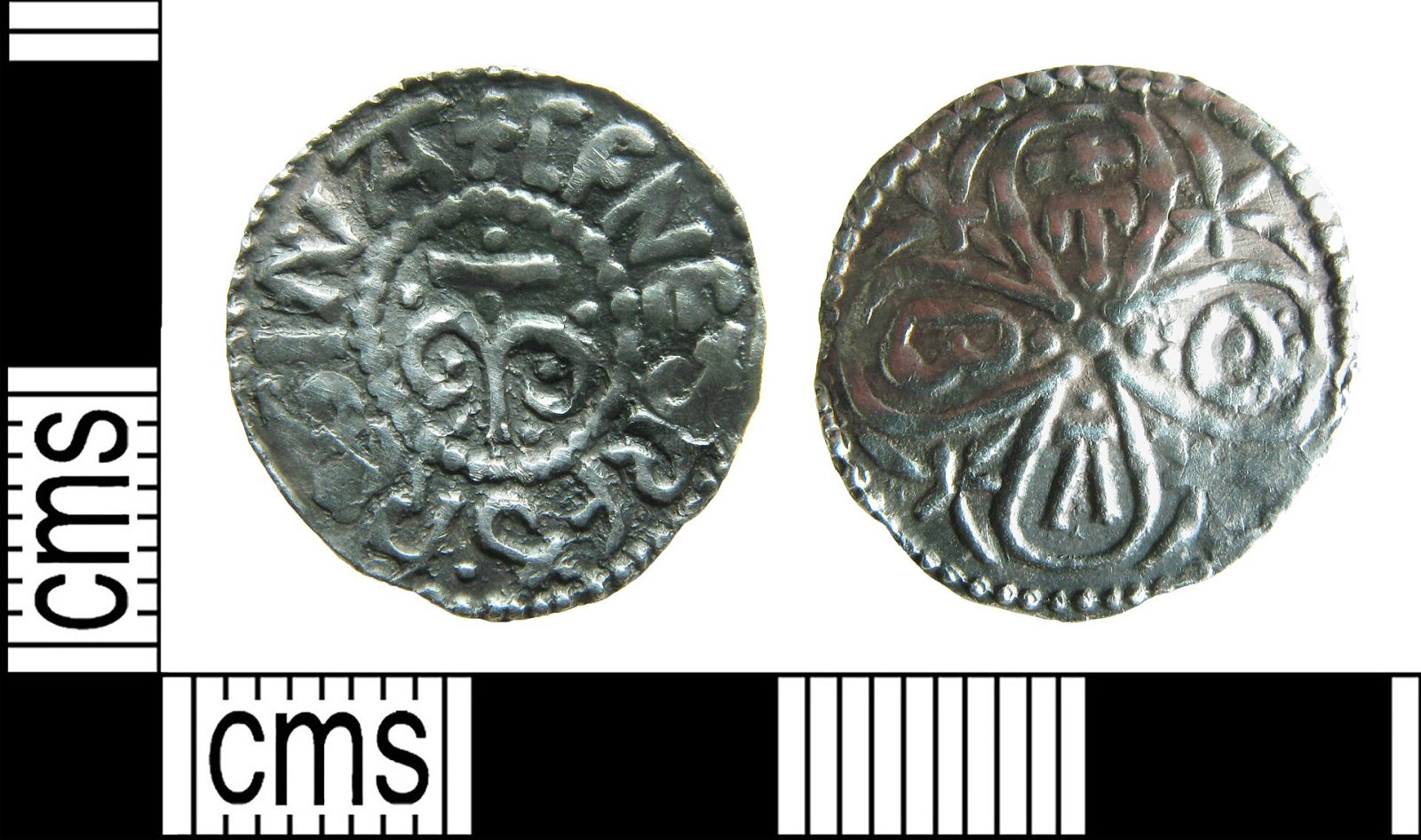
On 25 September 2013 a metal detectorist near Combe Bissett in Wiltshire found a silver penny of Cynethryth, wife of King Offa of Mercia. She is the only Anglo-Saxon queen known to have had coins struck in her own name, and only about 54 of her coins are recorded.
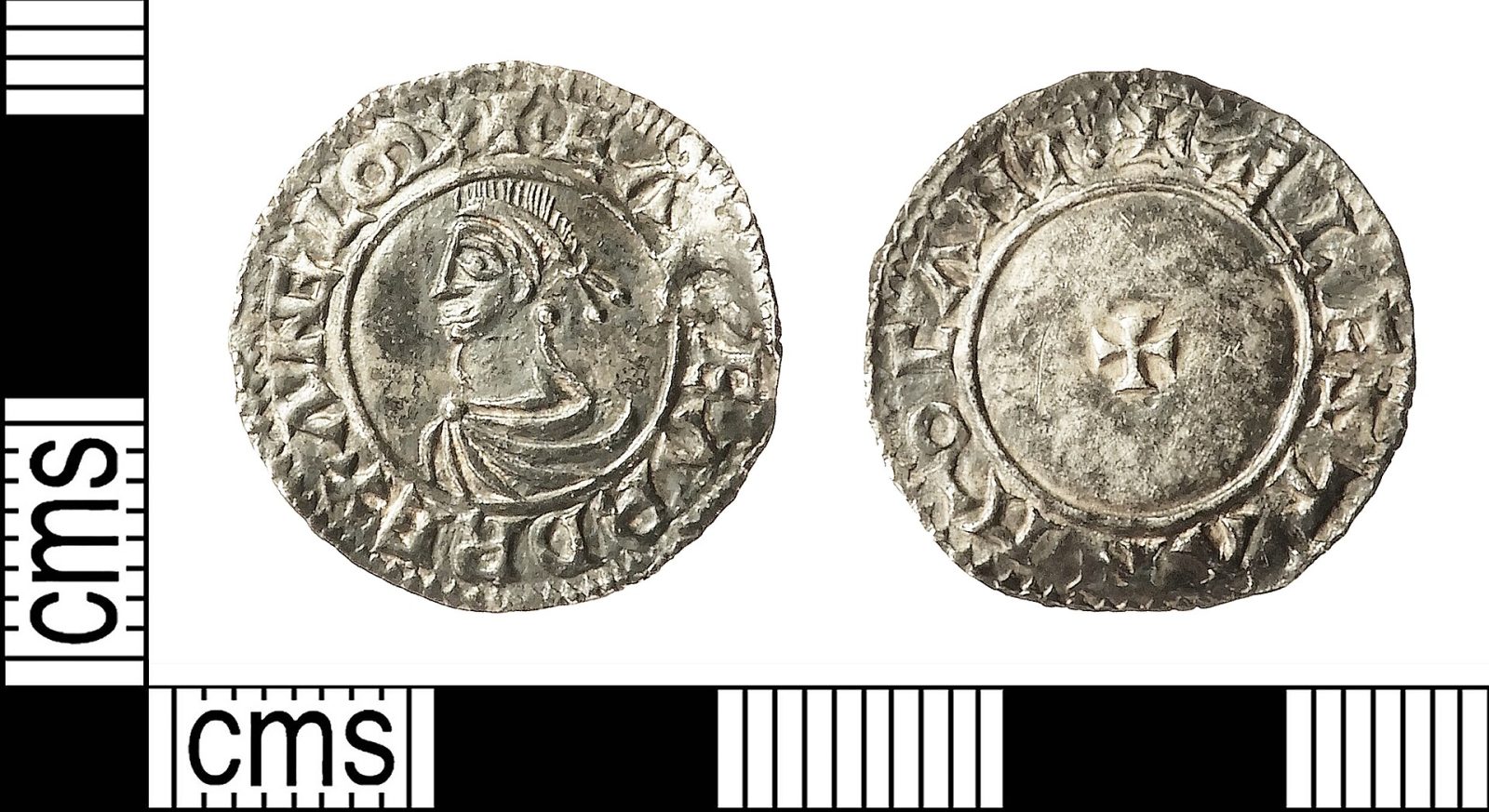
On 25 September 2013, a metal detectorist searching land near Combe Bissett, a village just south-west of Salisbury in Wiltshire, found a small, crimped silver penny. The finder's name has not been published. The coin was recorded with the Portable Antiquities Scheme and the Wiltshire Museum, and photographed by the Scheme that November.
It is a penny of Cynethryth, queen of Mercia and wife of King Offa, the most powerful ruler in England in the late 8th century. It weighs 1.25 grams. On the front, around a large letter M for Merciorum, "of the Mercians", is her name and title: CYNETHRYTH REGINA, Queen Cynethryth. On the back, the name of the moneyer, Eoba, sits in the arms of a four-lobed frame over a long cross. It was struck at Canterbury, probably in the 780s.
No other Anglo-Saxon queen is known to have issued coins in her own name, and the historian Gareth Williams has described Cynethryth's coins as unique in western Europe at the time. Some show her portrait, possibly modelled on Roman empresses. She witnessed royal charters alongside her husband and was styled queen, a sign of real status at Offa's court. Later chroniclers painted her as a villain and blamed her for the killing of King Æthelberht of East Anglia in 794, but that story was written long afterwards and may not be true. After Offa's death she became abbess of a monastery at Cookham, beside the Thames, and in 2021 archaeologists from the University of Reading found remains thought to belong to it.
When the coin was sold at auction by Spink in 2020, the cataloguers counted about 54 coins of Cynethryth recorded in total, only around a dozen of them of this design without a portrait, and more than half of those chipped or broken. They described the Combe Bissett penny as among the finest known of its type. As a single silver coin it was not Treasure, so it stayed with the finder. It sold for £5,500 in 2020 and is now in a private collection, not on public display.
Written for Global Finds from Spink (2014 and 2020), the Portable Antiquities Scheme (HAMP-73ADA0) and G. Williams, "Mercian coinage and authority" (2001). Photo: the Combe Bissett penny of Cynethryth, Alastair Willis, Portable Antiquities Scheme, Wikimedia Commons, CC BY-SA 2.0.
Linked finds
Source: Spink (2020)