The Stephen and Matilda Penny: a king and queen face to face on a coin from the Anarchy, found on a second visit to a field
Famous find Struck at York in the early 1140s · Found in 2018 See it on the timeline →
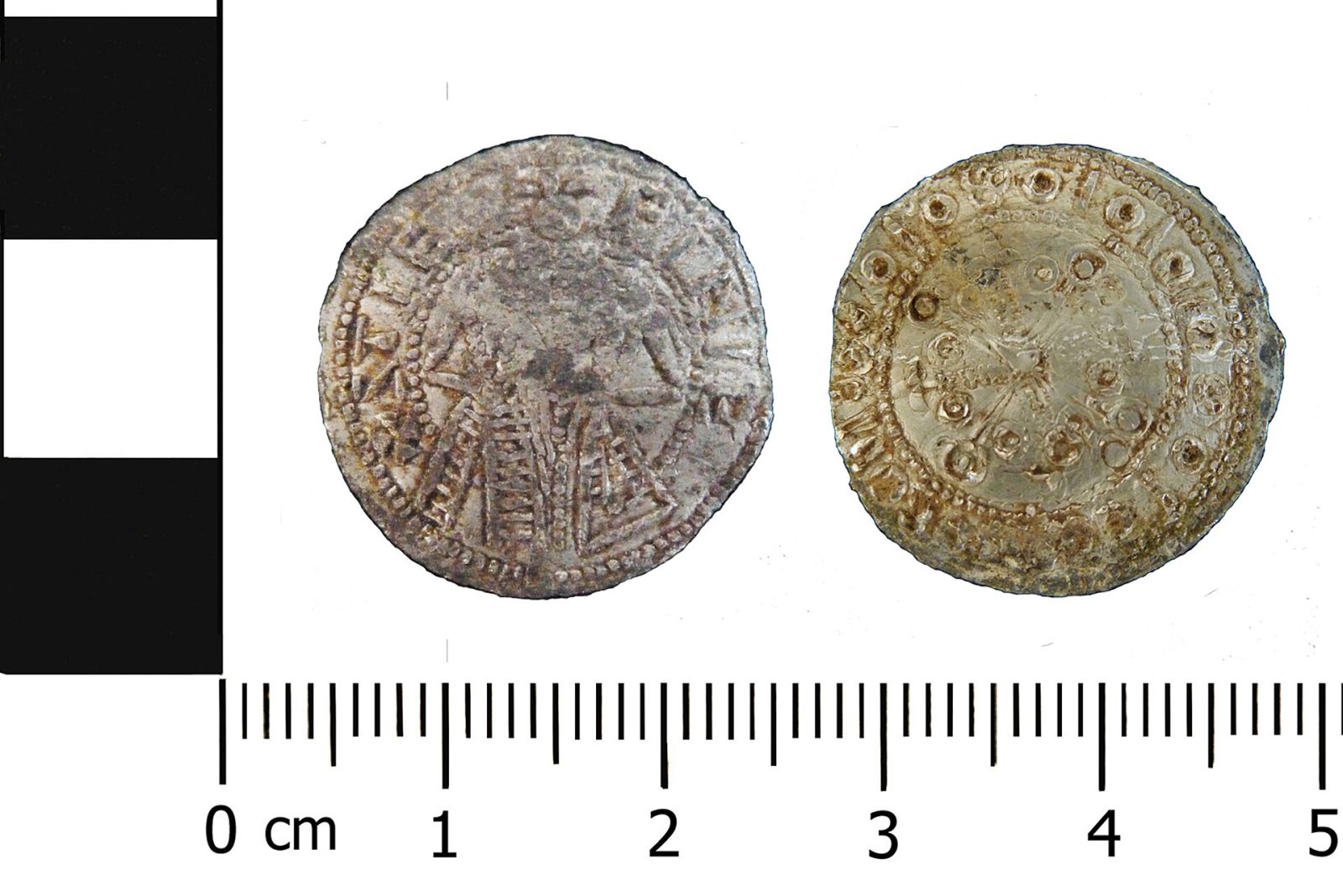
In October 2018 detectorist Graeme Rushton, on only his second visit to a ploughed field on the South Yorkshire and Lincolnshire border, found a York penny showing King Stephen and Queen Matilda holding a sceptre between them. About 25 are known.
In October 2018, Graeme Rushton, a detectorist since the age of eight who runs a detector shop in Cumbria, was searching a freshly ploughed field on the border of South Yorkshire and Lincolnshire. It was only his second visit to the site. After about 45 minutes, five or six inches down, he found a small silver penny. At first he did not recognise it. When he sent photographs to the Fitzwilliam Museum in Cambridge, which records early medieval coin finds, its importance became clear.
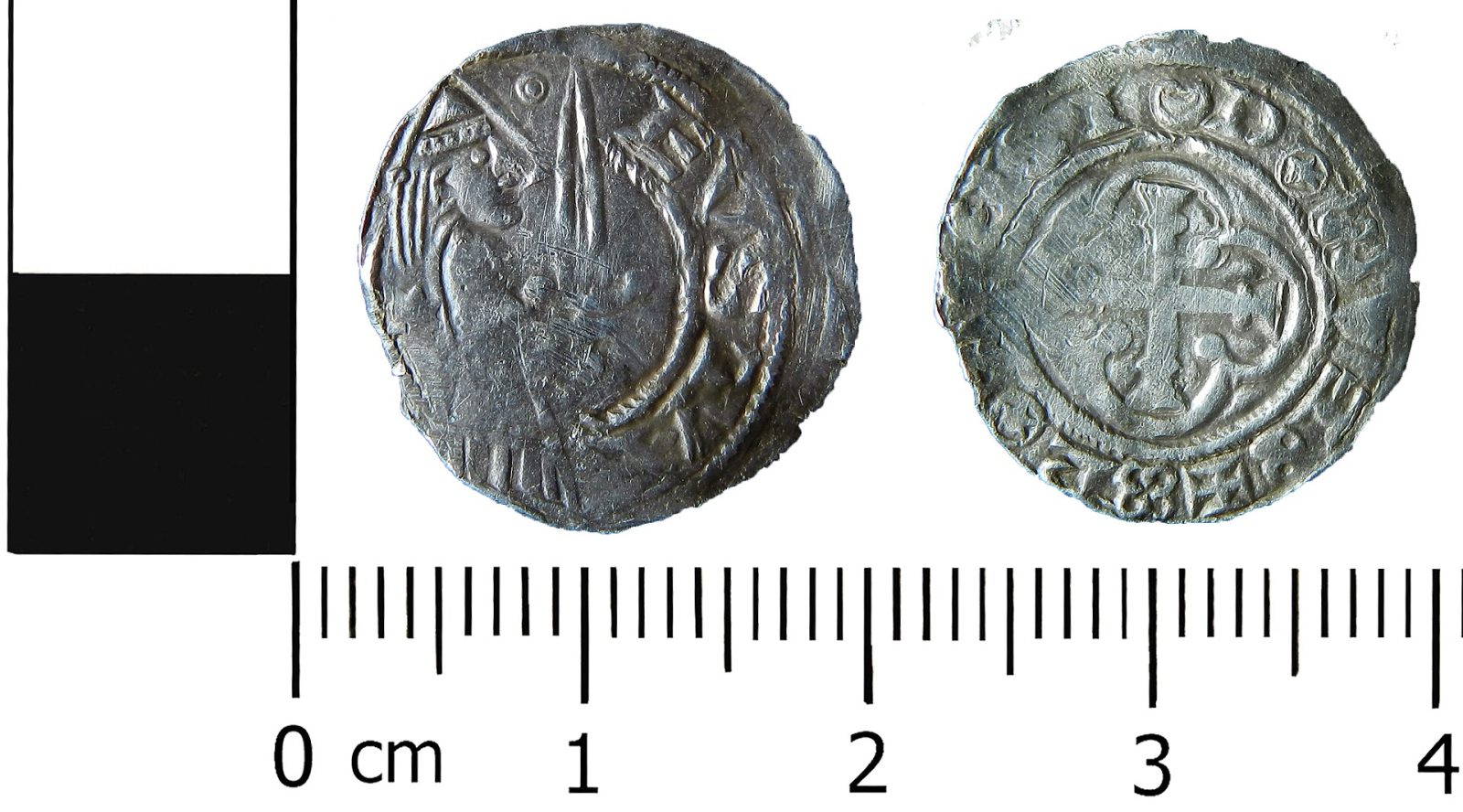
The coin is a penny struck at York in the early 1140s, in the reign of King Stephen. Its design is almost unique among English medieval coins. Instead of a single royal head, it shows two standing figures facing each other and holding a tall sceptre between them, with the legend STIENS, for Stephen. The second figure is Stephen's queen, Matilda of Boulogne, not his great rival, the Empress Matilda. On the other side is an ornate cross. Only about 25 coins of this type are known.
Stephen's reign was the period known as the Anarchy, a long civil war between Stephen and his cousin the Empress Matilda, daughter of Henry I, over the English crown. In 1141 Stephen was captured at the Battle of Lincoln, and it was his queen, Matilda of Boulogne, who kept his cause alive, raising an army and negotiating his release. Coins showing the king and queen together may have been struck in York to celebrate the royal couple, perhaps around a royal visit in 1142. In the chaos of the war, royal control of the coinage broke down, and the York mint produced several unusual types like this one.
As a single silver coin, the penny was not Treasure, so it belonged to the finder and the landowner. It was sold by Dix Noonan Webb in London on 16 September 2020, with an estimate of £5,000 to £10,000, for a hammer price of £8,500, or £10,540 with the buyer's premium. It is in a private collection.
Written for Global Finds from Coin World (2020), Medievalists.net (2020) and The E-Sylum (2020). Photo: another York penny of Stephen and Matilda of the same type, not the Rushton coin, John Naylor, Portable Antiquities Scheme, Wikimedia Commons, CC BY-SA 4.0.
Linked finds
Source: Coin World (2020)