The Haslingfield Shilling: a drainage engineer's 'button with a cross' was a gold Anglo-Saxon coin copied from a Roman prince
Famous find Struck about AD 650 to 675 · Found in 2022 See it on the timeline →
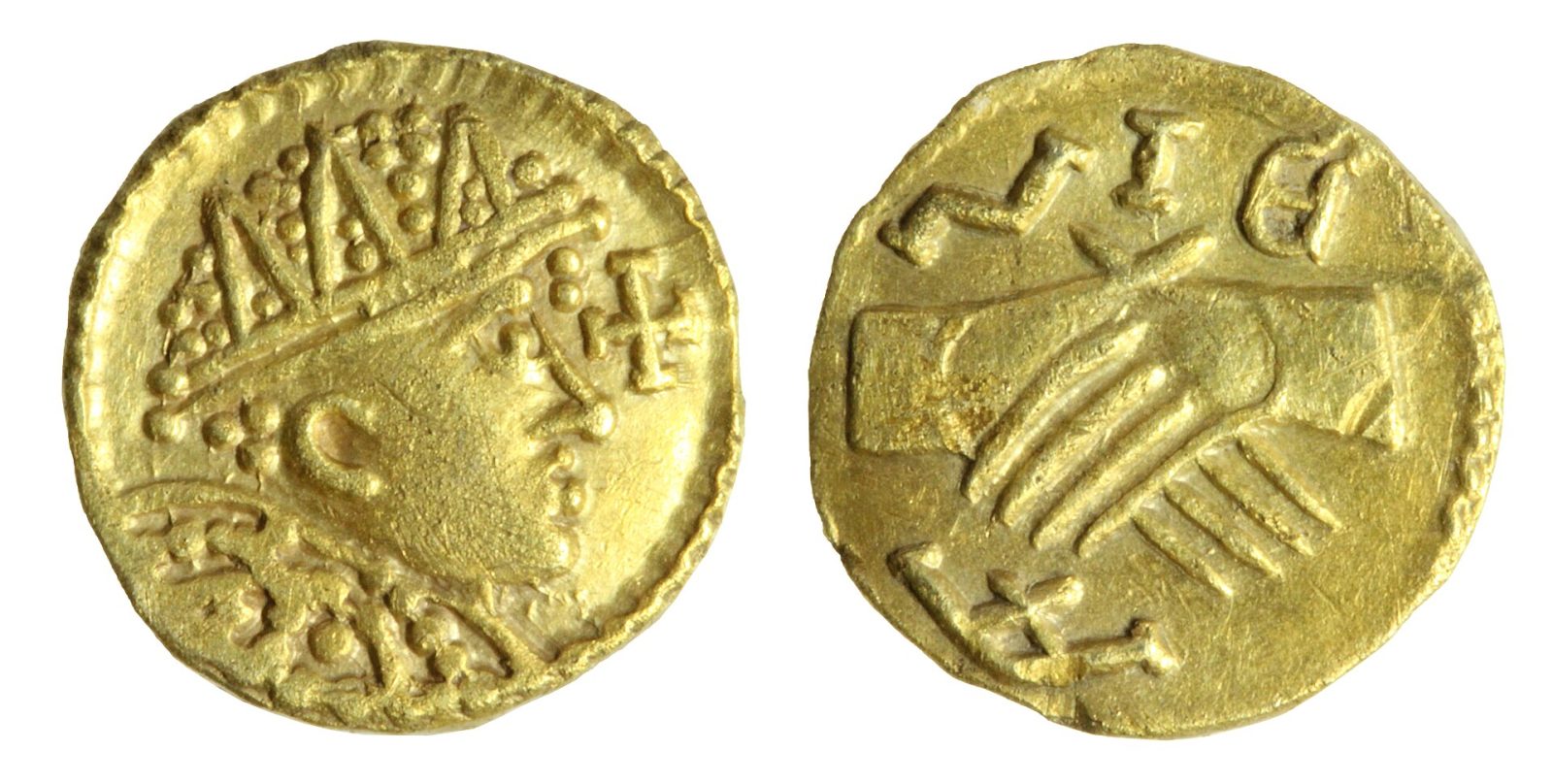
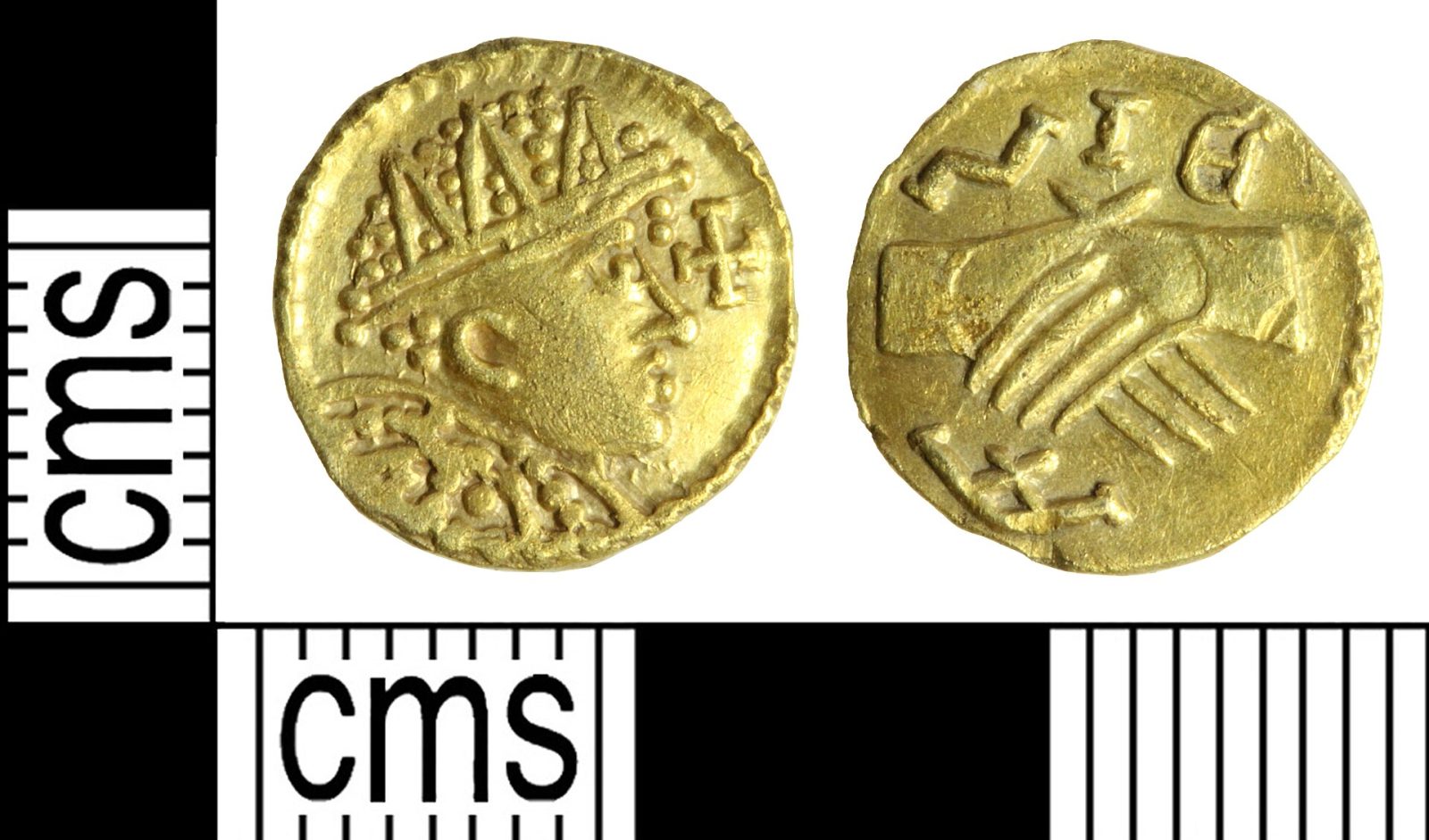
On 3 January 2022 detectorist Mark Pallett found what he took for a button in a stubble field at Haslingfield, Cambridgeshire. It was a tiny 7th-century Anglo-Saxon gold shilling copied from a coin of the Roman prince Crispus, only the ninth known.
On 3 January 2022, Mark Pallett, a 55-year-old drainage engineer from Brentwood in Essex, was detecting a stubble field at Haslingfield, south-west of Cambridge, that he had searched many times before. Fifteen minutes into the session, about four inches down, he dug up a small gold disc that he first took for a button with a cross on it. When he realised what it was, he said, he was shaking. He has said that his best finds always seem to come in the first two weeks of January.
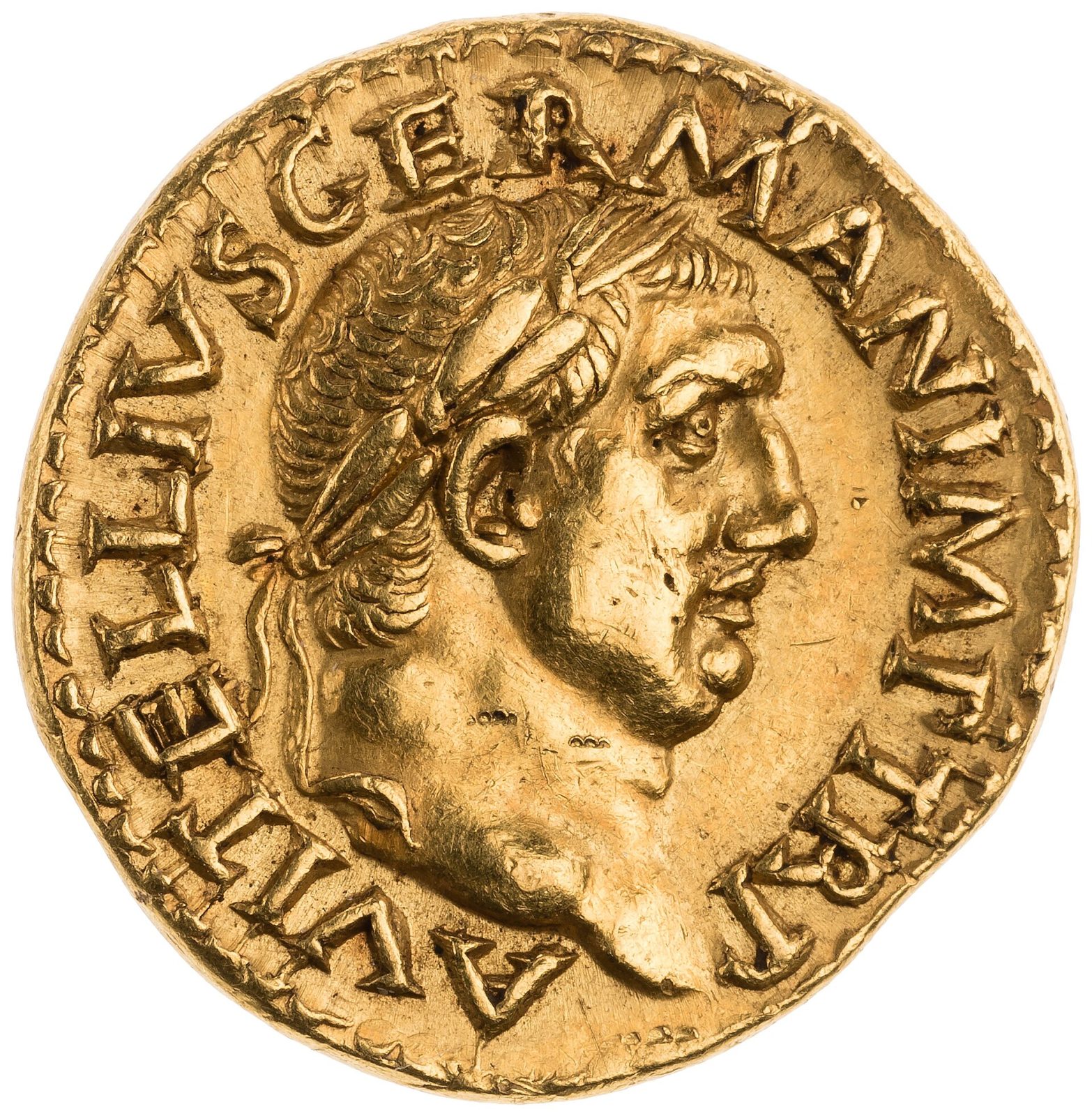
It was an Anglo-Saxon gold shilling, also called a thrymsa, only 13 millimetres across and weighing 1.3 grams. Its design was copied from a Roman coin of the 4th century: a gold coin of Crispus, the eldest son of the emperor Constantine the Great, who was put to death on his father's orders in AD 326. Three hundred years later, an Anglo-Saxon die-cutter took the helmeted bust from one of his coins as a model. Around it is a legend in runes, which has been read as "Delaiona". The numismatist Marion Archibald suggested it was a mint name for London, while Nigel Mills of the auctioneers Dix Noonan Webb thought it more likely to be the name of the moneyer.
These are among the first gold coins made in England since Roman times, struck in the middle of the 7th century, around 650 to 675, as the Anglo-Saxon kingdoms grew richer and more Christian. Pallett's coin was only the ninth known of the Crispus type. The British Museum and the Fitzwilliam Museum in Cambridge each hold just one.
As a single coin it was not Treasure. Dix Noonan Webb sold it in London in March 2022 against an estimate of £8,000 to £10,000, and it was bought by a dealer in the room for a client for a hammer price of £15,000, or £18,600 with the buyer's premium. Half the money went to the farmer.
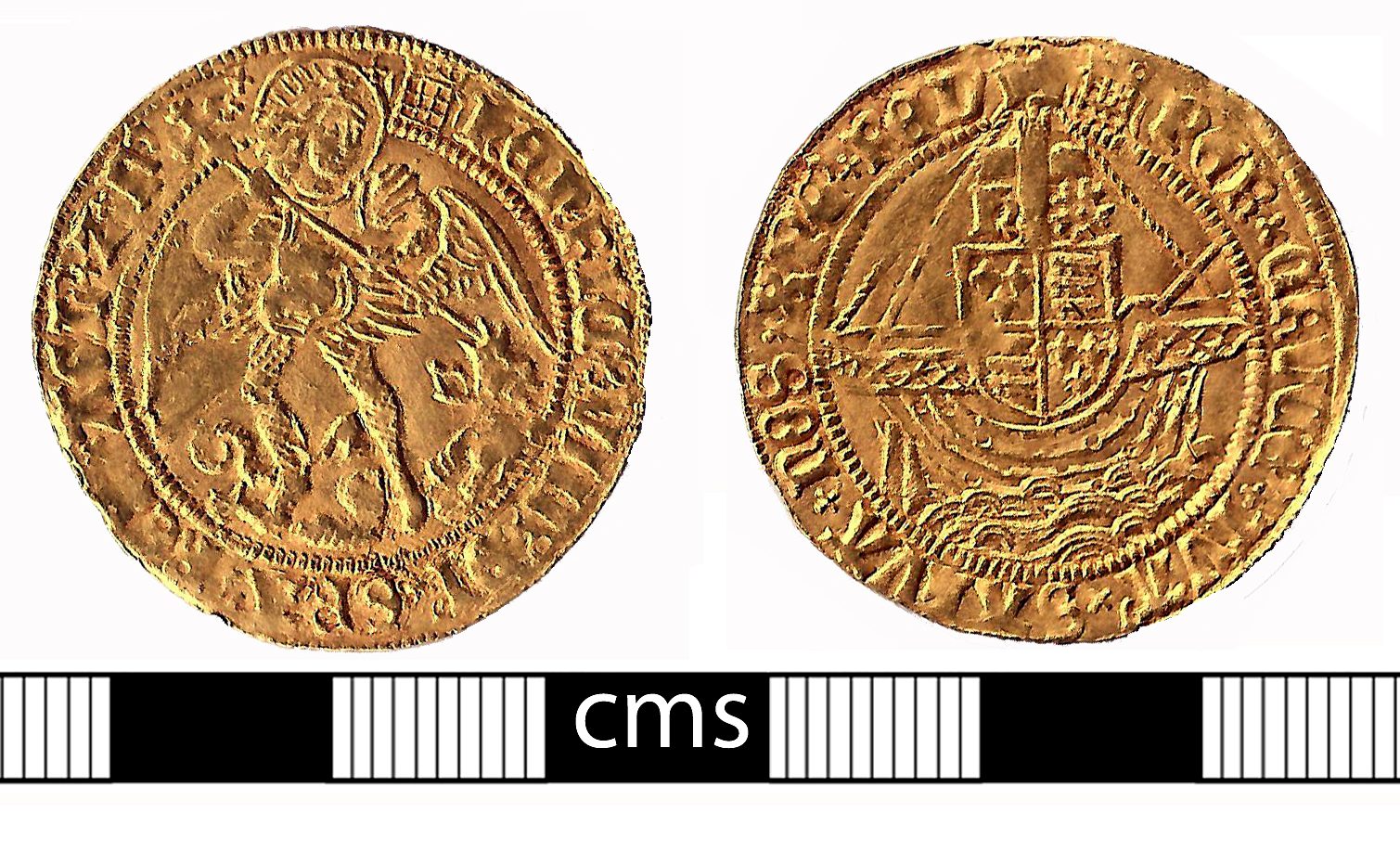
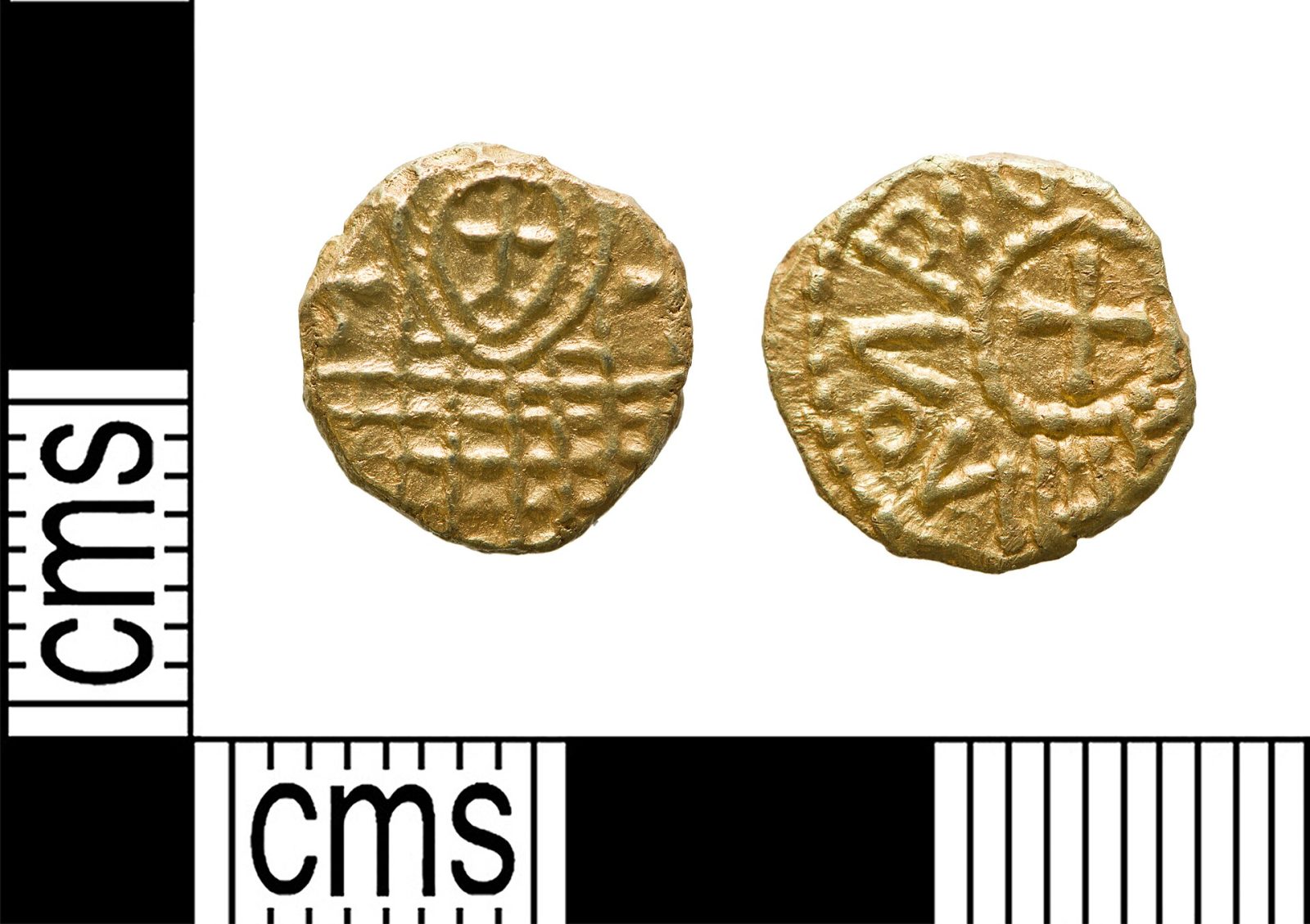
Written for Global Finds from Coin World (2022) and the Antiques Trade Gazette (2022). Photo: an Anglo-Saxon gold shilling of the same period but a different type, not the Haslingfield coin, Portable Antiquities Scheme and British Museum, Wikimedia Commons, CC BY-SA 2.5.
Linked finds
Source: Coin World (2022)