The Esunertos Coin: a detectorist's tiny gold coin revealed the name of a British ruler nobody knew existed
Famous find Struck about 50 to 30 BC · Found in 2023 See it on the timeline →
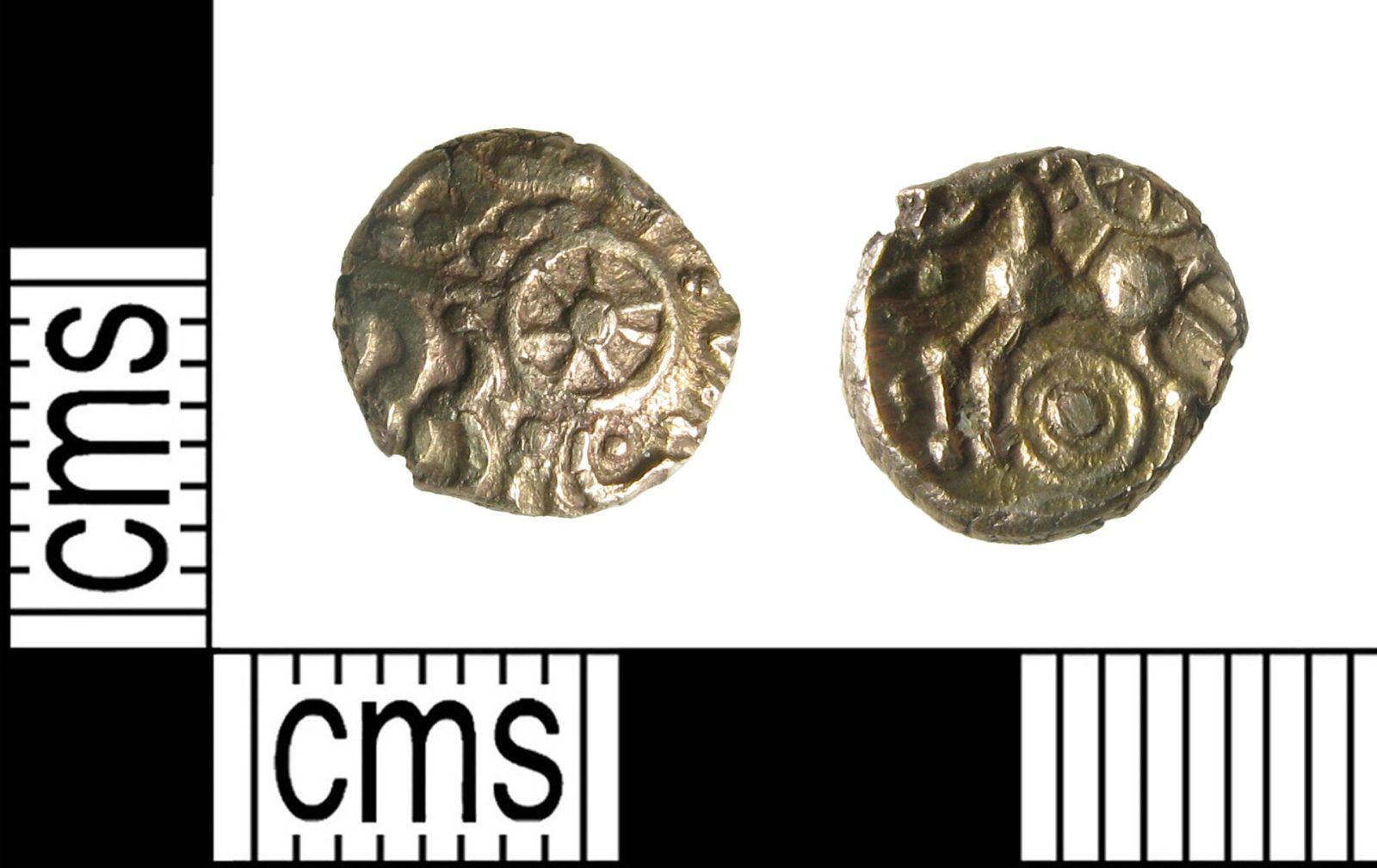
On 12 March 2023 detectorist Lewis Fudge found a small Iron Age gold coin in the Test Valley, Hampshire. Its legend named Esunertos, a ruler unknown to history, struck around 50 to 30 BC. It sold for a record £17,000 hammer price.
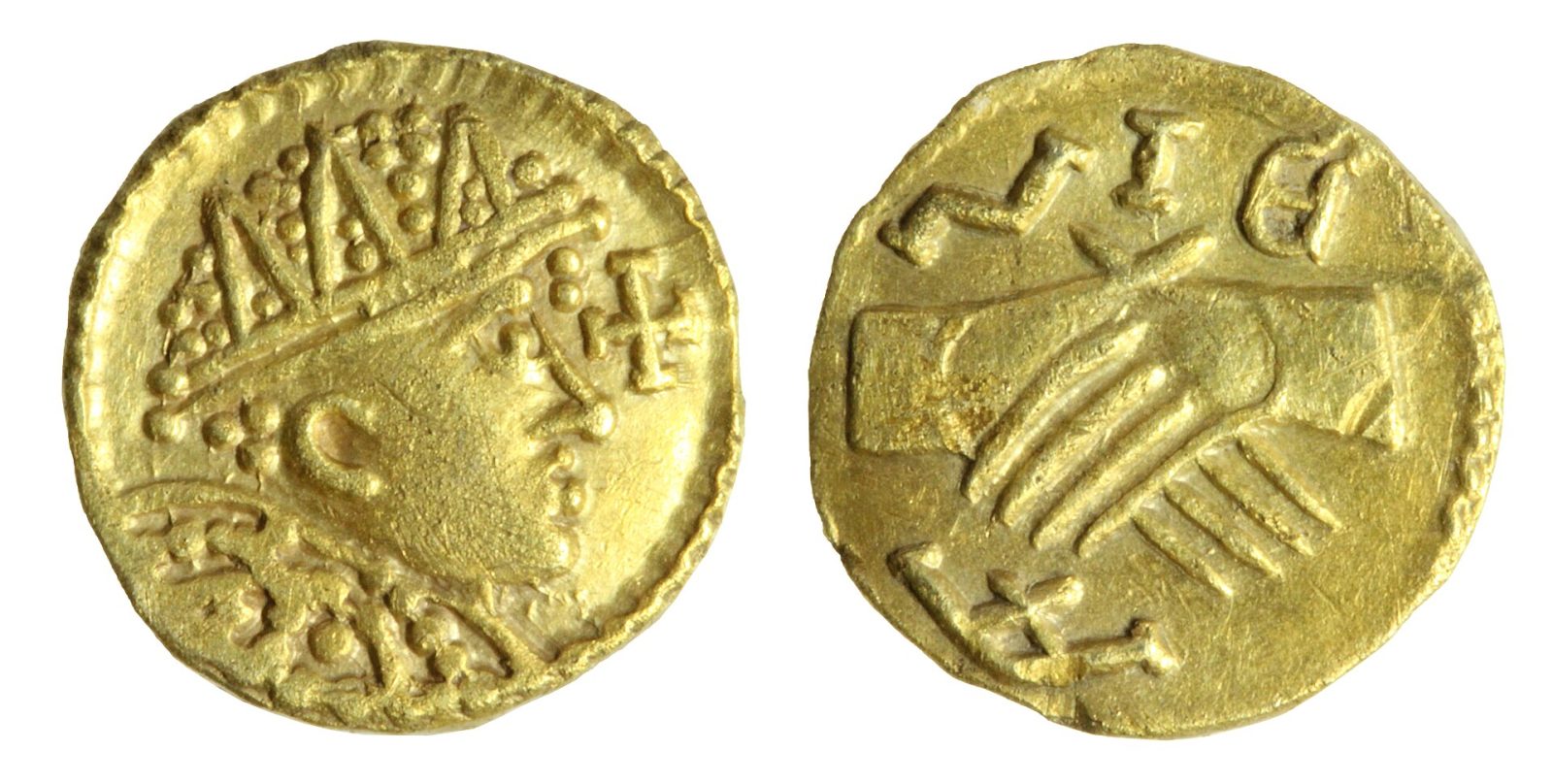
On 12 March 2023, the metal detectorist Lewis Fudge found a tiny gold coin in a field in the Test Valley in Hampshire. It is only about 12 millimetres across and weighs 1.2 grams. On one side is a head of the god Apollo, broken up into crescents in the Celtic style, with a seven-spoked wheel where the ear should be. On the other is a horse with three tails and a wheel above it. Around the head runs a short legend.
It took detective work to read it. Specialists at the auction house Spink compared Fudge's coin with two others: a similar gold quarter stater recorded with the Portable Antiquities Scheme in Hampshire in 2014, which had been logged as having no inscription, and a silver coin in their own records that nobody had understood. Each coin had been struck from different dies, and each showed a different part of the legend. Put together, they spelled out IISVNIIRTOS, with the double I standing for an E: Esunertos. The name is read as meaning "mighty as Esos", a Celtic god. It is one of the earliest names to appear on a British coin.
Esunertos is otherwise completely unknown. The coins date from around 50 to 30 BC, the years just after Julius Caesar's invasions of Britain, when the region was ruled by Commios, a Gaulish leader who had fled to Britain after turning against Caesar. All three coins come from around the upper River Test, near the great hillfort of Danebury, which suggests that Esunertos ruled in that area. John Sills of the Ashmolean Museum called it one of the outstanding discoveries of recent decades in Celtic coins.
As a single gold coin, it was not Treasure, so it belonged to the finder and the landowner. Fudge turned down private offers and sent it to auction. Spink sold it in London on 28 September 2023, against an estimate of £4,000, for a hammer price of £17,000, a record for a British Iron Age quarter stater. Its buyer has not been named.
Written for Global Finds from Spink (2023), Detecting Finds (2023), Numismatic News and Archaeology magazine (2023). Photo: the other known gold quarter stater of Esunertos, found in Hampshire in 2014 and first recorded as uninscribed, not Lewis Fudge's coin, Katie Hinds, Winchester Museums Service, Portable Antiquities Scheme, Wikimedia Commons, CC BY 2.0.
Linked finds
Source: Spink (2023)