The Ajanta Solidus: a Roman emperor's gold coin, pierced for wearing, in the monastery beside India's painted caves
Famous find Struck in the reign of Theodosius II, AD 402 to 450 · Found in 2001 See it on the timeline →
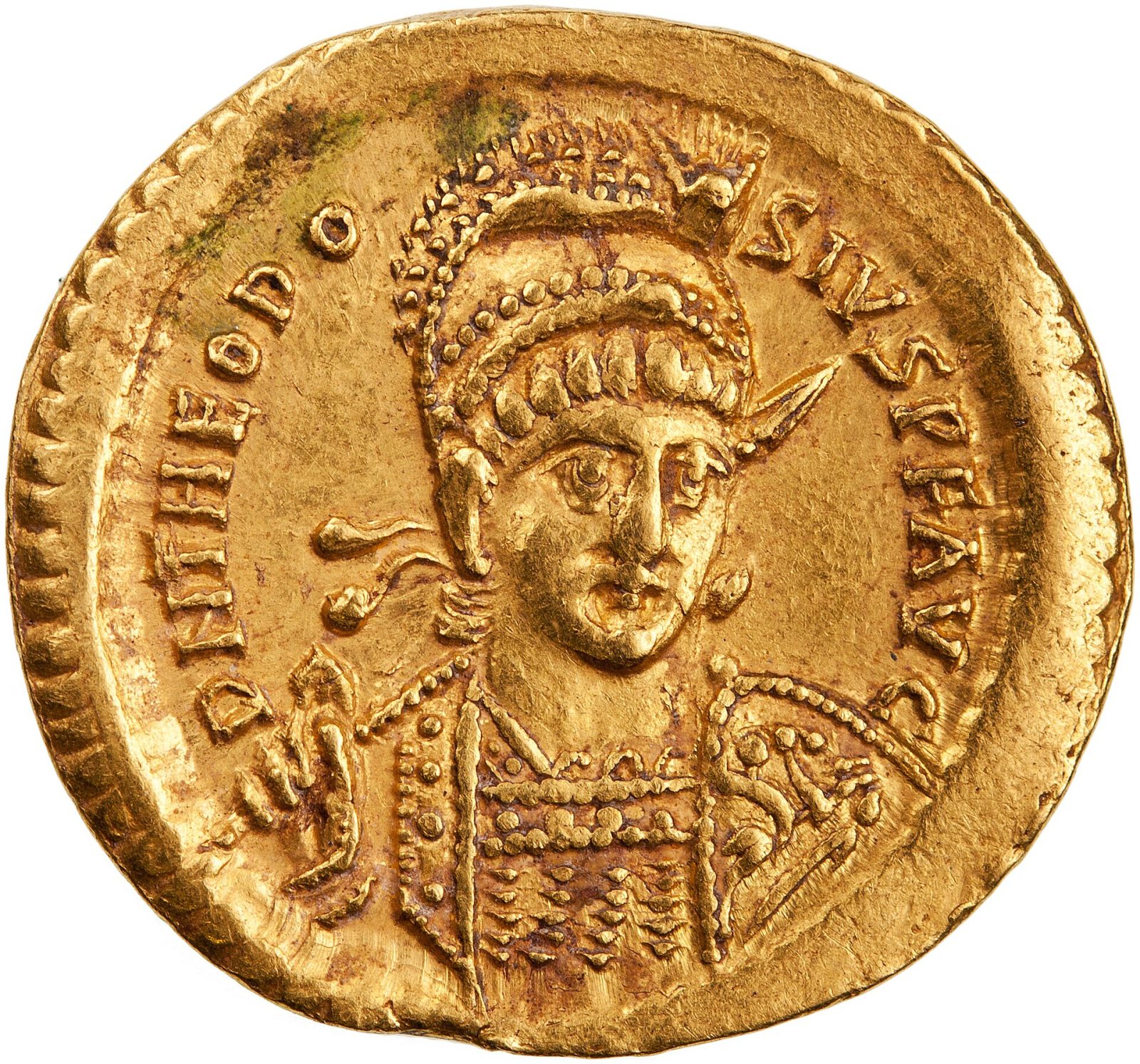
Around 2000 to 2001, Archaeological Survey of India excavators uncovered a brick Buddhist monastery facing the famous painted caves of Ajanta. In it lay a pierced gold solidus of the Roman emperor Theodosius II, the only datable coin from the site.
The caves of Ajanta, cut into a horseshoe-shaped gorge of the Waghora river in Maharashtra, western India, are famous for their Buddhist wall paintings. Around 1999, work on the opposite bank of the river turned up ancient bricks and potsherds, and the Archaeological Survey of India's Aurangabad Circle, under S. V. Venkateshaiah, dug trial trenches there over the next two seasons. Their six trenches exposed a U-shaped monastery of burnt brick, with monks' cells around a central platform for a stupa, looking across the gorge towards the caves.
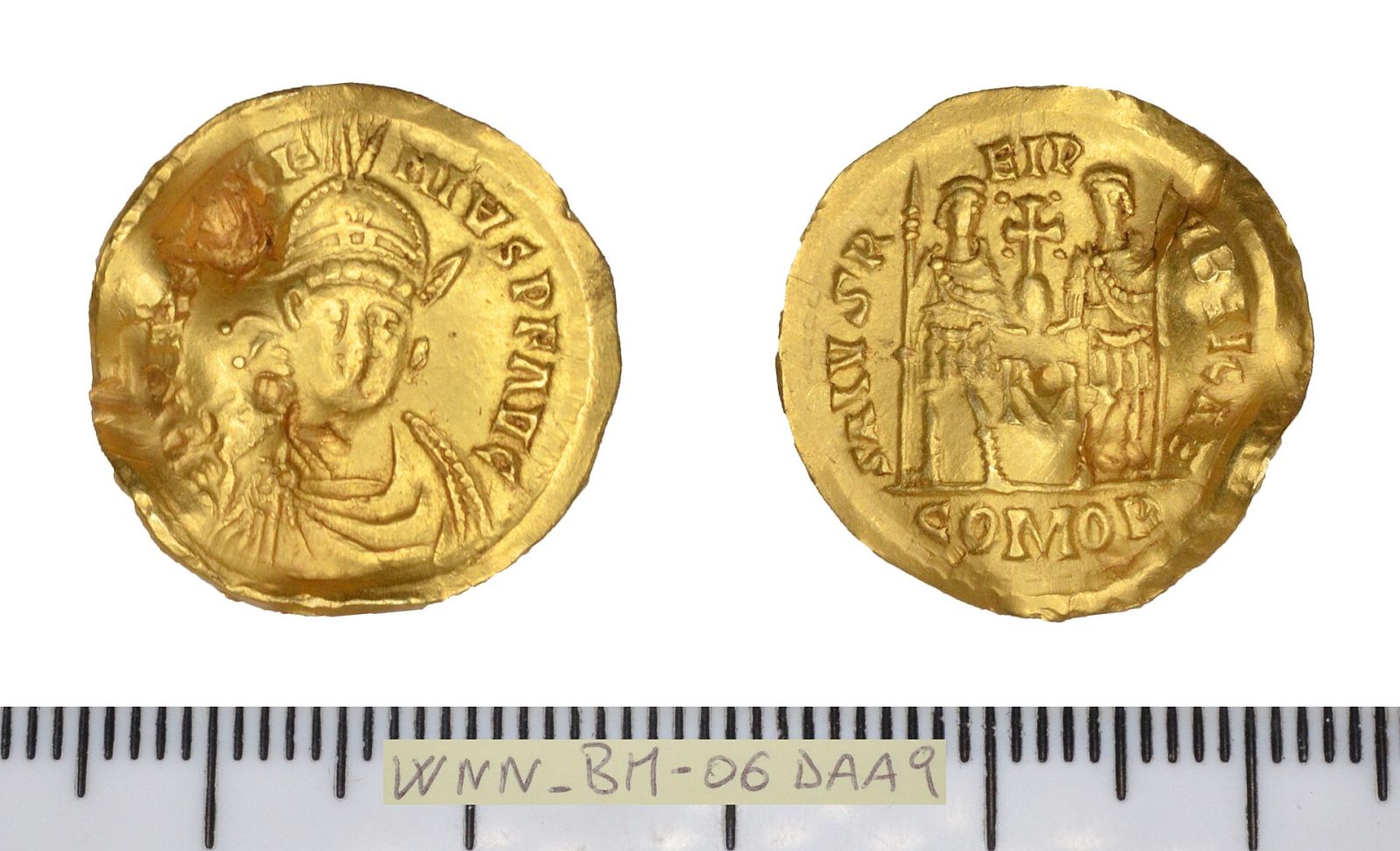
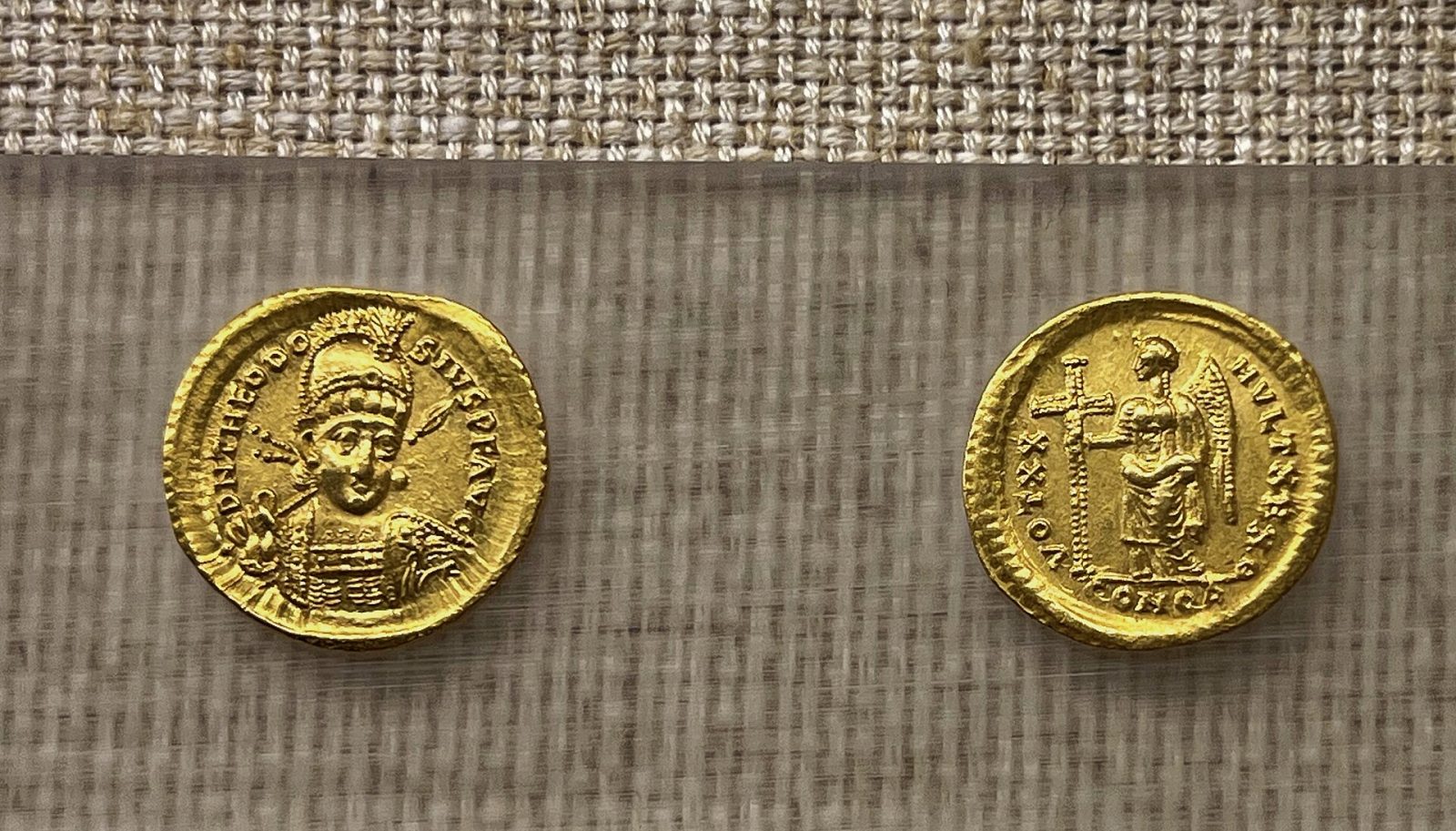
In the 2000 to 2001 season, in a layer laid down after the monastery had fallen out of use, the excavators found a small gold coin. It was a solidus of Theodosius II, emperor of the eastern Roman Empire from 402 to 450, struck in Constantinople, about two centimetres across. Two holes had been punched through it, so it had probably been worn as a pendant.
The excavators reported that it was the only datable coin found at the monastery, and that it gave a relative date to the site. The scholar Debala Mitra wrote that the coin evidence supported the archaeological dating of the site. Most scholars place Ajanta's second great phase of activity, when many of its most famous caves and paintings were made, in the 5th century.
How a Roman gold coin reached a Buddhist monastery more than 5,000 kilometres from Constantinople is a story of trade. Roman gold flowed east to India in exchange for pepper, spices, gems and textiles, and Roman coins, often pierced or mounted as jewellery, have been found at many Indian sites. Some were prized as ornaments rather than spent as money.
The coin was recorded by the Archaeological Survey of India and published in its annual review and in Mitra's guide to Ajanta. Where it is now kept has not been published.
Written for Global Finds from Indian Archaeology 2000–01: A Review (Archaeological Survey of India) and D. Mitra, Ajanta (Archaeological Survey of India, 2004). Photo: a gold solidus of Theodosius II in the American Numismatic Society, of the kind found at Ajanta, not the Ajanta coin itself, American Numismatic Society, Wikimedia Commons, CC0.
Linked finds
Source: D. Mitra, Ajanta (Archaeological Survey of India, 2004)