The Zippori Solidus: four schoolboys on an orienteering trip found the first gold coin of its kind in Israel
Famous find Struck in Constantinople about AD 420 to 423 · Found in 2019 See it on the timeline →
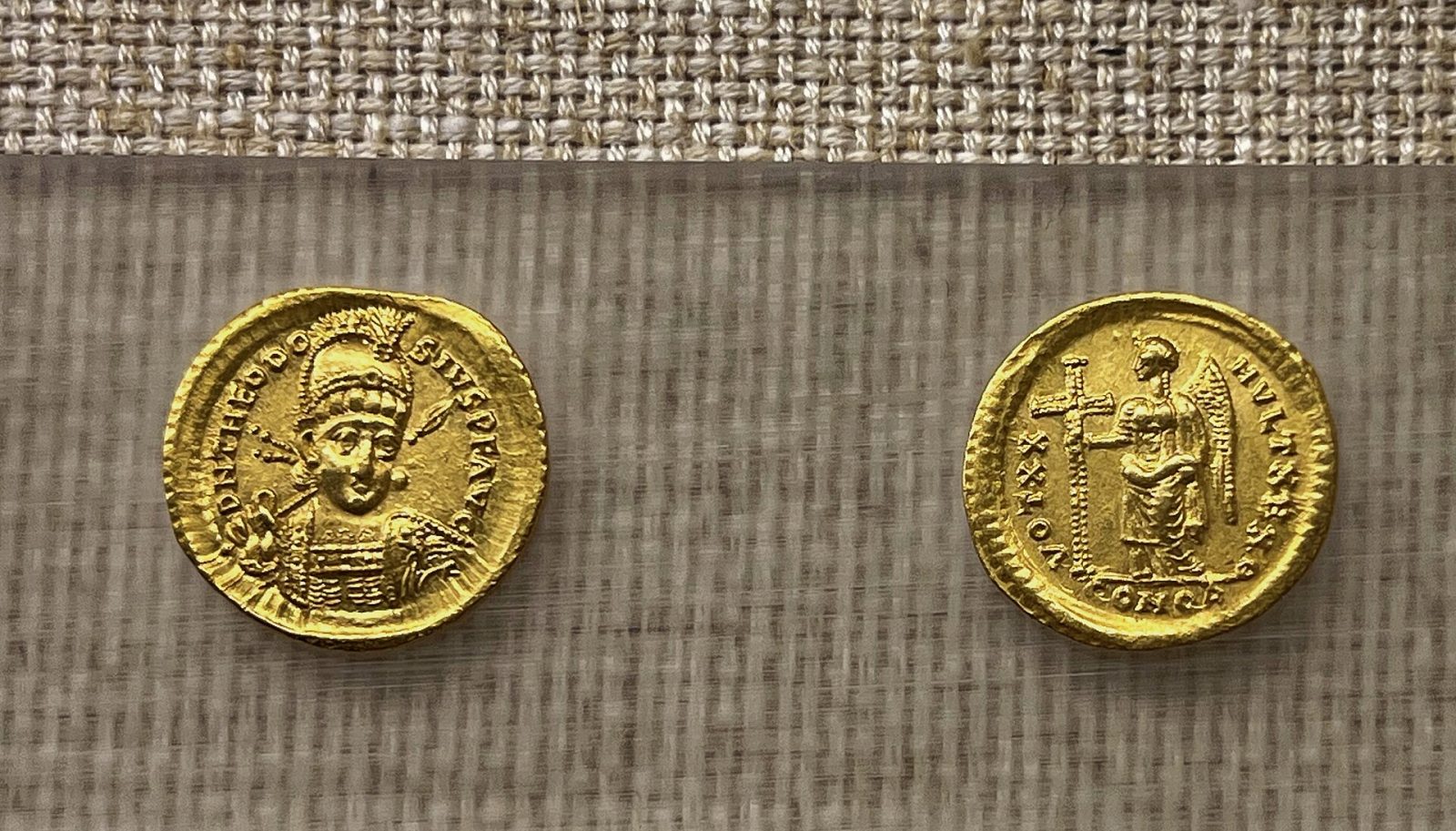
In February 2019 four ninth-graders orienteering beside the Zippori stream in the Galilee spotted a gold coin on the ground. It was a solidus of the emperor Theodosius II, struck in Constantinople around 420, the first of its type found in Israel. They handed it to their teacher.
In February 2019, four ninth-grade pupils from a high school at Kibbutz Yifat in the Jezreel Valley, Ido, Ofir, Dotan and Harel, were on an orienteering trip in fields beside the Zippori stream in the Lower Galilee, near the new Sanhedrin Trail. Lying on the ground, they spotted a small gold coin. They took it to their teacher, Zohar Porshyan, who contacted the Israel Antiquities Authority, and the authority's inspector Nir Distelfeld came to collect it from the boys at the findspot.
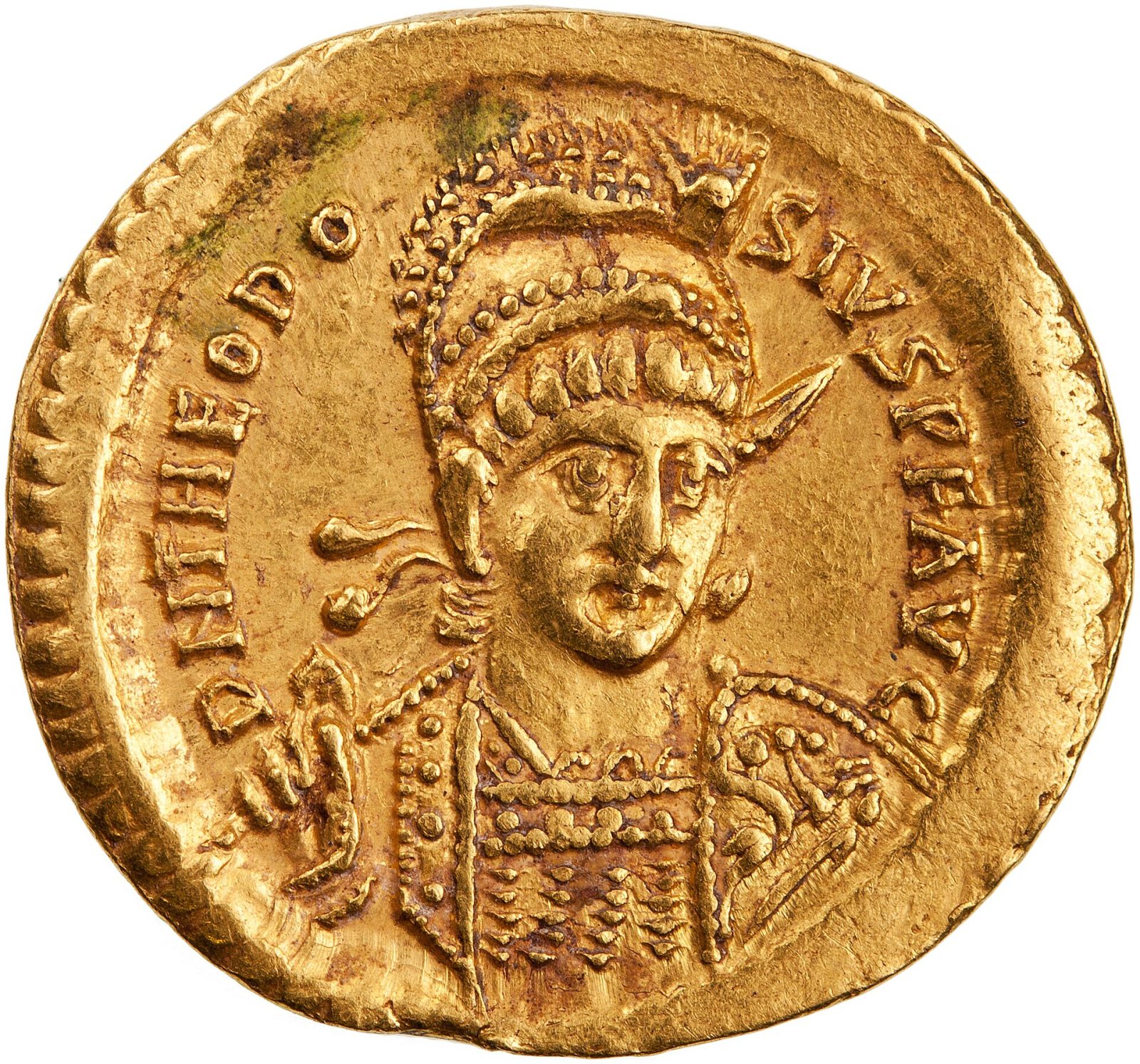
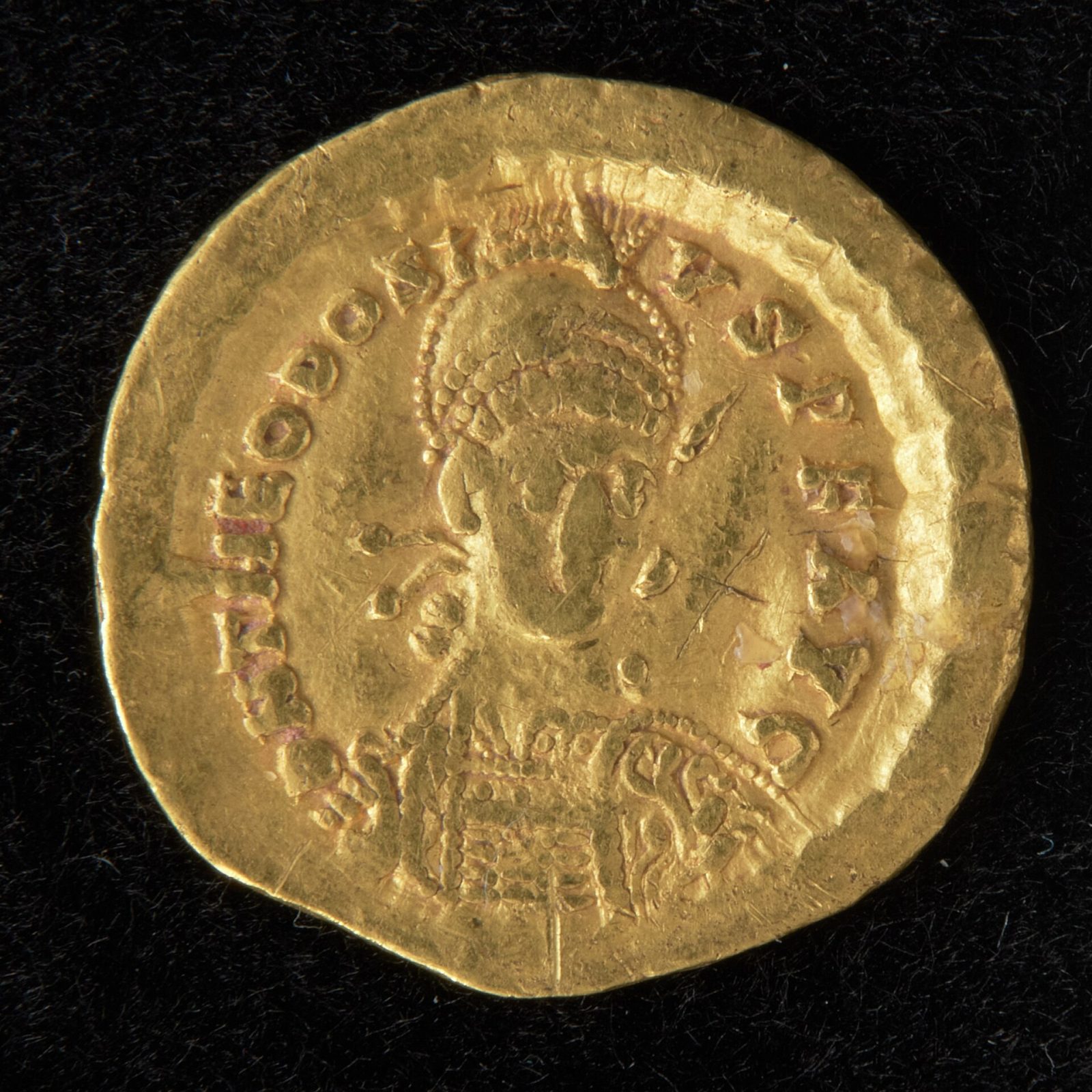
The coin is a solidus, the gold coin of the late Roman and early Byzantine empire, struck in Constantinople around 420 to 423 for the emperor Theodosius II. On the front is the emperor. On the back is Victory holding a long cross. The Israel Antiquities Authority's coin specialist, Gabriela Bijovsky, said that similar coins were known from the eastern empire, but that this was the first of its type found in Israel. "It is uncommon to find single gold coins," Distelfeld said, "as they were very valuable, and people took care not to lose them."
Theodosius II became emperor at the age of seven and ruled for more than forty years, from 408 to 450. His reign is remembered for the great land walls of Constantinople and for the Theodosian Code, a collection of Roman laws published in 438. The find carried a historical irony that the authority's chief archaeologist, Yair Amitzur, pointed out: Theodosius brought to an end the office of the Nasi, the head of the Sanhedrin, the Jewish council that had once met at Zippori, and his laws lowered the legal status of Jews in the empire. Yet his coin turned up beside a trail named after the Sanhedrin.
Zippori, also called Sepphoris, was the capital of the Galilee in Roman times and a centre of Jewish learning. Under Israeli law, antiquities found since 1978 belong to the state. The four boys received certificates of good citizenship from the Israel Antiquities Authority, and the coin passed to the state.
Written for Global Finds from the Friends of the Israel Antiquities Authority (2019), Fox News (2019), Sci.News (2019) and The E-Sylum (2019). Photo: a solidus of Theodosius II of the same issue, not the Zippori coin, Burkhard Mücke, Wikimedia Commons, CC BY 4.0.