The Agnus Dei Penny: Æthelred the Unready's emergency coin, struck as the Vikings invaded, found in Lincolnshire
Famous find Struck about AD 1009 · Found in 2018 See it on the timeline →
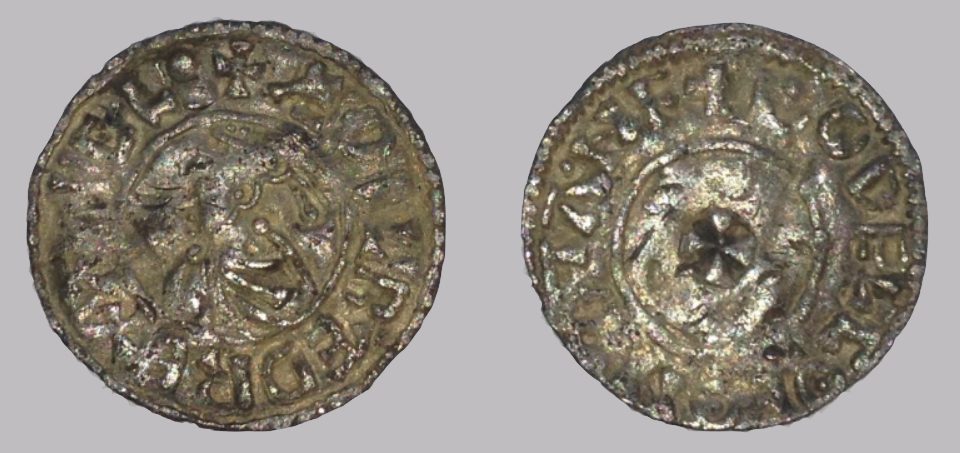
In 2018 a metal detectorist in south Lincolnshire found a silver penny of Æthelred the Unready with the Lamb of God where the king's head should be. Struck around 1009 during a Viking invasion, it is only the 22nd known coin of its type, and its die-twin is in Estonia.
In 2018, a metal detectorist searching land in south Lincolnshire found a silver penny unlike almost any other English coin. The finder's name has not been published. Where the king's portrait would normally be, it shows the Lamb of God, the Agnus Dei, and on the other side, instead of a cross, a dove, the symbol of the Holy Spirit.
It is a penny of Æthelred II, known as the Unready, who ruled England from 978 to 1016. It was struck at Leicester by a moneyer named Æthelwig. It weighs 1.46 grams; a small chip is missing from its edge, and a complete coin would weigh about 1.75 grams.
Agnus Dei pennies were a short emergency issue struck around 1009, the year a great Viking army under Thorkell the Tall landed in England. Æthelred's government called for the whole nation to fast, pray and give alms to win God's help, and these coins, with their Christian symbols in place of the king, seem to belong to that moment of crisis. They were soon replaced by an ordinary design. In 2022 the historians Simon Keynes, Hugh MacKay and Rory Naismith published the Lincolnshire coin as only the 22nd coin known from genuine Agnus Dei dies, and the fourth from Leicester. Most of the others have been found in Scandinavia and around the Baltic, where English silver flowed as tribute to Viking armies, and many of them had been pierced and worn as jewellery. The Lincolnshire penny is not pierced. Remarkably, it was struck from the same pair of dies as the only other known Agnus Dei coin of Æthelwig, which is now in the Estonian History Museum in Tallinn.
As a single silver coin, the penny was not Treasure, so it belonged to the finder and the landowner. It was sold at auction by Baldwin's of St James's in London, with an estimate of £10,000, and made £15,000. It is now in a private collection.
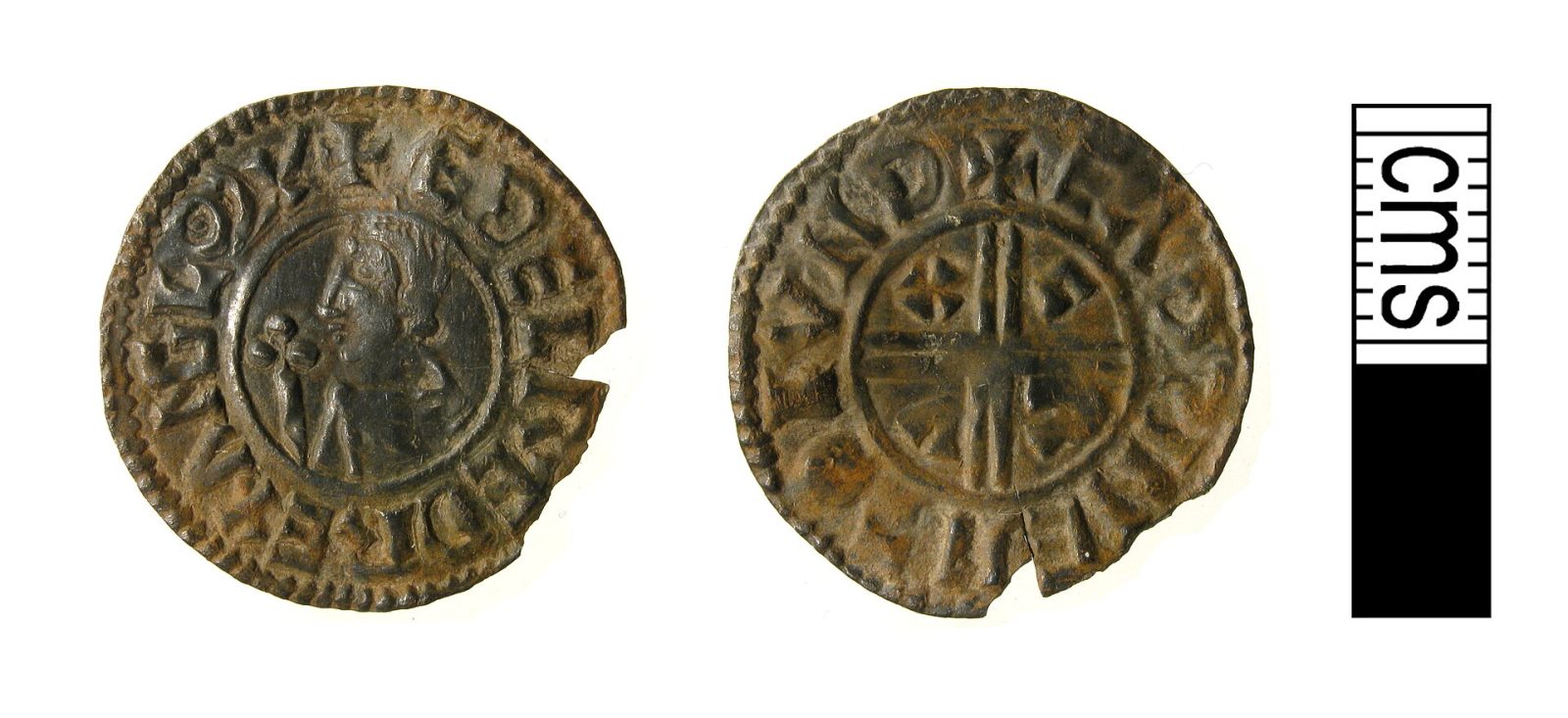
Æthelred's half-brother Edward the Martyr, whose murder in 978 made Æthelred king, is also on Global Finds, through another detectorist's penny.
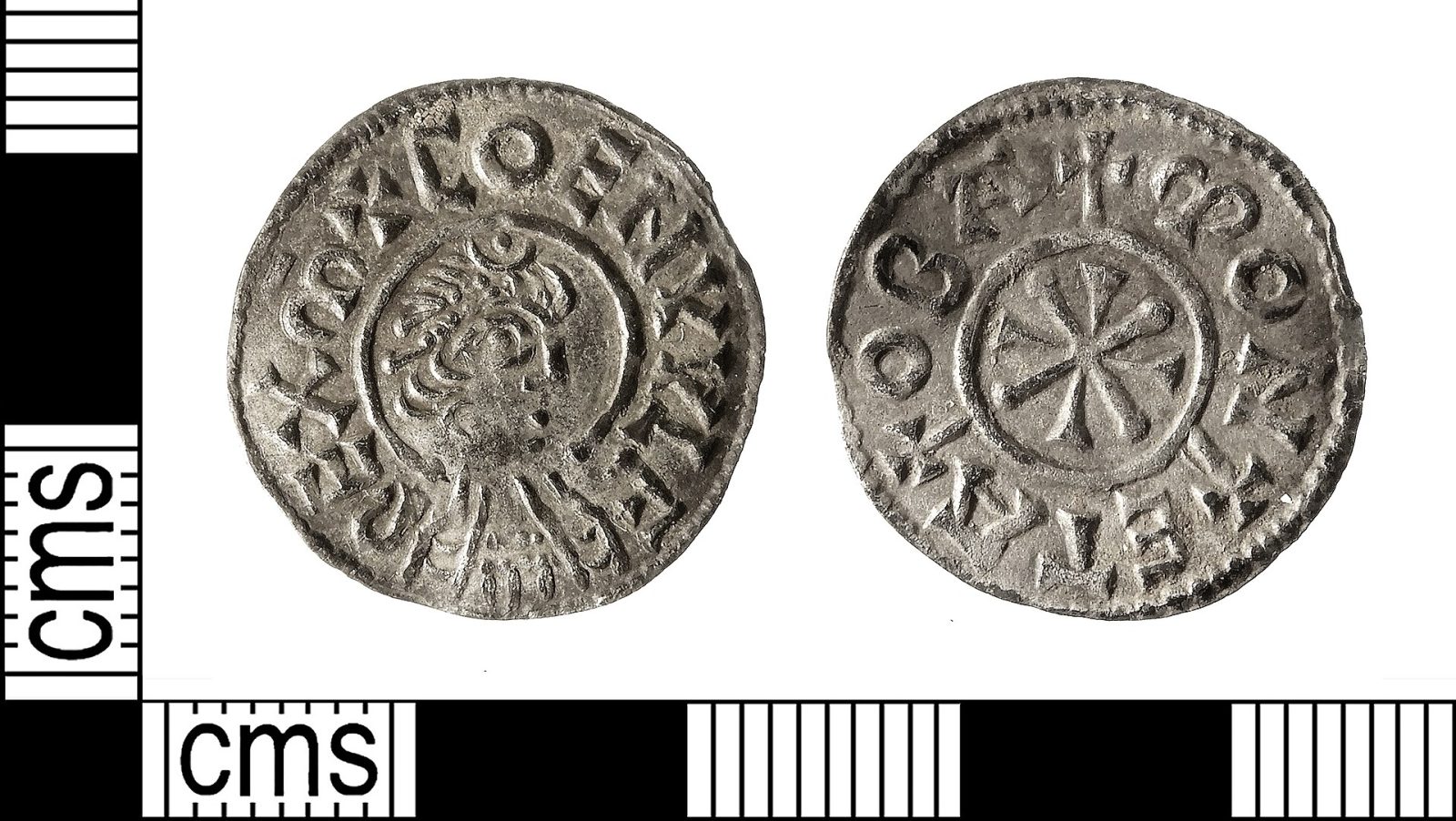
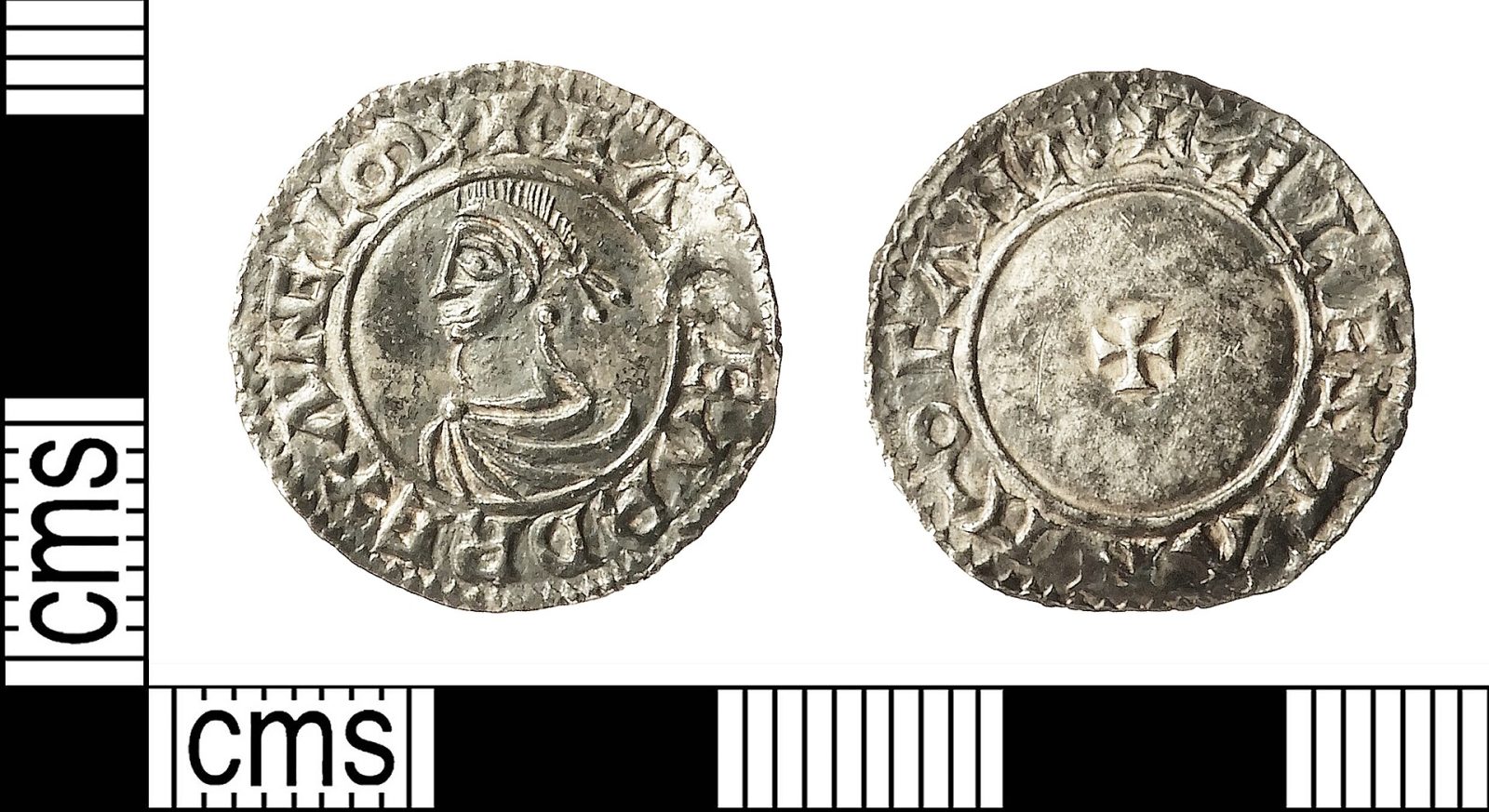
Written for Global Finds from S. Keynes, H. MacKay and R. Naismith, "A further Agnus Dei penny of King Æthelred the Unready", Anglo-Saxon England 48 (published 2022), and Baldwin's of St James's. Photo: a penny of Æthelred II of the next type, struck at Stamford, not the Lincolnshire coin, Nortonius, Wikimedia Commons, CC BY-SA 4.0.
Linked finds
Source: Anglo-Saxon England (2022)