The March Aureus: a Fenland detectorist found a gold coin of the emperor who conquered southern Britain
Famous find Struck about AD 69 to 70 · Found in 2017 See it on the timeline →
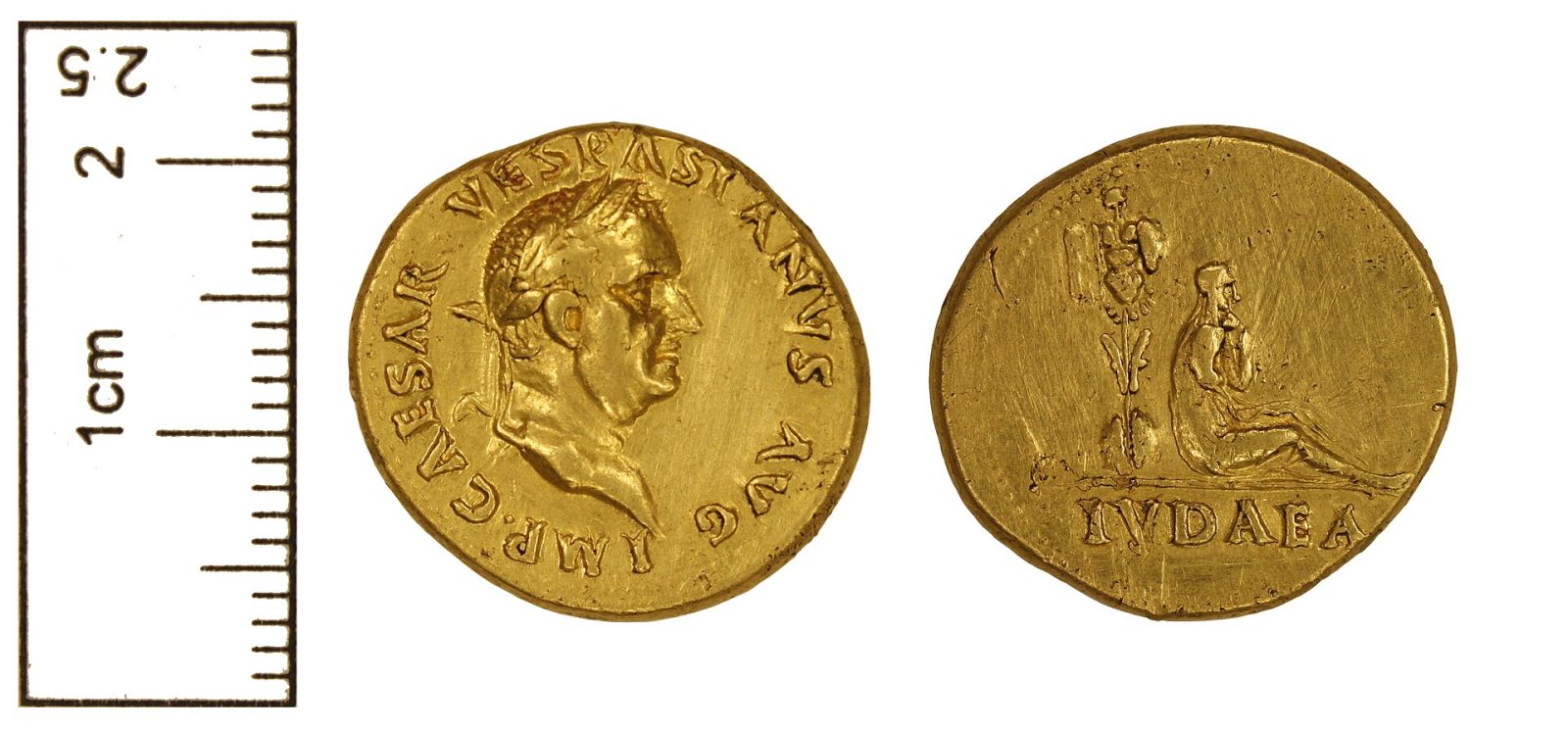
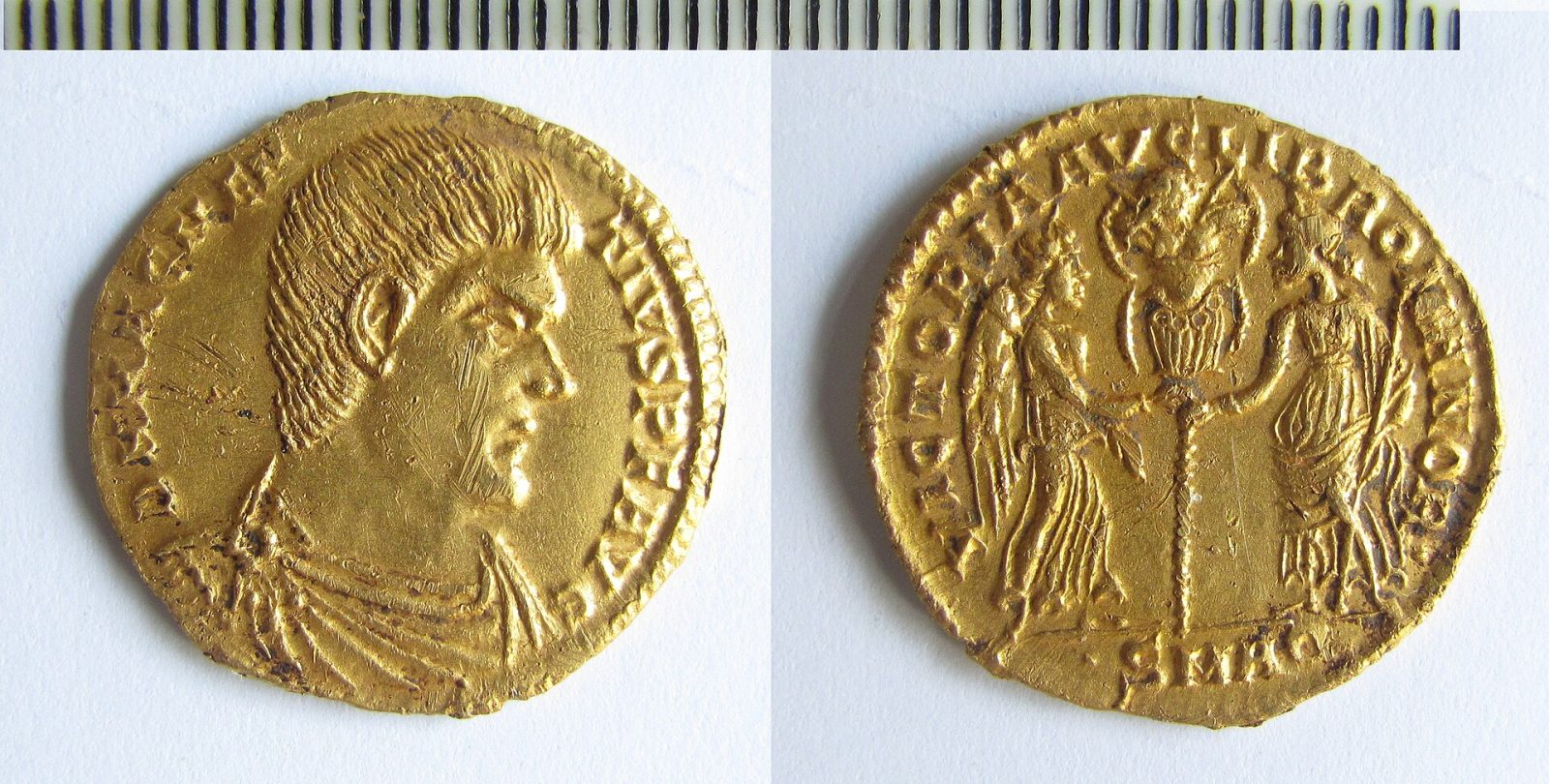
In 2017 a metal detectorist near March in Cambridgeshire found a gold aureus of Vespasian, the general who conquered much of southern Britain before becoming emperor. Struck around AD 69 to 70 to mark his war in Judaea, it shares its dies with a coin in the British Museum.
In 2017, a metal detectorist searching land near March, in the Cambridgeshire Fens, found a heavy gold coin. The finder's name has not been published. By 20 October that year it had been recorded with the Portable Antiquities Scheme by Helen Fowler, the county's Finds Liaison Officer, and it was later listed in the British Numismatic Journal's register of coin finds.
It is an aureus, the standard Roman gold coin, of the emperor Vespasian. It weighs 7.37 grams and is about 20 millimetres across, and when the auction house Spink tested it, it proved to be almost 99 per cent gold. On the front is a laurelled head and the emperor's name and titles, IMP CAESAR VESPASIANVS AVG. On the back, above the word IVDAEA, a woman representing Judaea sits mourning beneath a trophy of captured weapons. It belongs to the famous "Judaea Capta" series that celebrated the Roman crushing of the Jewish revolt, which ended with the destruction of Jerusalem in AD 70.
Spink dated it to the winter of AD 69 to 70, the first weeks of Vespasian's reign, and attributed it to a provincial military mint, probably Tarraco in Spain, although the original record gives Rome. The cataloguers described the head as being "of Vitellius", the emperor Vespasian had just overthrown, which may mean the die-cutter did not yet have a portrait of the new ruler to copy. Only one other coin is known from the same front die, and it has been in the British Museum since 1864.
Vespasian had a close link with Britain. Twenty-six years earlier, in AD 43, he commanded the Second Legion in the Roman invasion, and according to the historian Suetonius he fought thirty battles, captured more than twenty towns and took the Isle of Wight. That success helped make his name, and in AD 69, the year of four emperors, he seized the throne.
As a single gold coin, the aureus was not Treasure, so it stayed with the finder. It was sold by Spink at its Coinex auction in London in September 2024 for £60,000 and is now in a private collection.
Written for Global Finds from Spink (2024), the British Numismatic Journal Coin Register (2018) and the Portable Antiquities Scheme (CAM-9D9B6D). Photo: the March aureus of Vespasian, Helen Fowler, Cambridgeshire County Council, Portable Antiquities Scheme, Wikimedia Commons, CC BY 2.0.
Linked finds
Source: Spink (2024)