The Lincolnshire Aureus: a gold coin known only from a specimen melted in the French Revolution, found in an English field
Famous find Struck at Antioch, AD 72 to 73 See it on the timeline →
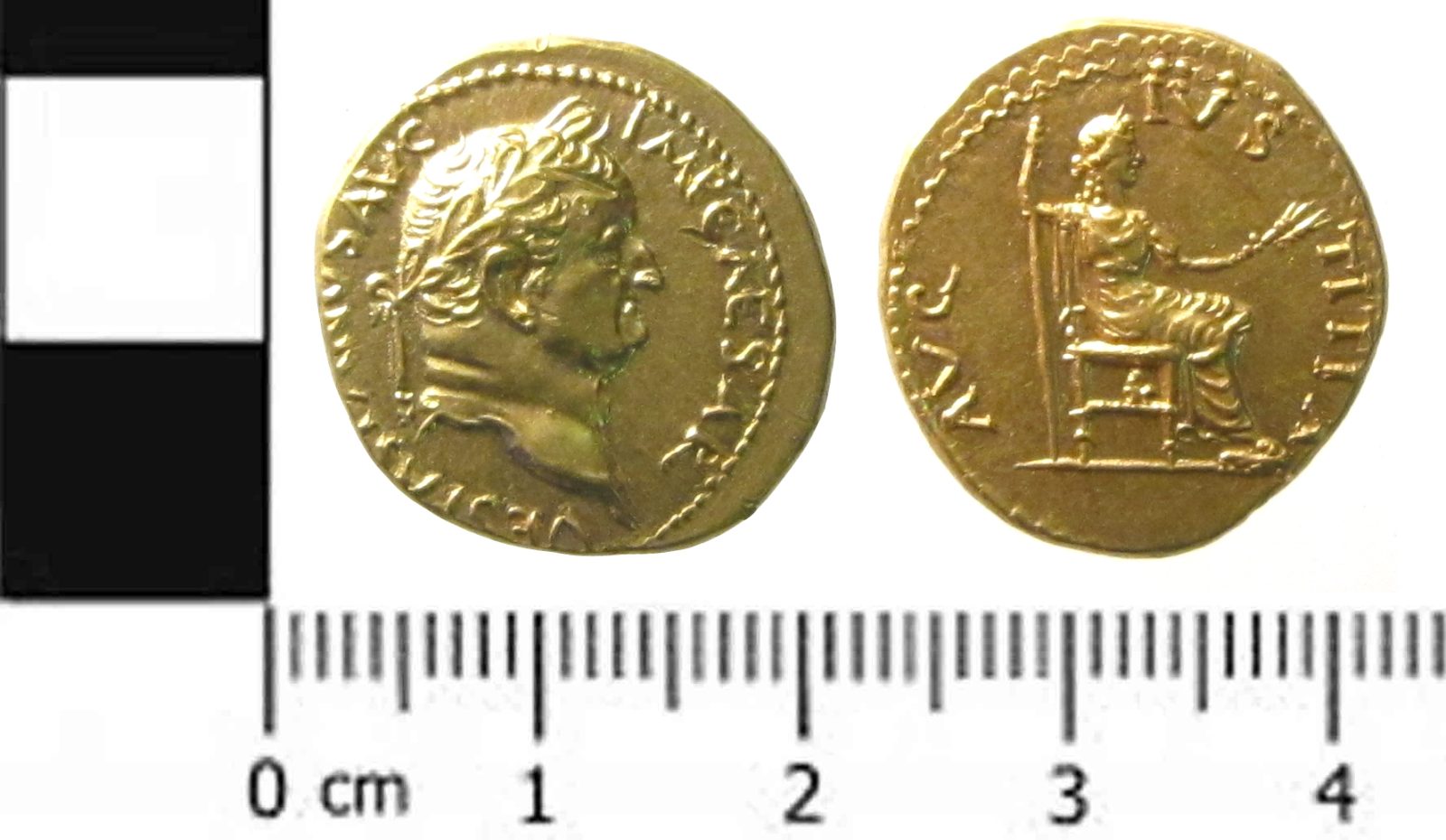
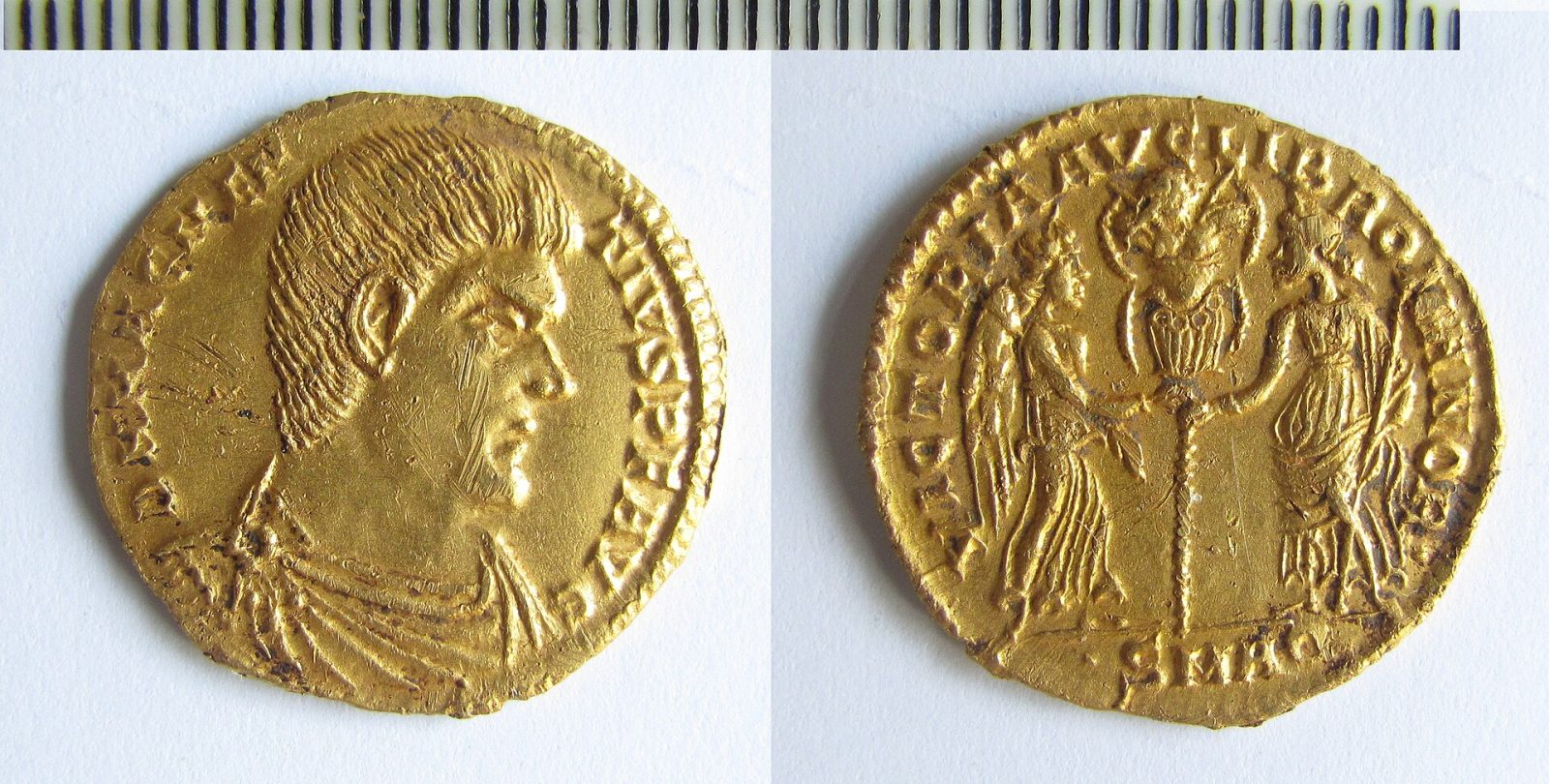
In 2011 a gold aureus of Vespasian found in North Lincolnshire was recorded with the Portable Antiquities Scheme. Struck at Antioch in Syria, it was a type known only from an 1882 description of a coin in a collection at Lyon that had been melted down around 1793.
In 2011, a gold coin found in North Lincolnshire was brought to the Portable Antiquities Scheme and recorded by Sam Moorhead, the Scheme's national adviser on Iron Age and Roman coins. The finder's name and the exact findspot have not been published. It turned out to be a coin that experts had begun to doubt ever existed.
It is a gold aureus of the emperor Vespasian, who ruled from AD 69 to 79, struck not at Rome but at Antioch, in Syria, in AD 72 or 73. On the back is the word IVSTITIA, justice. When Moorhead checked the standard catalogue of Roman imperial coins, the reverse turned out to be unpublished. The only earlier record of the type was a description printed in a Belgian coin journal in 1882, of a coin that had belonged to a great collection at Lyon. That collection was largely melted down during the French Revolution, around 1793, so nobody had been able to check the coin. The Lincolnshire find showed that the old description had been right. Ian Carradice, author of the modern catalogue volume on the Flavian emperors, was shown an image of the coin and agreed the attribution.
Later research showed that the emperor's portrait closely matches an aureus from a hoard found at Didcot in Oxfordshire, and that another eastern-mint aureus of Vespasian had been found at Finstock in Oxfordshire in the 19th century. That makes three gold coins of Vespasian from eastern mints found in Britain, a long way from where they were struck. How this one reached Lincolnshire is unknown. It may have come with a soldier or official who had served in the east, since Vespasian's legions moved across the whole empire, from Judaea to Britain.
As a single gold coin, it was not Treasure, so it remained the property of the finder and landowner. Its later history has not been published in the sources used here.
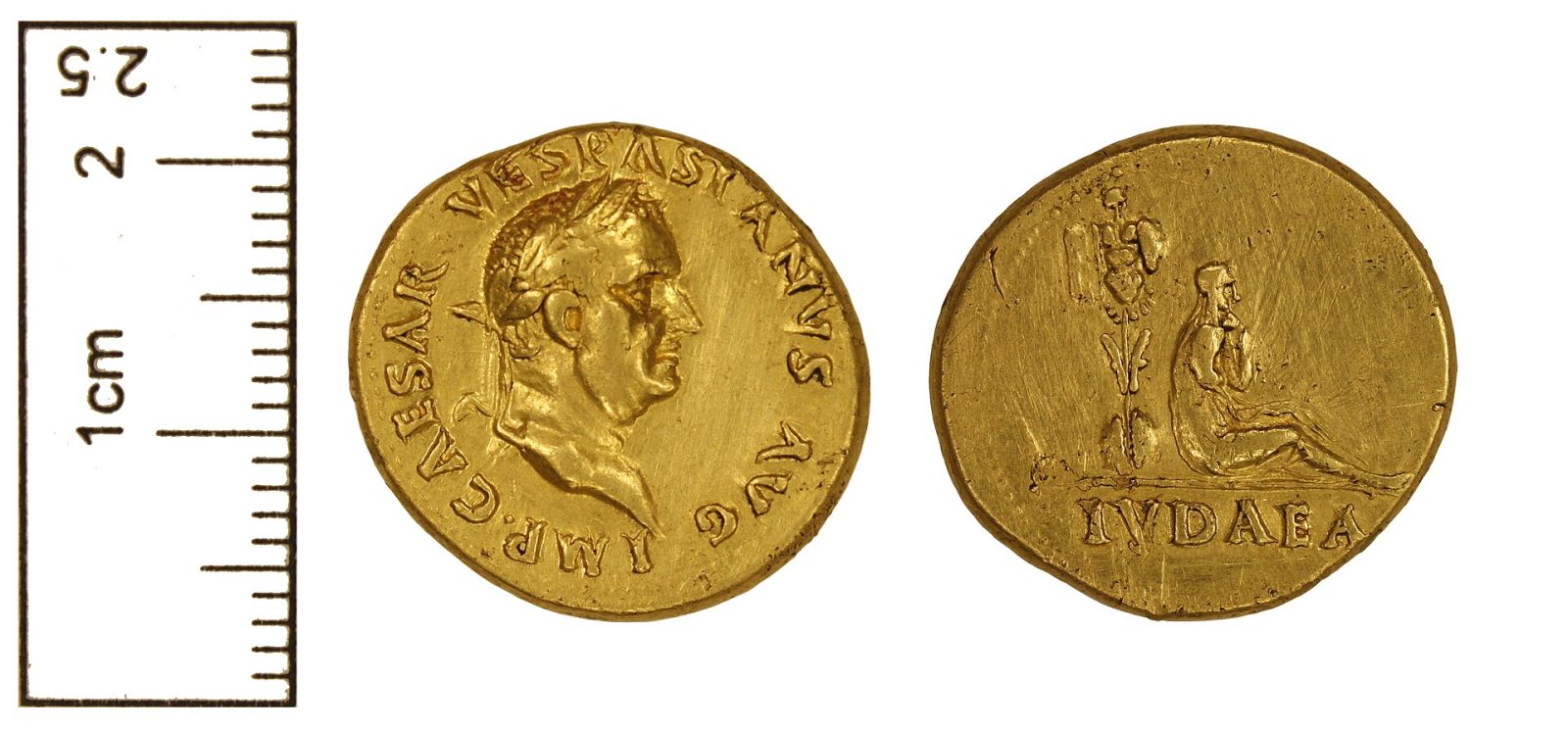
A second gold coin of Vespasian, found near March in Cambridgeshire, is also on Global Finds.
Written for Global Finds from the Portable Antiquities Scheme record (FASAM-2CD627, FindID 465909, via Wikimedia Commons) and Roman Provincial Coinage online. Photo: the North Lincolnshire aureus of Vespasian, Sam Moorhead, Portable Antiquities Scheme, Wikimedia Commons, CC BY-SA 2.0.
Linked finds
Source: Portable Antiquities Scheme record, via Wikimedia Commons