Famous finds

The finds every detectorist knows: hoards turned up by ploughs, builders and fellow detectorists, and the treasures that changed what we know about the past. Oldest first, by when they were made or buried. Each one is on the finds timeline too.

507 famous finds, oldest first · page 6 of 13. Jump to: Prehistoric · Bronze Age · Iron Age · Roman · Early Medieval · Medieval · Post-Medieval · Modern

FF 173

Buried about AD 307 · found 2014

Wold Newton Hoard

England · Hoards

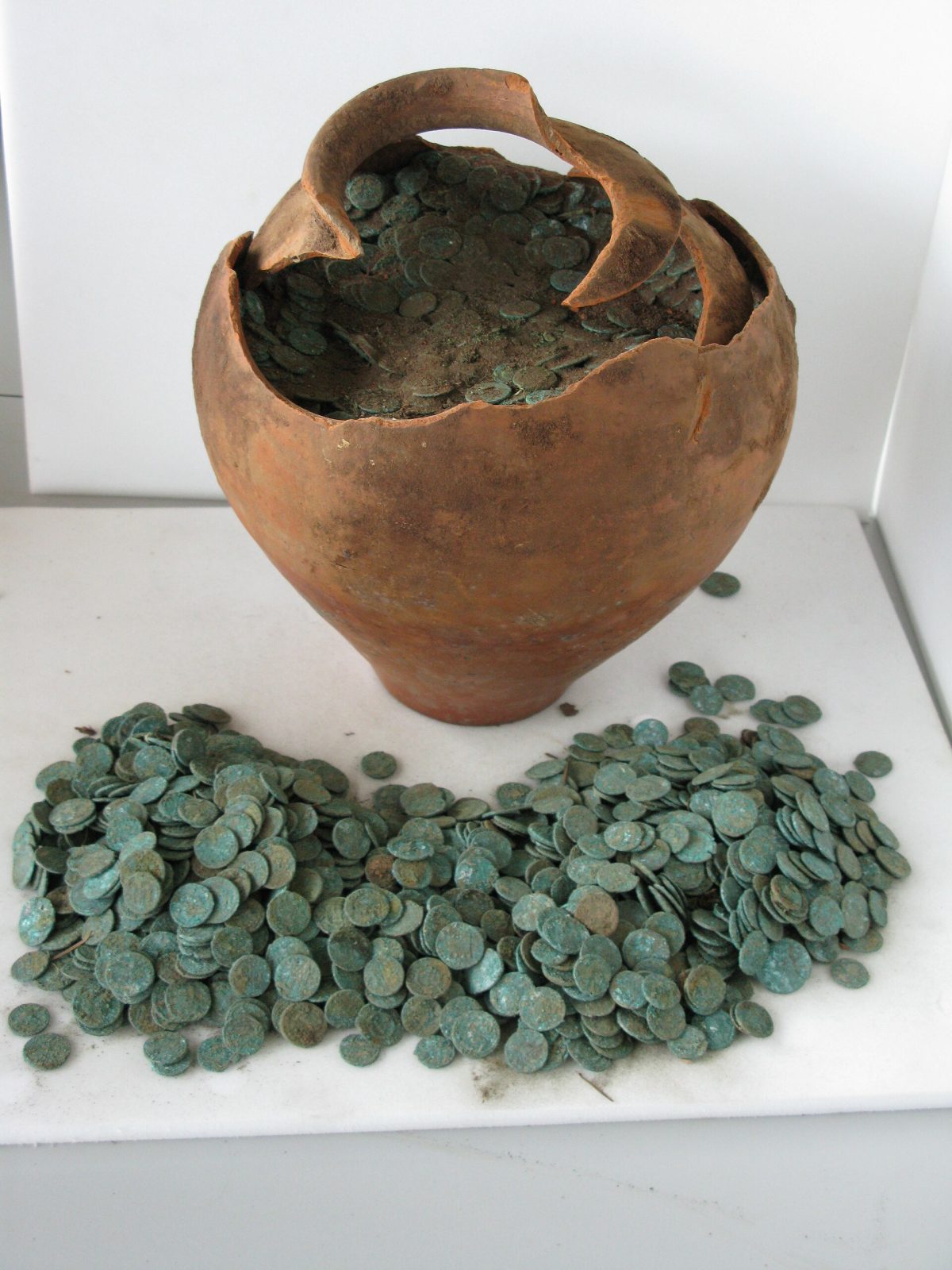
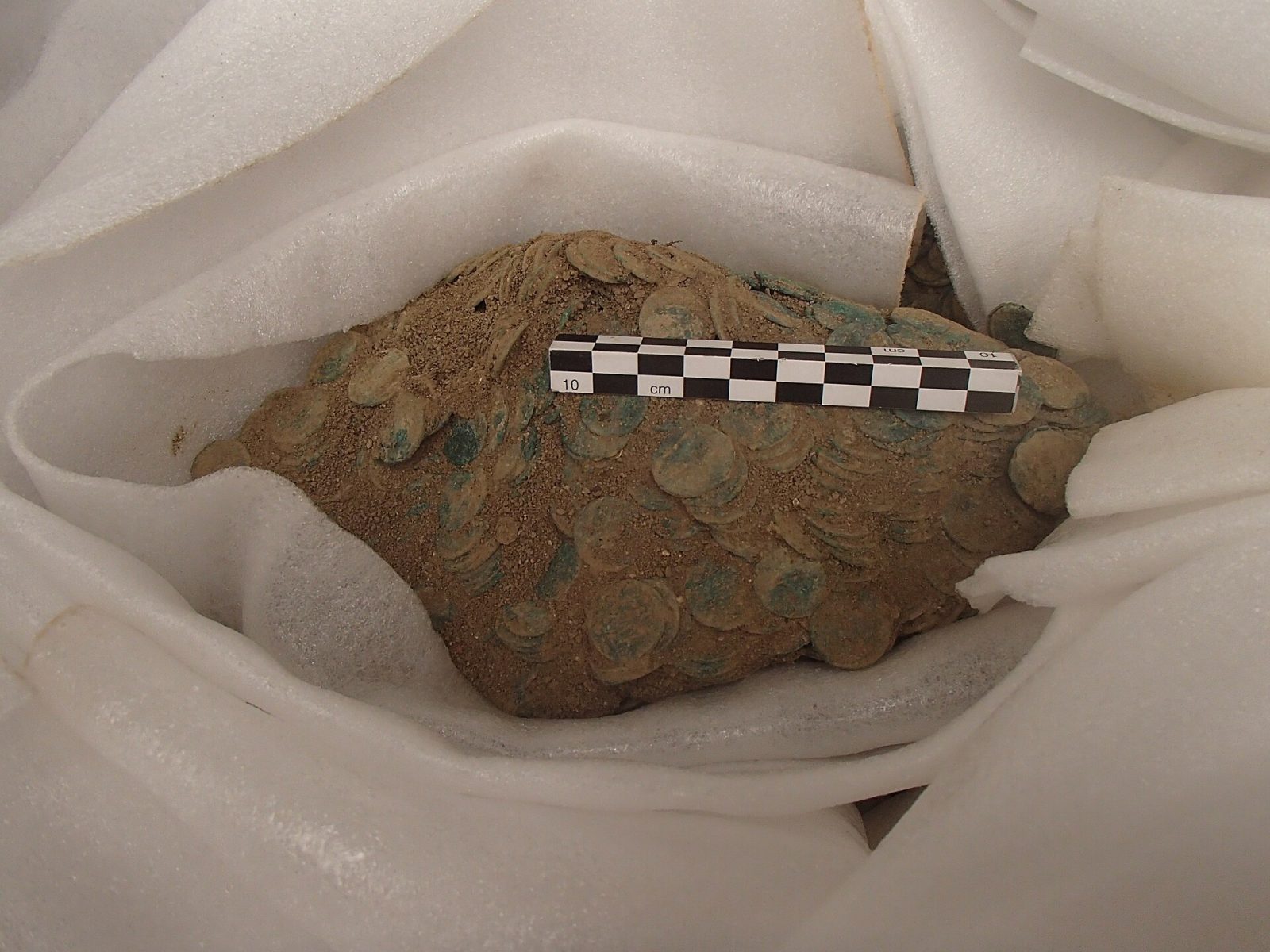
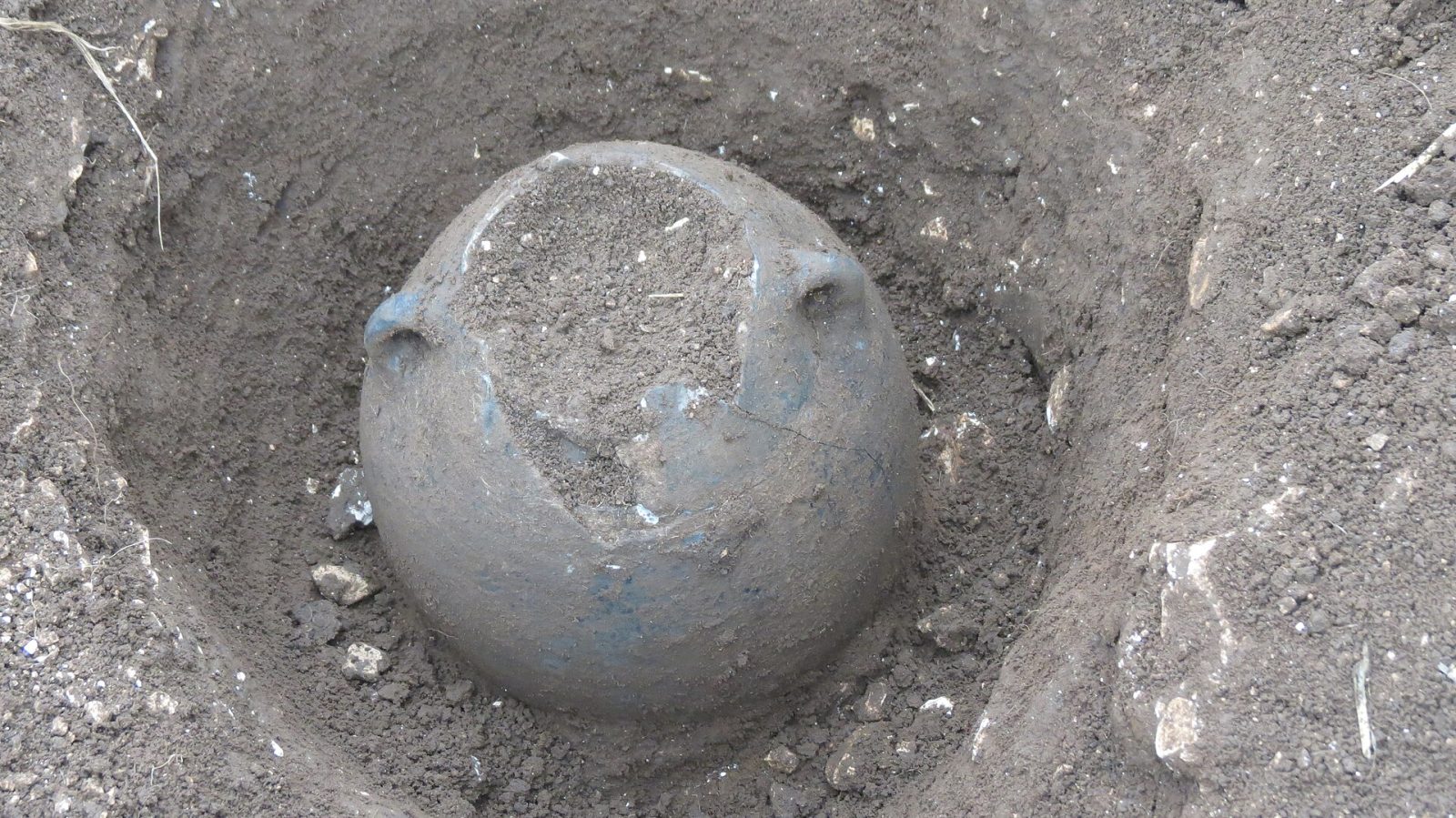
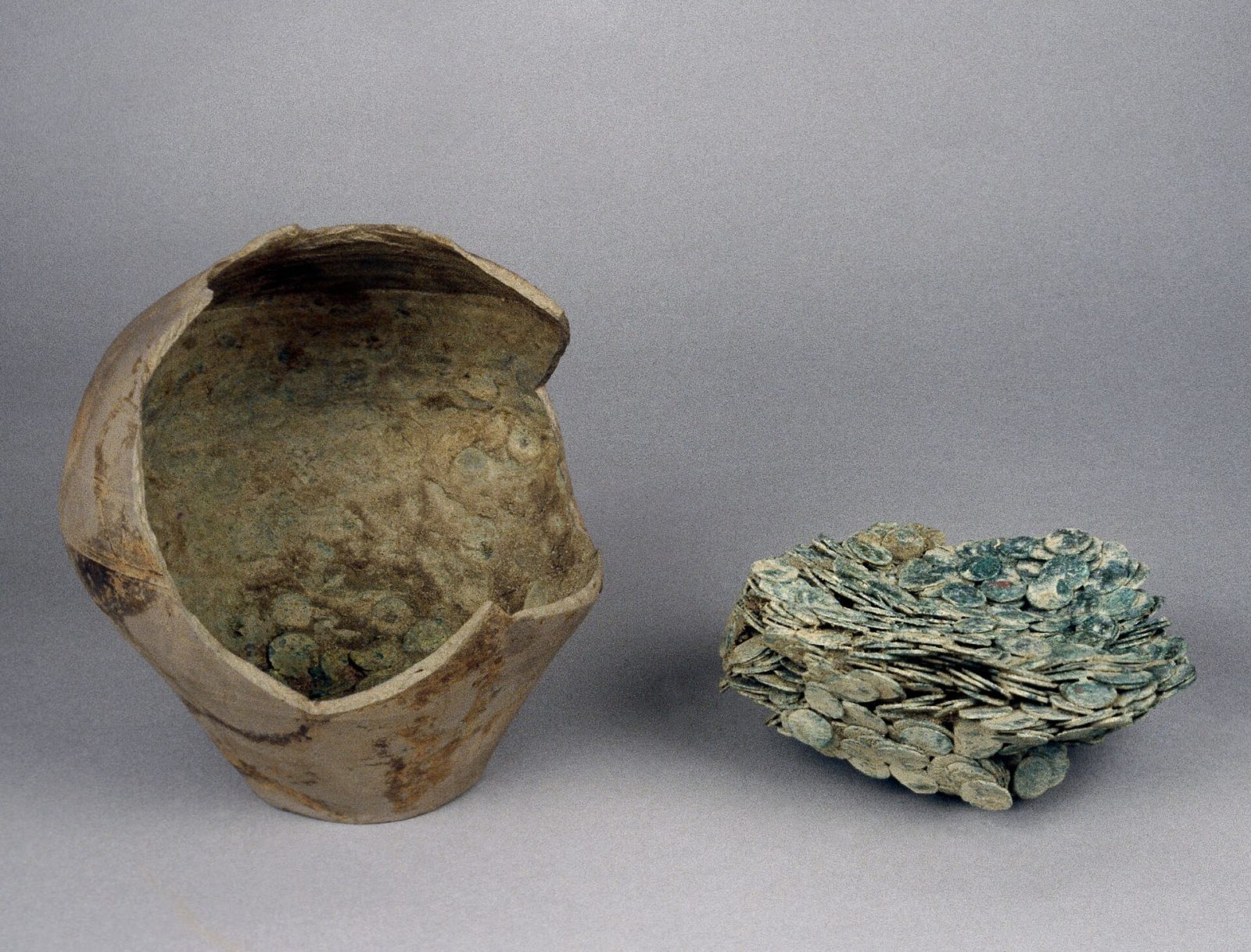
In September 2014 a detectorist in East Yorkshire found a Roman pot holding 1,857 coins and lifted it whole, unopened. Excavated layer by layer at the British Museum, it turned out to have been buried around AD 307, just after Constantine the Great was proclaimed emperor at York.
FF 573

Sank about AD 280 · found 1982

Asterix Roman ship, Guernsey

Guernsey · Artefacts

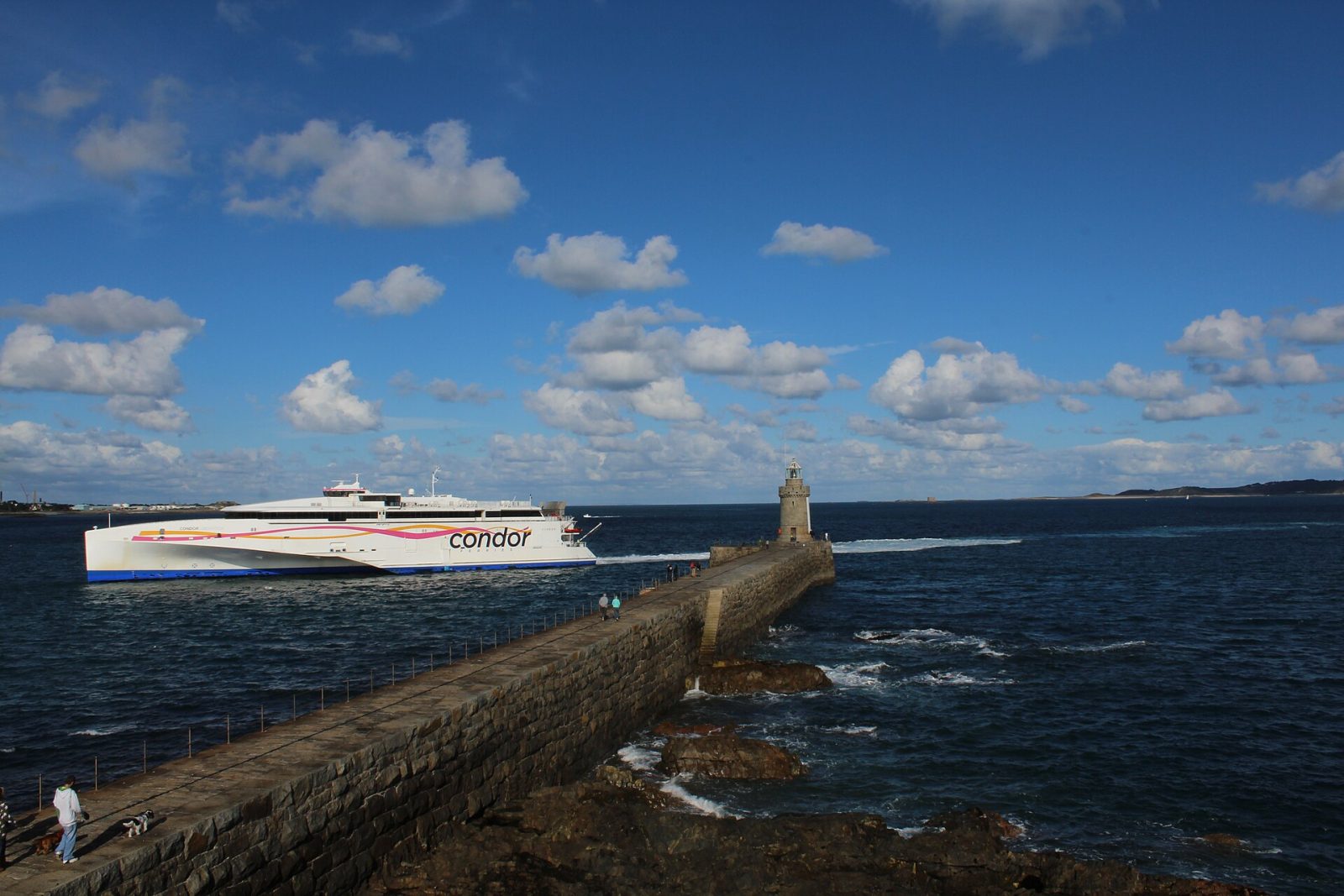
On Christmas Day 1982 local diver Richard Keen found old timbers on the seabed between the pierheads of St Peter Port, Guernsey. They were the hull of a Gallo-Roman merchant ship that caught fire and sank around AD 280, the most complete Roman sea-going wreck found outside the Mediterranean.

FF 242

Buried about AD 280 · found 2003

Chalgrove Hoard

England · Hoards

In April 2003 detectorist Brian Malin found a pot of almost 5,000 Roman coins near Chalgrove in Oxfordshire, a hundred feet from a hoard he had found in 1989. Inside was a coin of Domitian II, an emperor many historians had thought was a forgery.

FF 509

Struck in the reign of Diocletian, AD 284 to 305 · found 2001

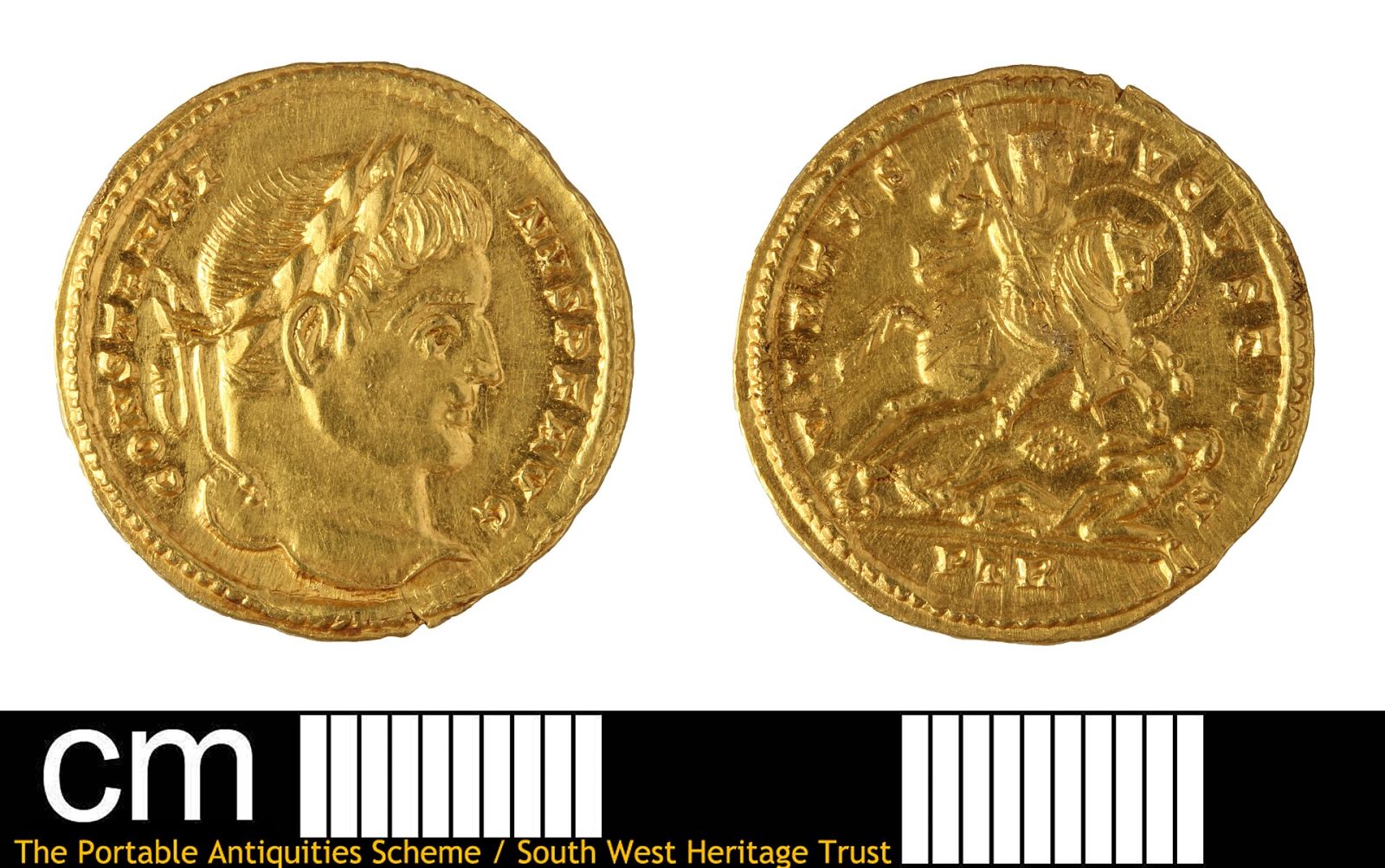
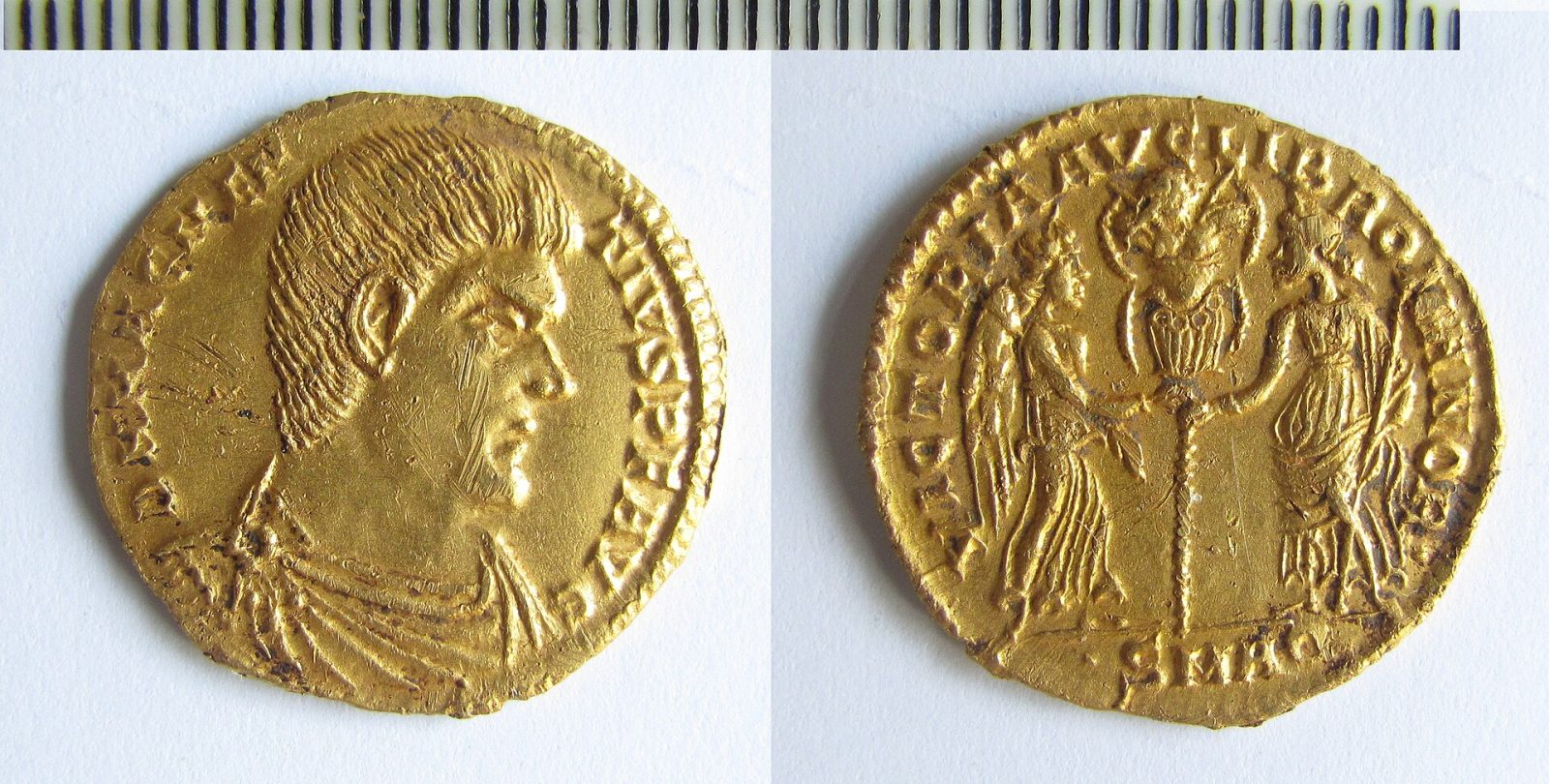
Diocletian aureus, Thames

England · Coins

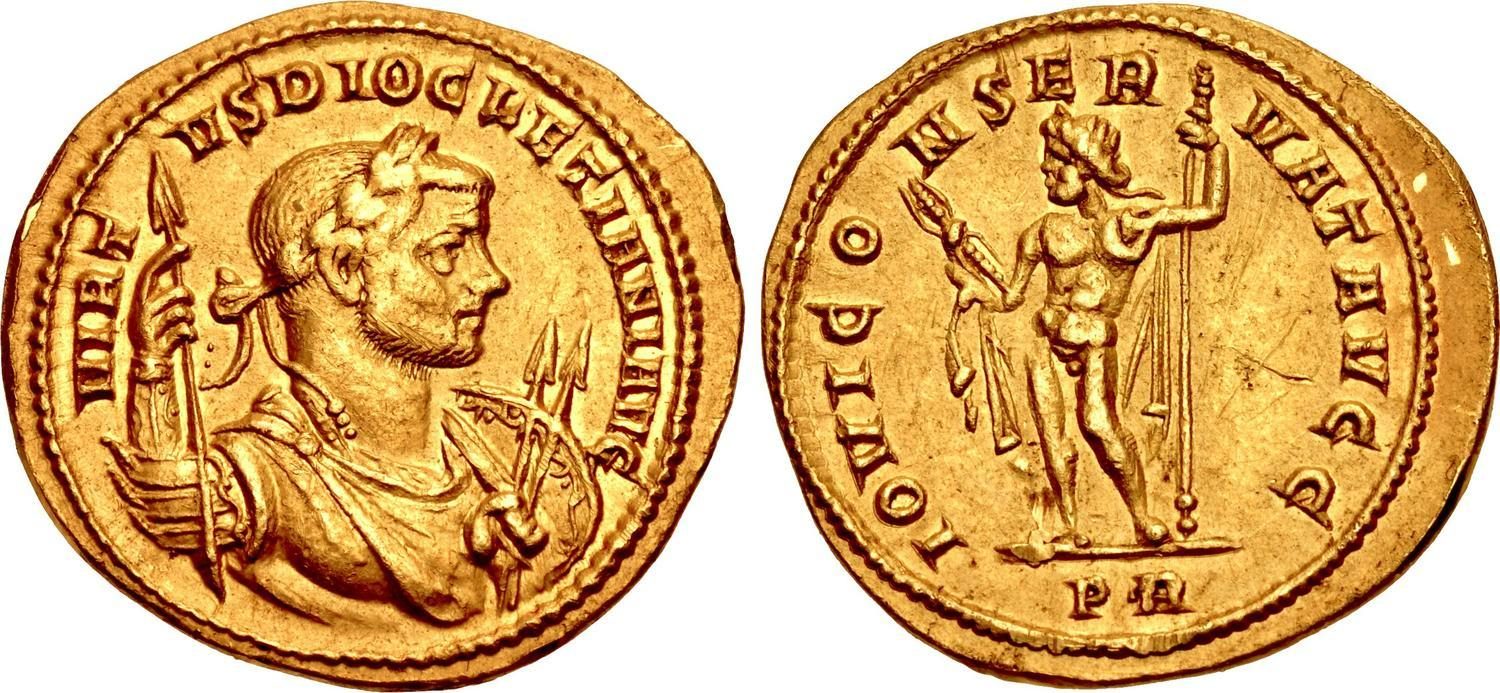
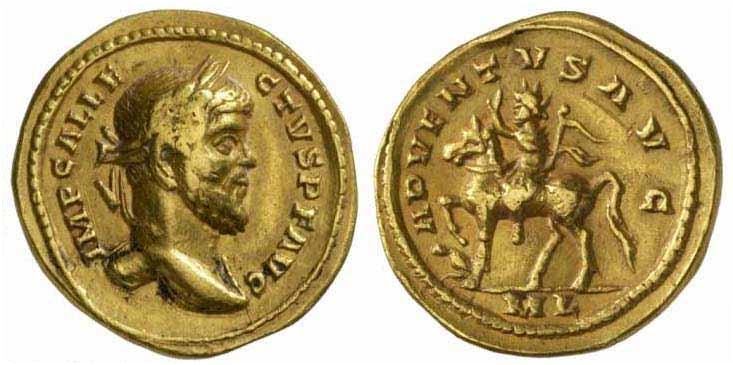
Around 2001 mudlark Tim Miller, who had searched the Thames foreshore since childhood, often with his mother, found a gold aureus of the Roman emperor Diocletian. He first thought it was a chocolate coin. Passers-by had asked him for years whether he had struck gold yet.

FF 326

Gathered about AD 285 to 315 · found 1922

Beaurains Treasure

France · Hoards

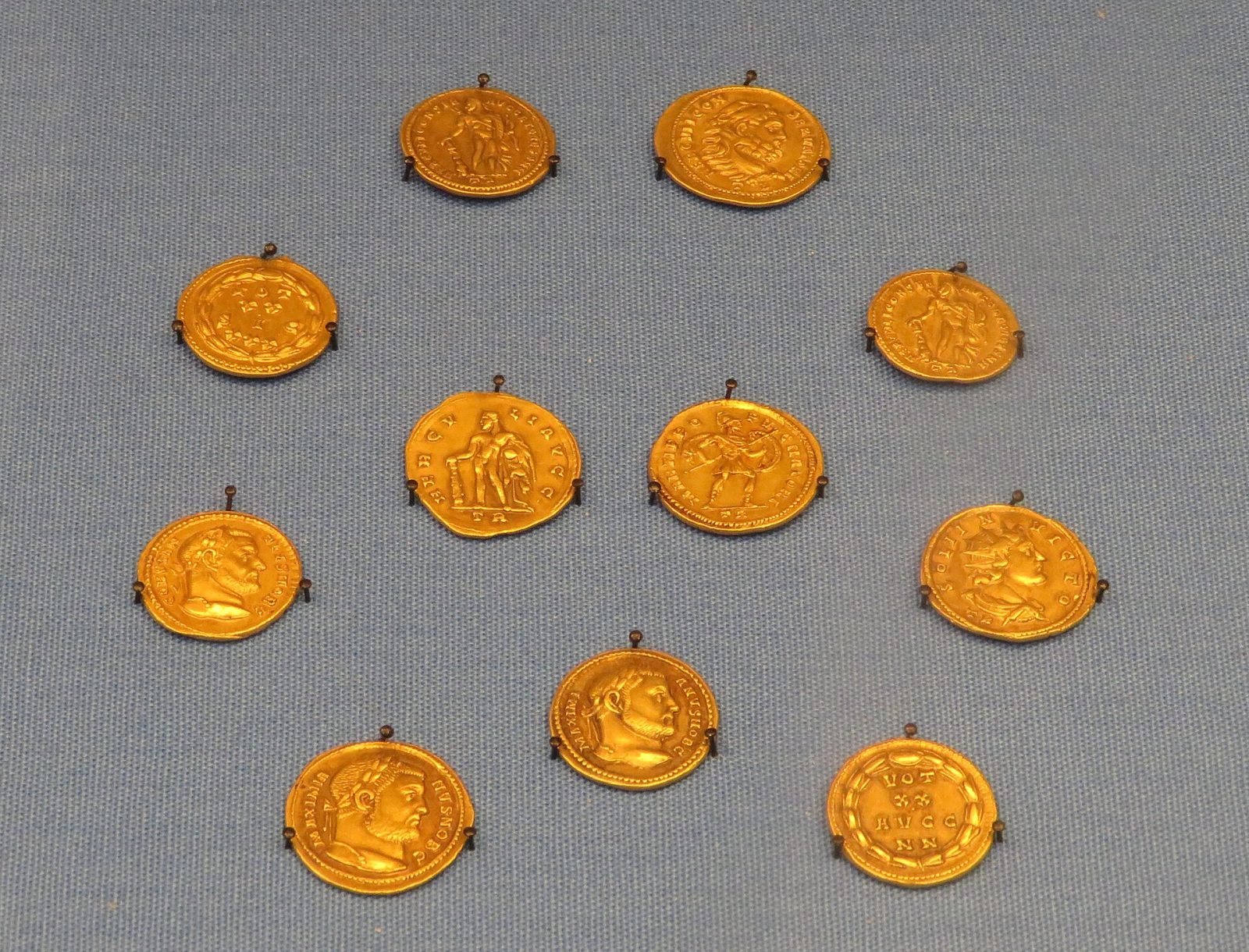
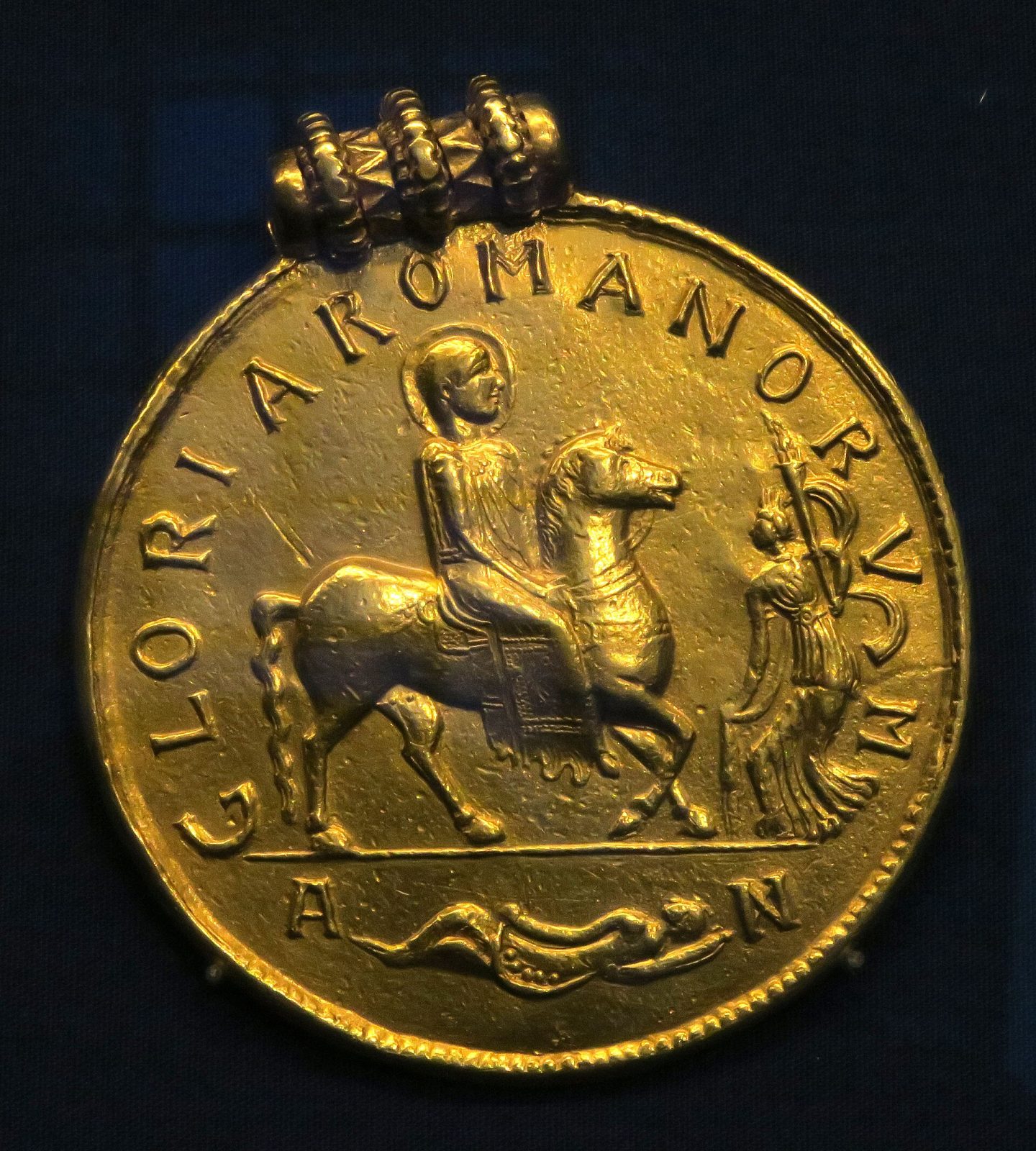
In September 1922 workmen digging clay at a brickworks at Beaurains, near Arras in northern France, found a hoard of Roman gold coins, medallions and jewellery. Much of it vanished overnight into the antiquities trade, including a medallion bearing the earliest known picture of London.

FF 524

Struck in the reign of Carausius, AD 286 to 293 · found 2024

Carausius lion denarius

England · Coins

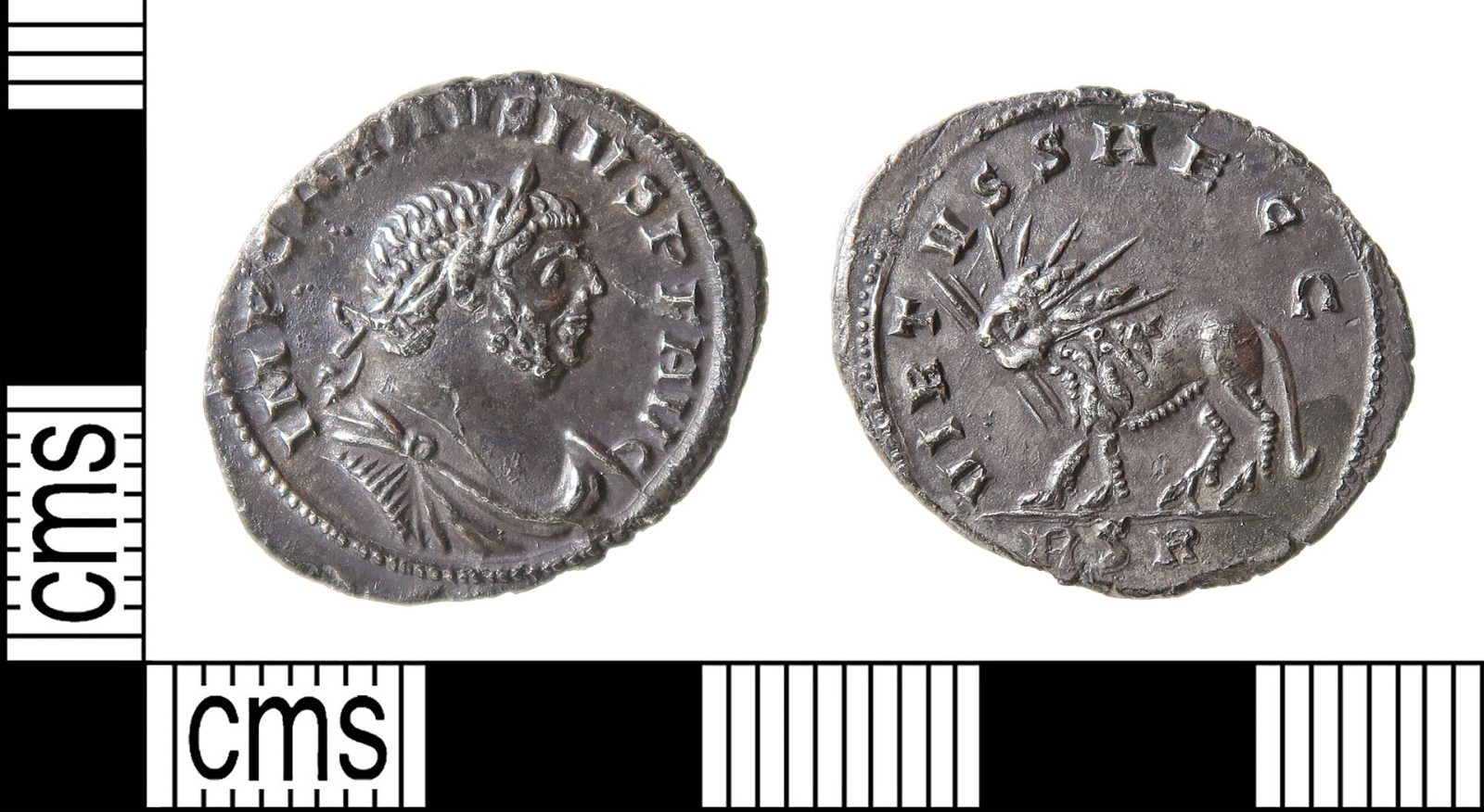
On 9 June 2024 Mike Clark, a retired fisherman with 52 years of detecting behind him, dug a £1 coin on pasture at South Brewham in Somerset. His next signal was a rare silver denarius of Carausius, the admiral who made himself Emperor of Britain.

FF 44

Coins of AD 253 to 293; buried soon after · found 2010

Frome Hoard

England · Hoards

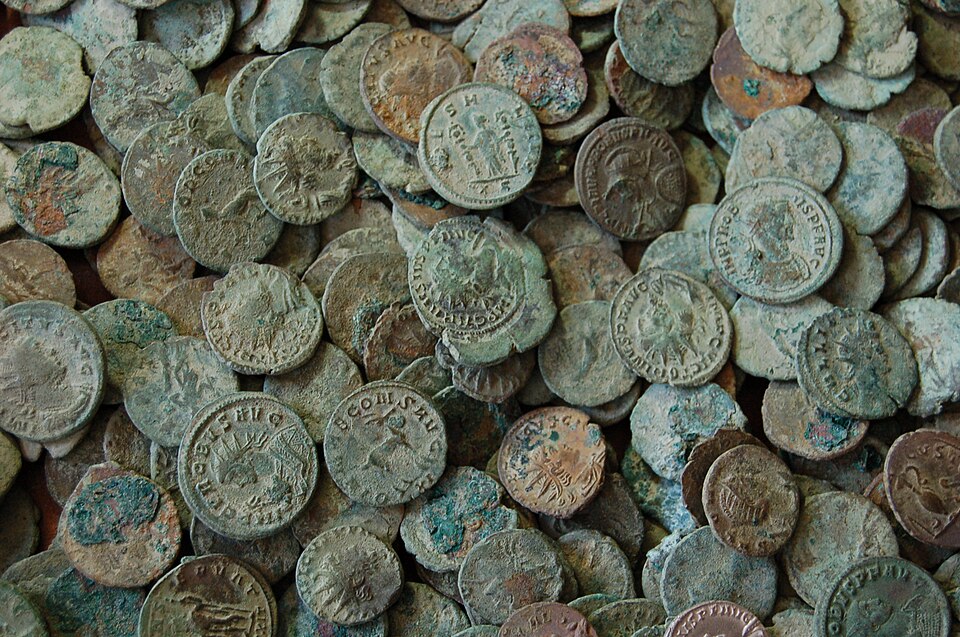
In 2010 a detectorist near Frome found a pot holding 52,503 Roman coins, the largest Roman hoard ever found in a single container in Britain. He stopped digging and called in the experts.

FF 458

Struck in London, AD 293 to 296 · found 2019

Allectus gold aureus

England · Coins

In March 2019 a metal detectorist and his brother searching a freshly ploughed field near Dover found a gold aureus of Allectus, who seized Britain by murdering its rebel emperor Carausius. Only about 24 are known, and it sold for a record £552,000.

FF 160

Made AD 294 to 350, buried about AD 351 · found 1961

Kaiseraugst Treasure

Switzerland · Hoards

In December 1961 a digger levelling a school sports field beside a Roman fort on the Rhine cut through the largest late Roman silver hoard ever found. Nobody noticed, and the plates turned up for months afterwards in dumps, dung pits and an inn's wash-house.

FF 236

Struck about AD 294 to 310 · found 2016

Tomares Hoard

Spain · Hoards

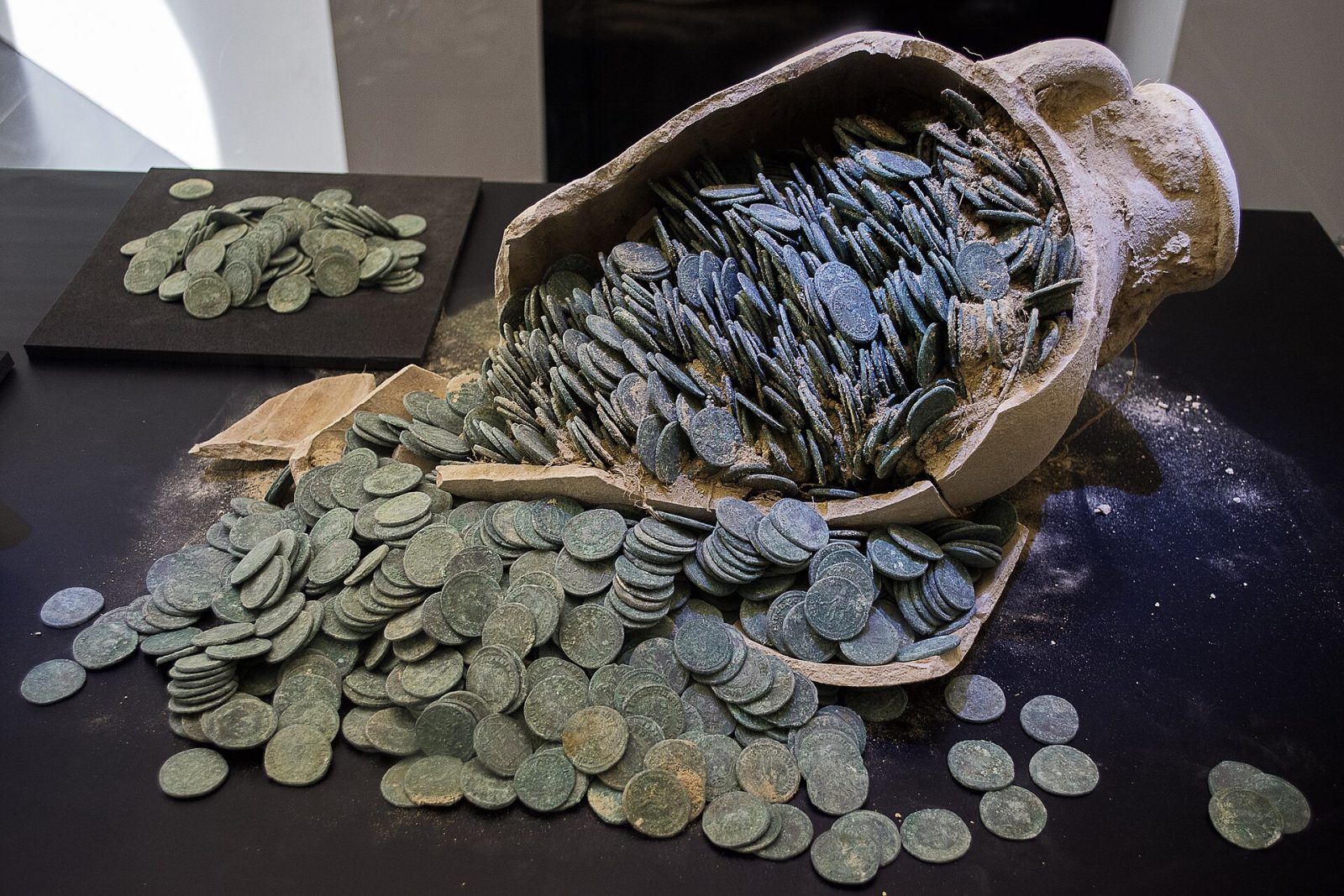
In April 2016 workers digging a trench for water pipes in a park at Tomares, near Seville in Spain, hit a row of Roman amphorae packed with coins. They held about 53,000 bronze coins, weighing some 600 kilograms, struck around AD 300.

FF 81

Made in the 4th century AD · found 1942

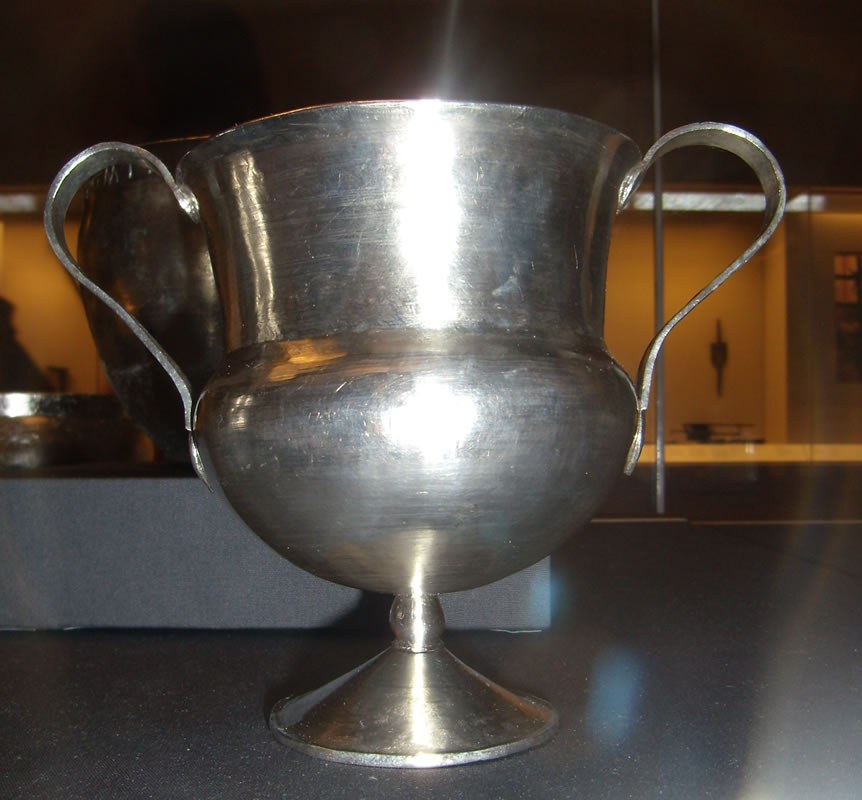
Mildenhall Treasure

England · Hoards

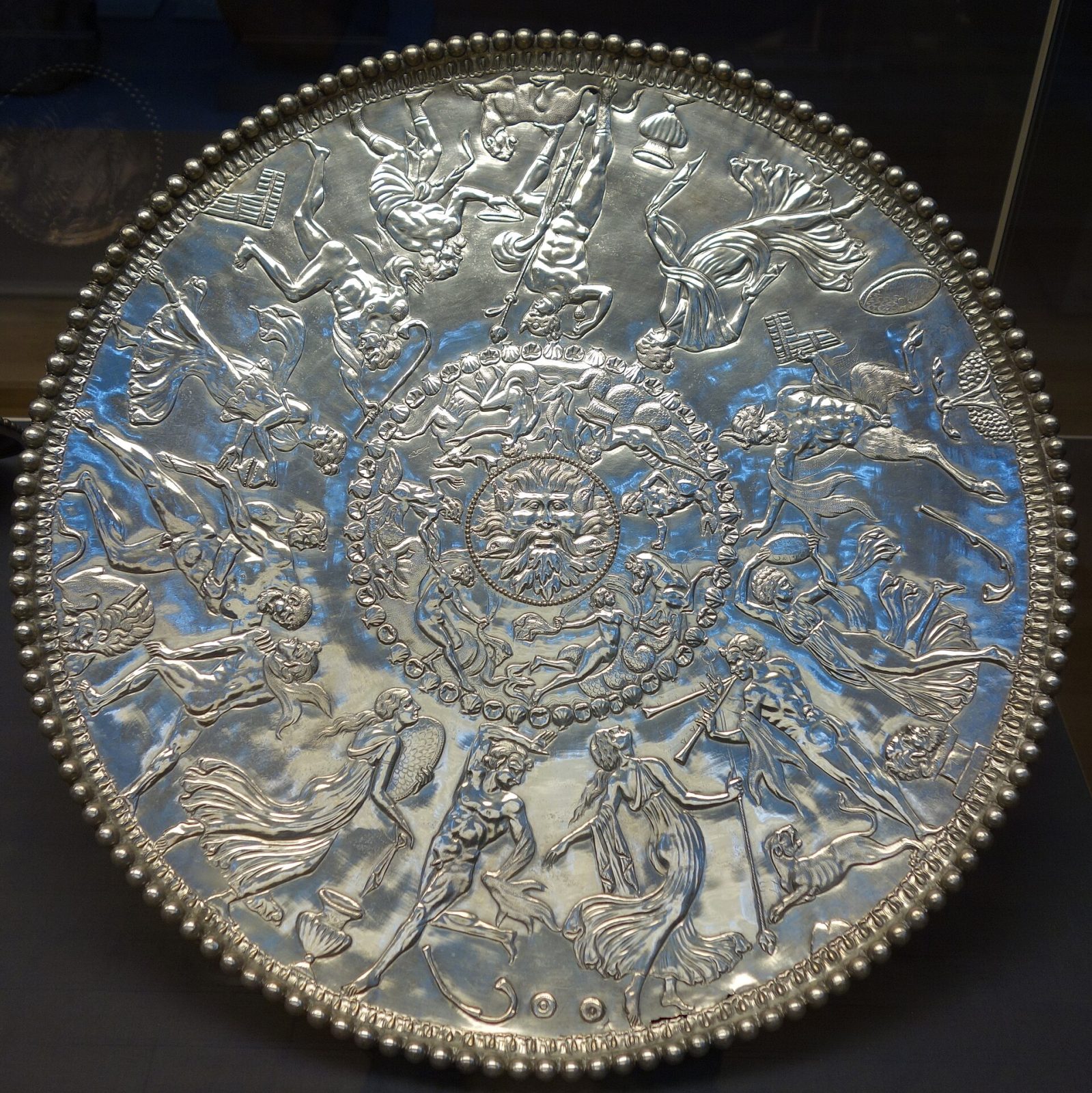
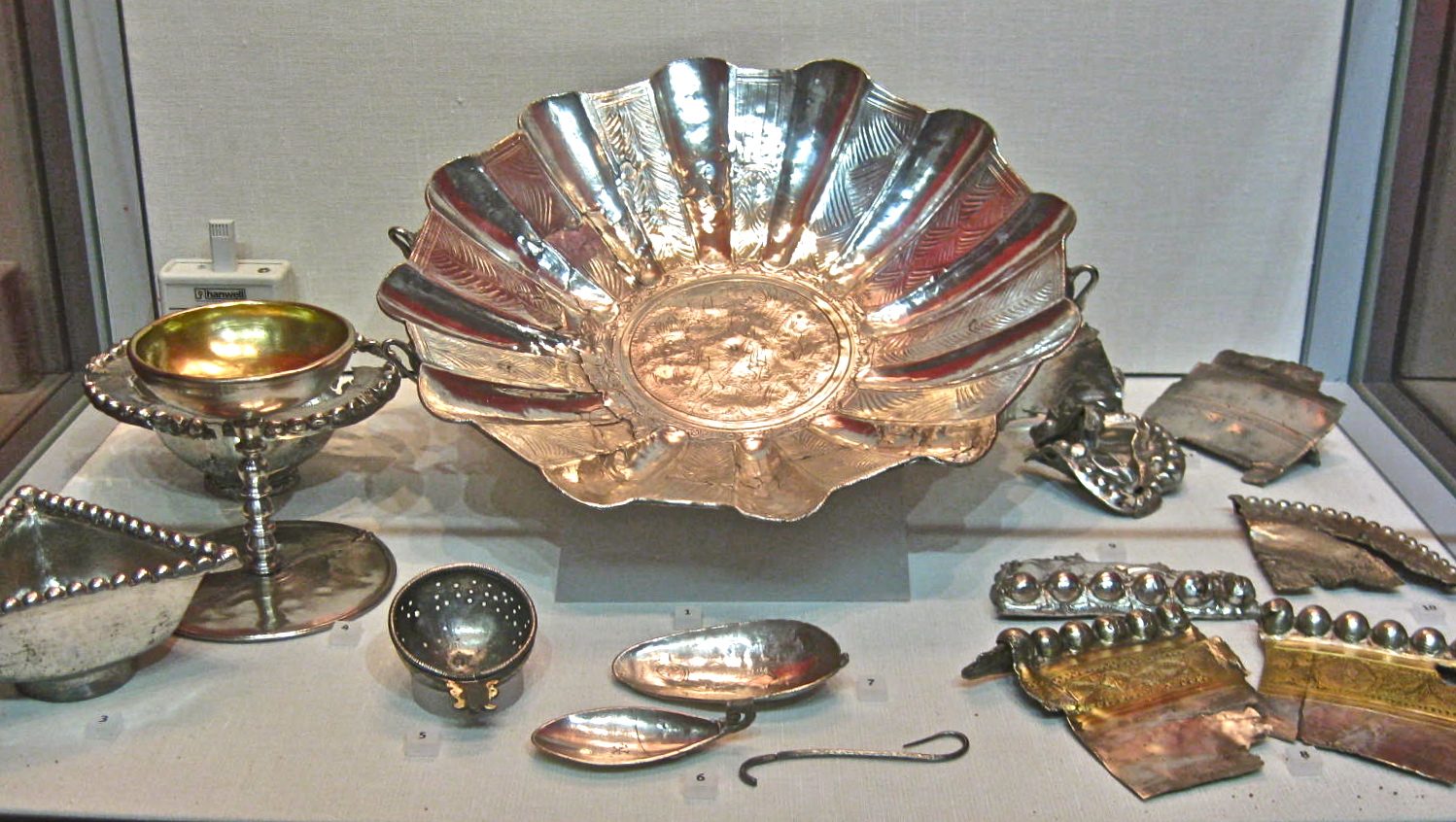
In 1942 a ploughman at West Row in Suffolk struck a hoard of 34 pieces of late Roman silver tableware. His employer took it home and kept quiet about it for four years before the world found out.

FF 94

Made in the 4th century AD · found 1975

Water Newton Treasure

England · Hoards

In 1975 a ploughed field at Water Newton, on the site of a Roman town near Peterborough, gave up 28 silver and gold objects marked with Christian symbols, the earliest known Christian church silver from anywhere in the Roman Empire.

FF 132

Made in the 4th century AD · found 1735

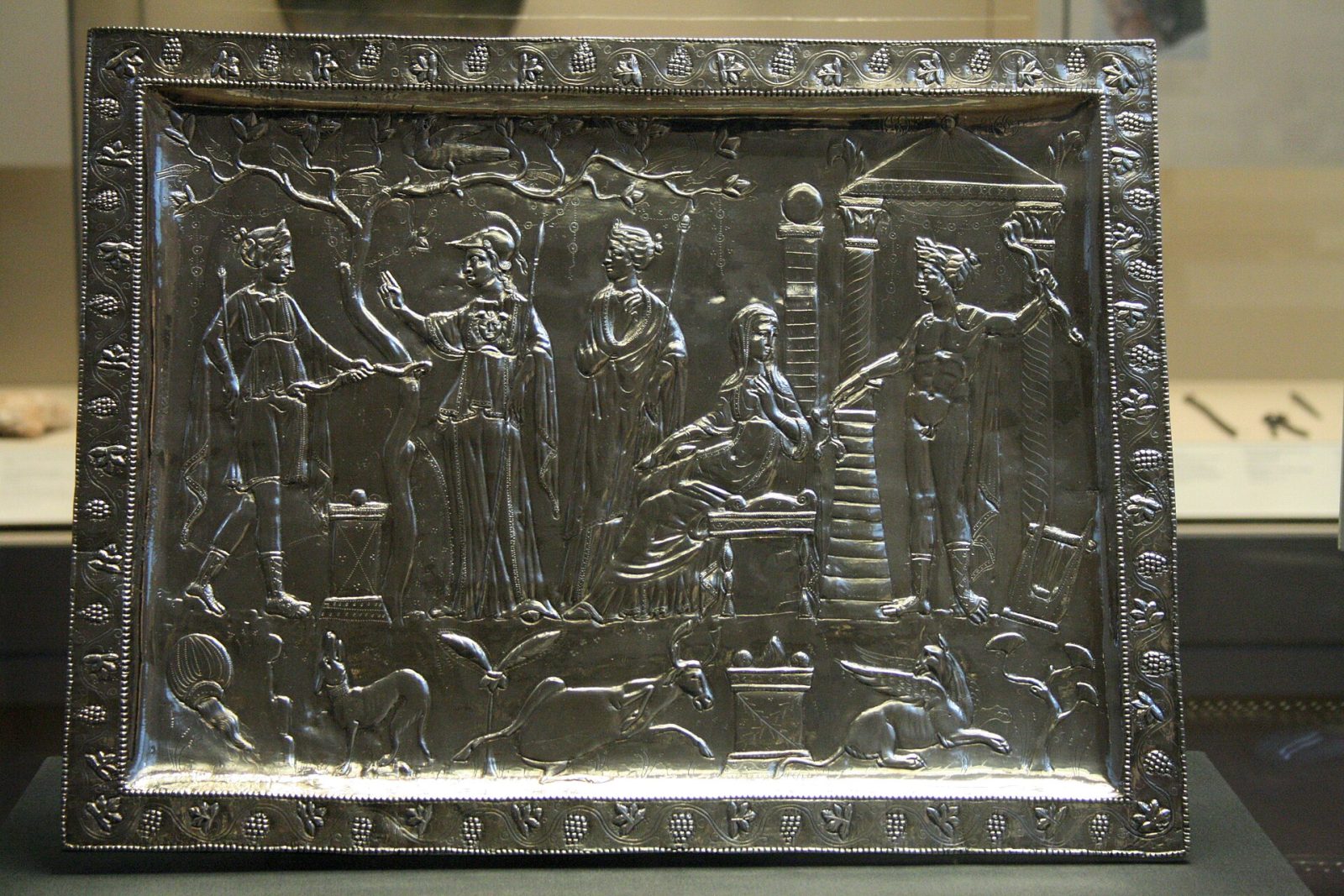
Corbridge Lanx

England · Artefacts

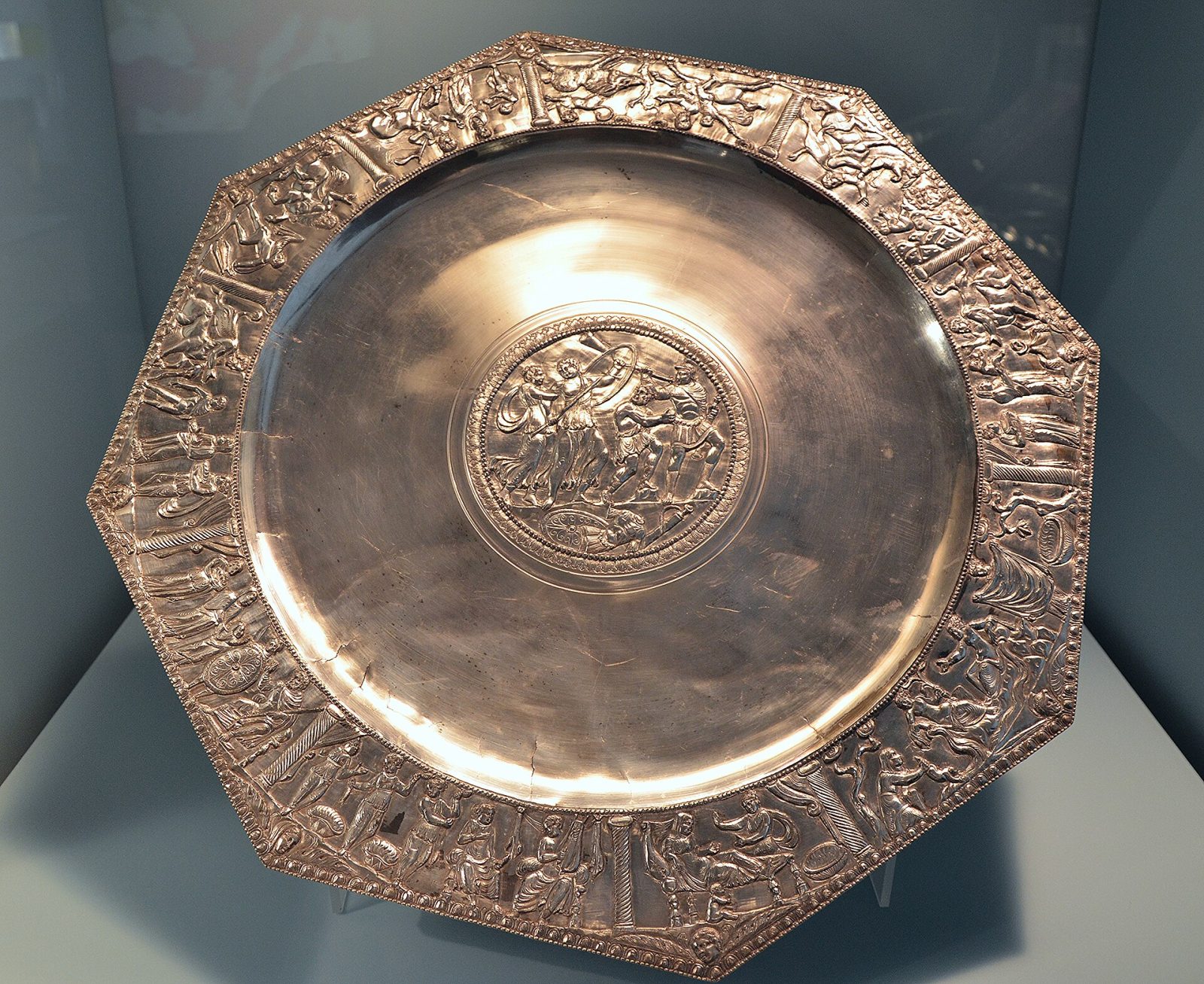
In 1735 a nine-year-old girl found a large Roman silver tray sticking out of the riverbank at Corbridge in Northumberland. Within months it was the subject of a court case over who owned it.

FF 295

Early 4th century AD · found 1955

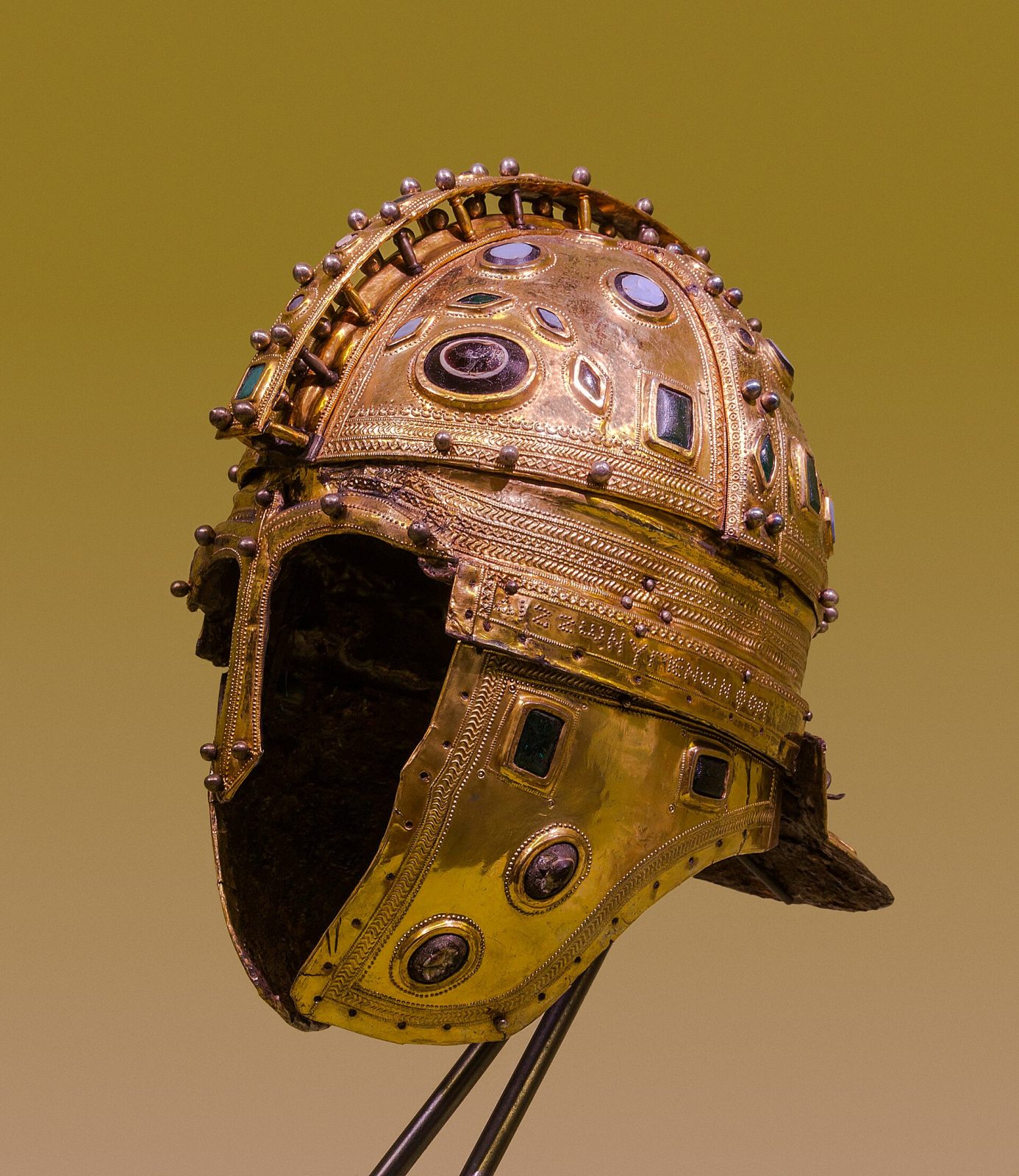
Berkasovo helmets

Serbia · Weapons

A woman working her field at Berkasovo in Serbia saw strange metal objects in the ploughed soil and, fearing wartime bombs, left them alone for years. In 1955 she dug them up. They were two late Roman helmets covered in gilded silver, one set with imitation emeralds.

FF 373

Made about AD 300 to 700 · found 1890

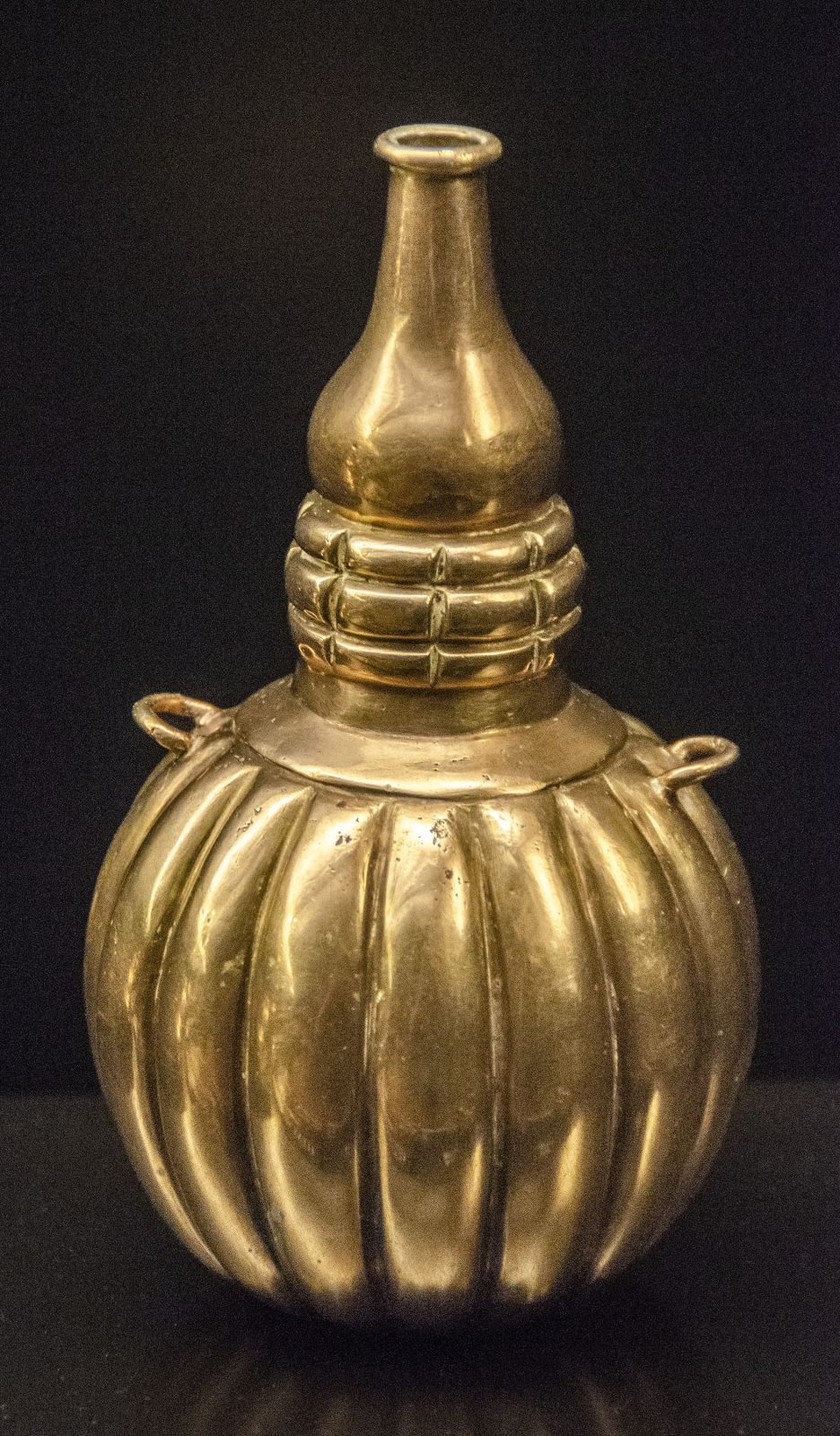
Quimbaya Treasure

Colombia · Hoards

In 1890 grave-robbers opened two tombs at La Soledad near Filandia in Colombia and found hundreds of gold objects. The government bought them, then the president gave them to the Queen Regent of Spain in 1893. Colombia has been trying to get them back ever since.

FF 316

Buried in the 4th or 5th century AD · found 1925

Tomb of Tin Hinan

Algeria · Jewellery

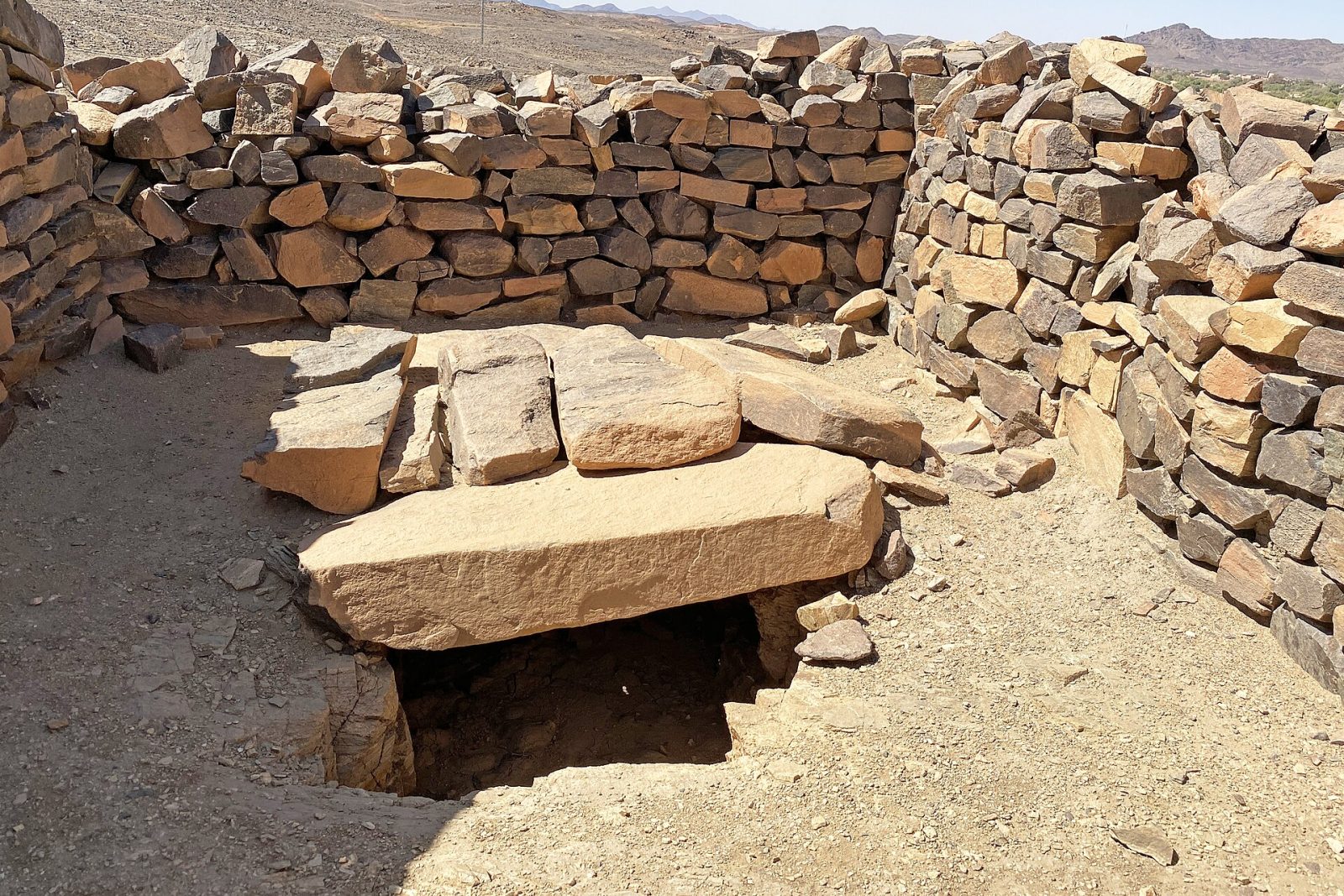
In 1925 an expedition led by the showman Byron Khun de Prorok opened a great stone tomb at Abalessa in the Algerian Sahara. Inside lay a woman wearing seven gold bracelets weighing more than 1.7 kilograms, revered by the Tuareg as their ancestral queen, Tin Hinan.

FF 349

Built about AD 310 to 320, sunk about 350 · found 1863

Nydam boat

Denmark · Weapons

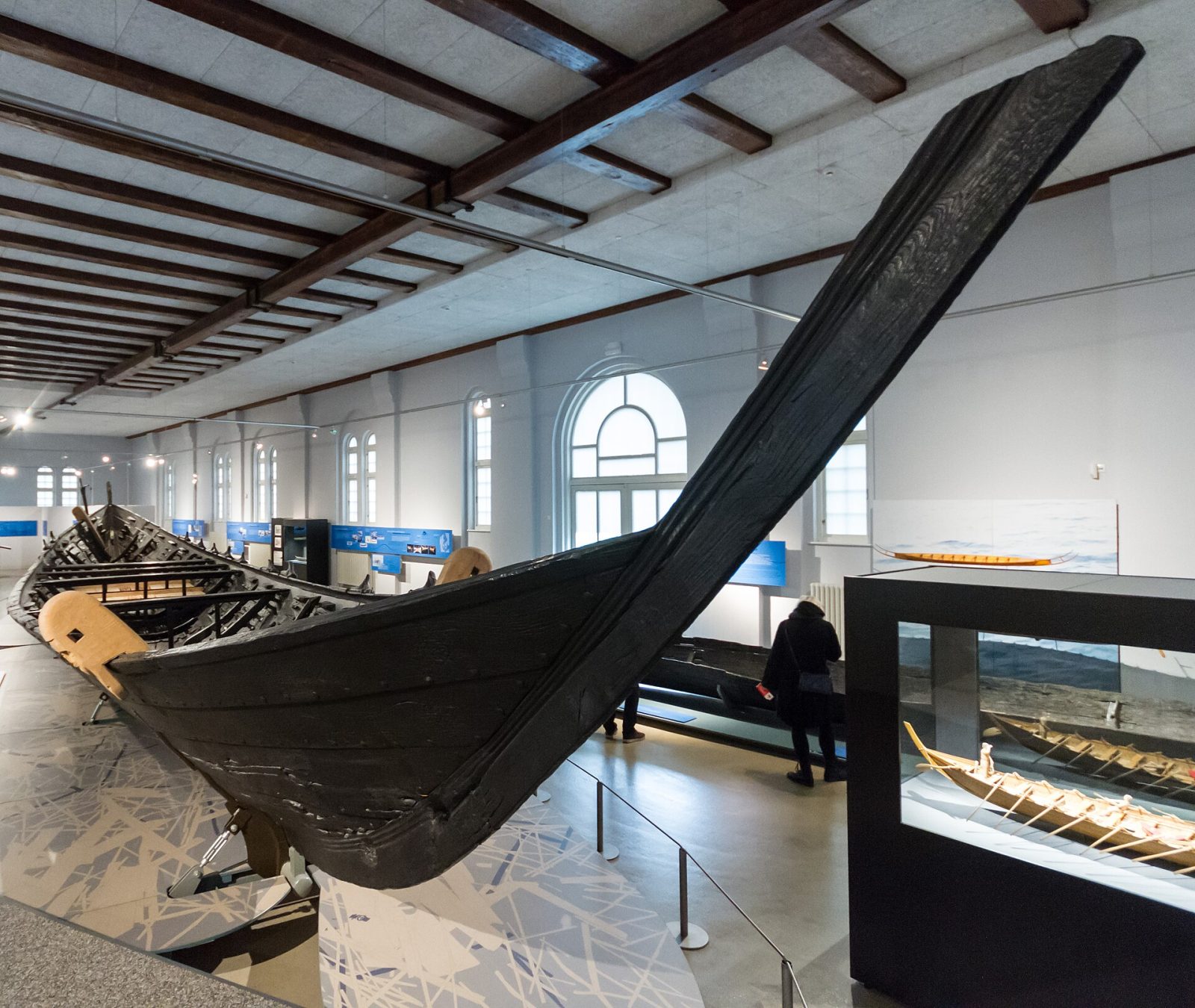
On 17 August 1863 workers excavating Nydam bog in South Jutland for the archaeologist Conrad Engelhardt struck oak planks: a 23-metre rowing boat sunk as a war offering around AD 350. War stopped the dig months later, and the boat has been in Germany ever since.

FF 344

Buried about AD 335 · found 2009

Shrewsbury Hoard

England · Hoards

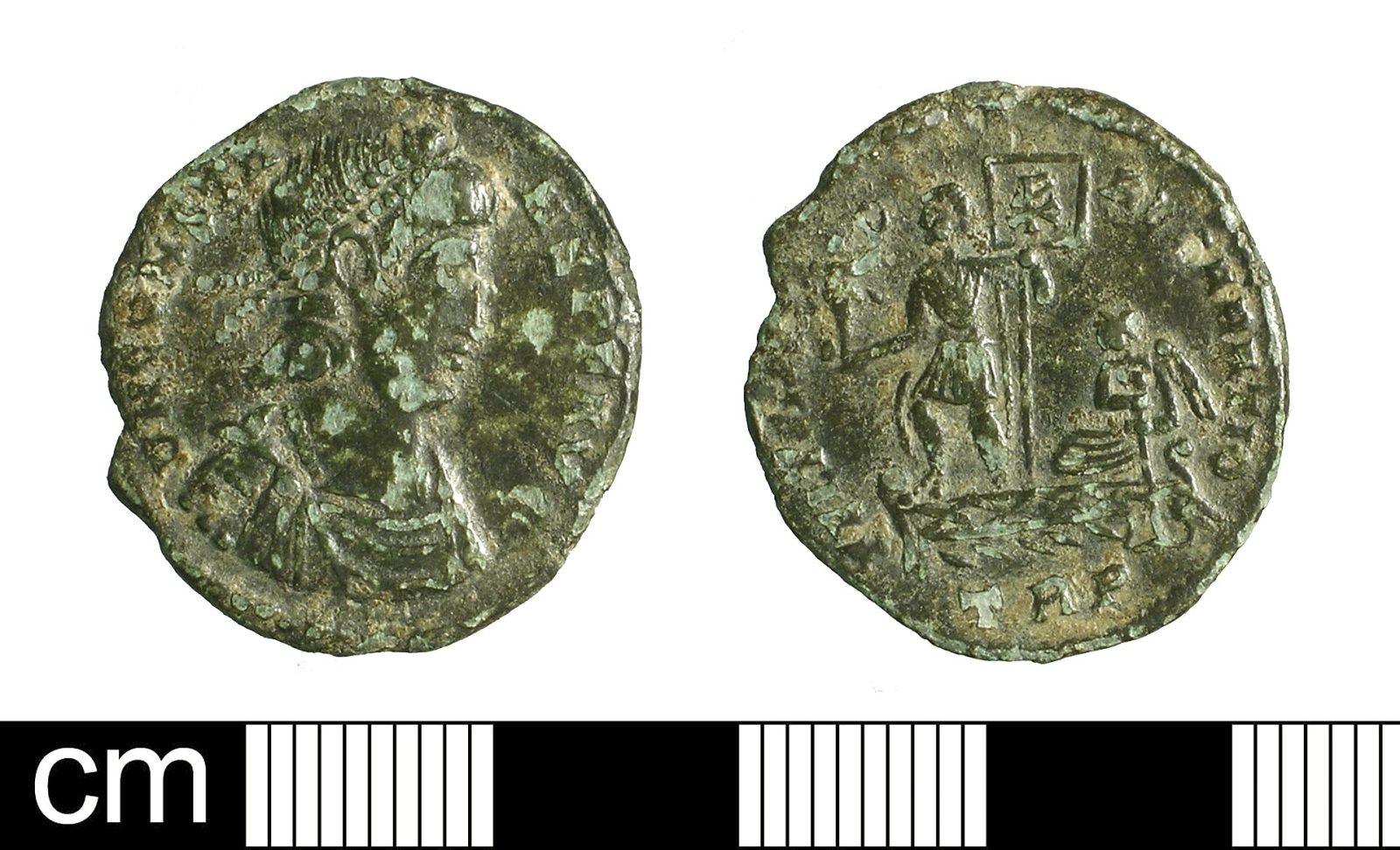
In August 2009 Nic Davies, who had taken up metal detecting a month earlier, was sheltering from rain near Shrewsbury when he found a Roman pot packed with 9,315 coins of the age of Constantine. He had not asked the landowner's permission, and the coroner said so.

FF 423

Struck about AD 313 to 315 · found 2007

Licinius I gold multiple

England · Coins

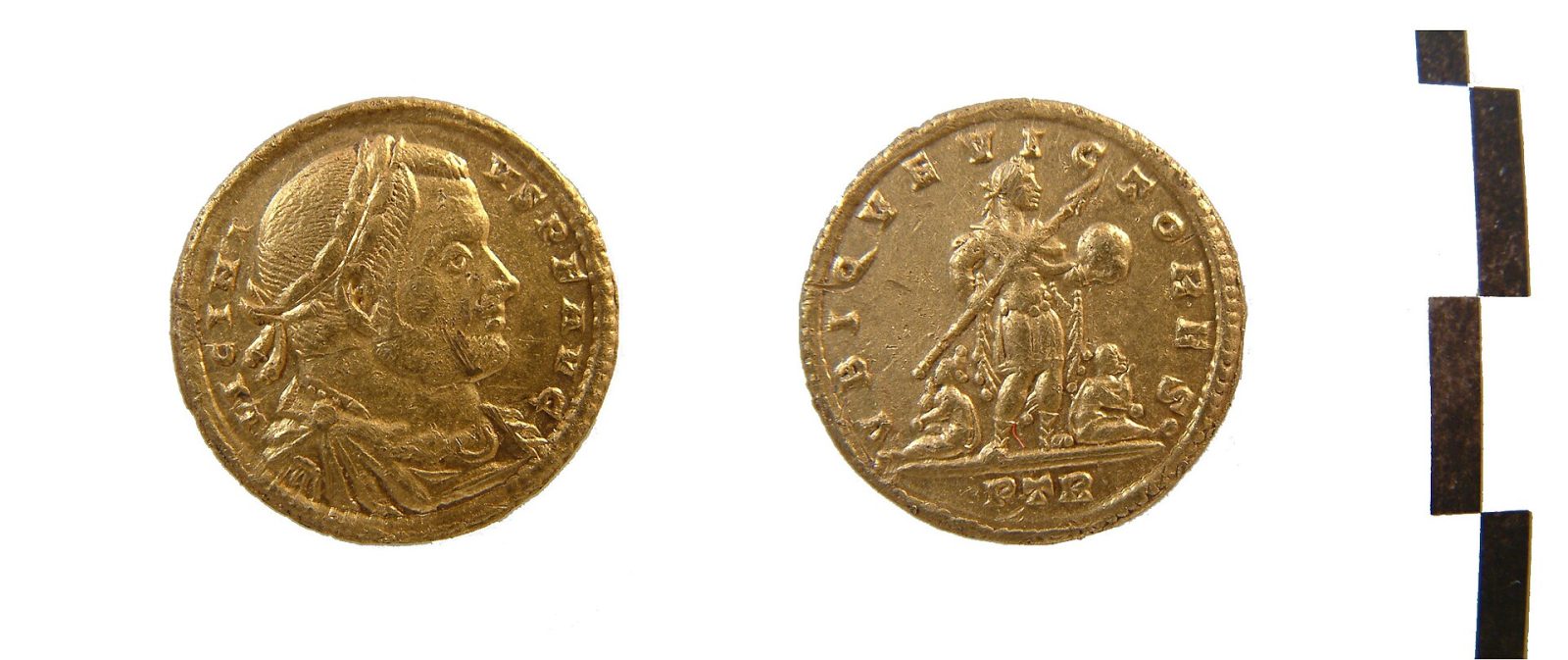
A detectorist in south Wiltshire, late for a club dig and searching alone in the rain, nearly ignored a faint signal he took for sweet-wrapper foil. It was a gold multiple of the Roman emperor Licinius I, struck at Trier around 313 to 315. Only four are known.

FF 433

Struck about AD 313 to 315 · found 2019

Constantine I gold solidus

England · Coins

On 7 June 2019 a detectorist searching an oddly shaped field at Wanstrow in Somerset, near a Roman lead-mining road, dug a near-perfect gold solidus of Constantine the Great, struck at Trier about AD 313 to 315. It was the first of its type recorded from Britain.

FF 176

Made about AD 335 to 550, buried in the 6th century · found 2020

Vindelev Hoard

Denmark · Hoards

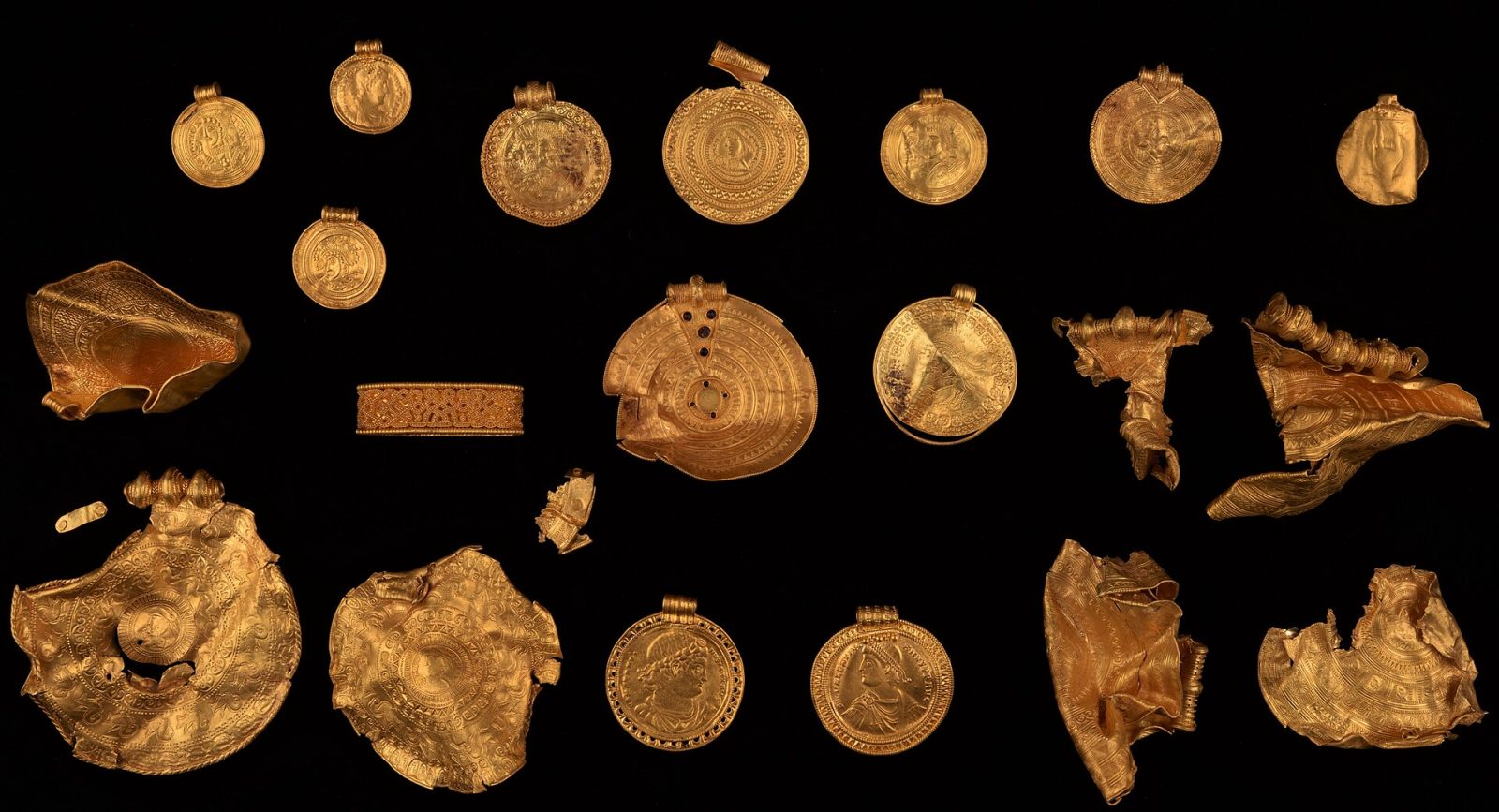
Just before Christmas 2020 a man with a newly bought metal detector found a hoard of gold in a friend's field near Jelling in Denmark: Roman medallions and the largest gold bracteate ever found. One pendant carries the oldest known written mention of the god Odin.

FF 98

Buried around AD 350 · found 2013

Seaton Down Hoard

England · Hoards

In November 2013 a detectorist in east Devon found a hoard of 22,888 Roman coins, reported it at once and helped archaeologists dig it out. Its first coin became the one-millionth find recorded by the Portable Antiquities Scheme.

FF 525

Struck at Trier, AD 348 to 350 · found 2017

Constans coin, Orkney

Scotland · Coins

On 12 July 2017 archaeologists racing the sea at the Knowe of Swandro on Rousay, Orkney, found a Roman bronze coin in a small Iron Age roundhouse. It was a nummus of the emperor Constans, struck at Trier around AD 348 to 350, hundreds of miles beyond Roman Britain.

FF 114

Made in the late 4th or early 5th century AD · found 1837

Pietroasele Treasure

Romania · Hoards

In 1837 two quarrymen in Romania found a hoard of Gothic gold known as the Hen with the Golden Chicks. Since then it has been broken up, stolen, saved from a fire and held in Moscow for 40 years.

FF 384

Made about AD 350 to 450 · found 1785

Vyne Ring (Ring of Senicianus)

England · Jewellery

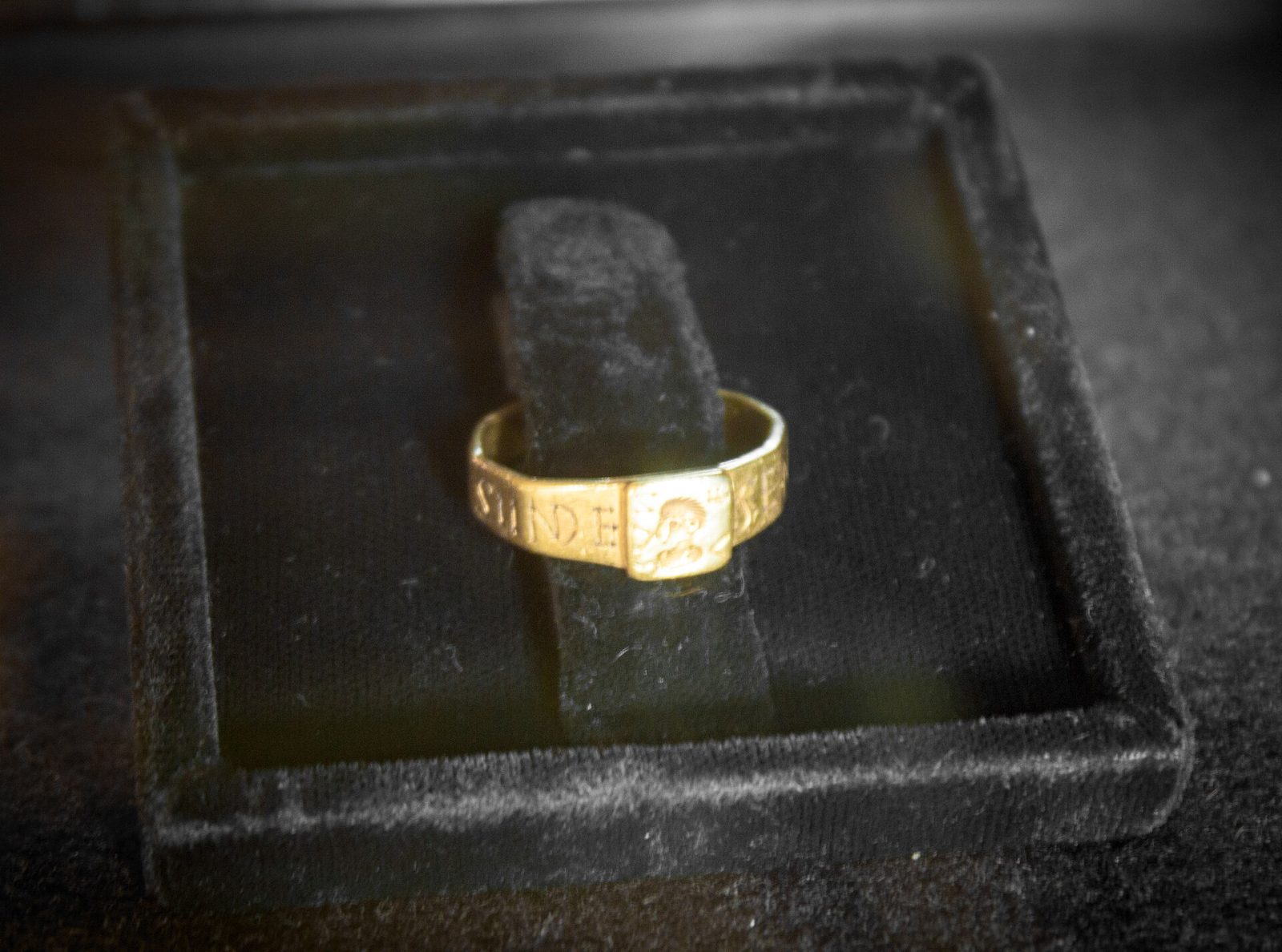
In about 1785 a farmer ploughing near the Roman town of Silchester in Hampshire turned up a heavy gold ring inscribed for a man called Senicianus. A curse tablet naming a Senicianus as a ring thief was later found at Lydney, and Tolkien worked on the site.

FF 468

Struck at Aquileia, AD 351 to 352 · found 2018

Magnentius gold solidus

England · Coins

In 2018 metal detectorists in north Suffolk found a gold solidus of Magnentius, who seized the western Roman Empire in AD 350. Struck at Aquileia, it hails him as liberator of the Romans. After his defeat, an imperial agent called 'the Chain' was sent to hunt his supporters in Britain.

FF 500

Struck at Sirmium, AD 351 to 355 · found 2024

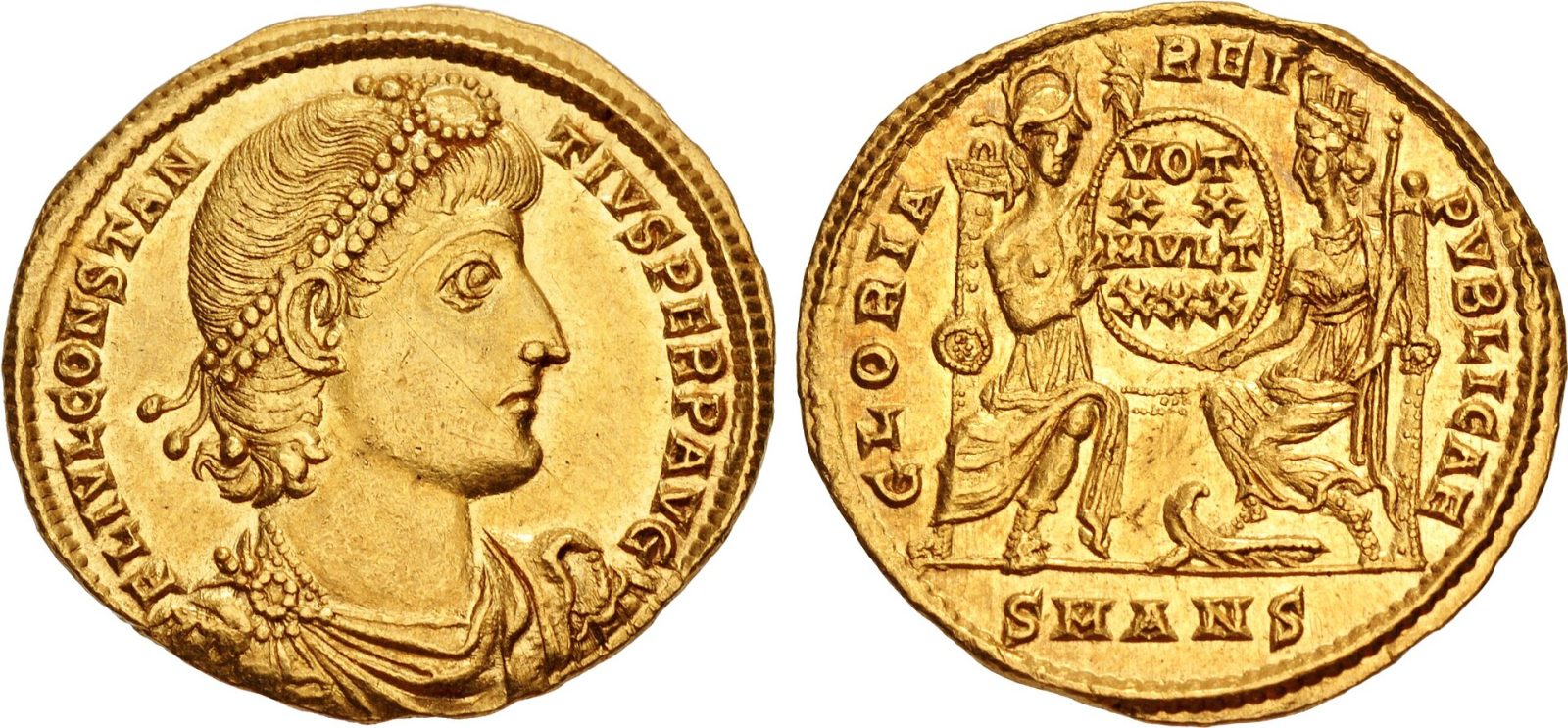
Constantius II solidus, Falster

Denmark · Coins

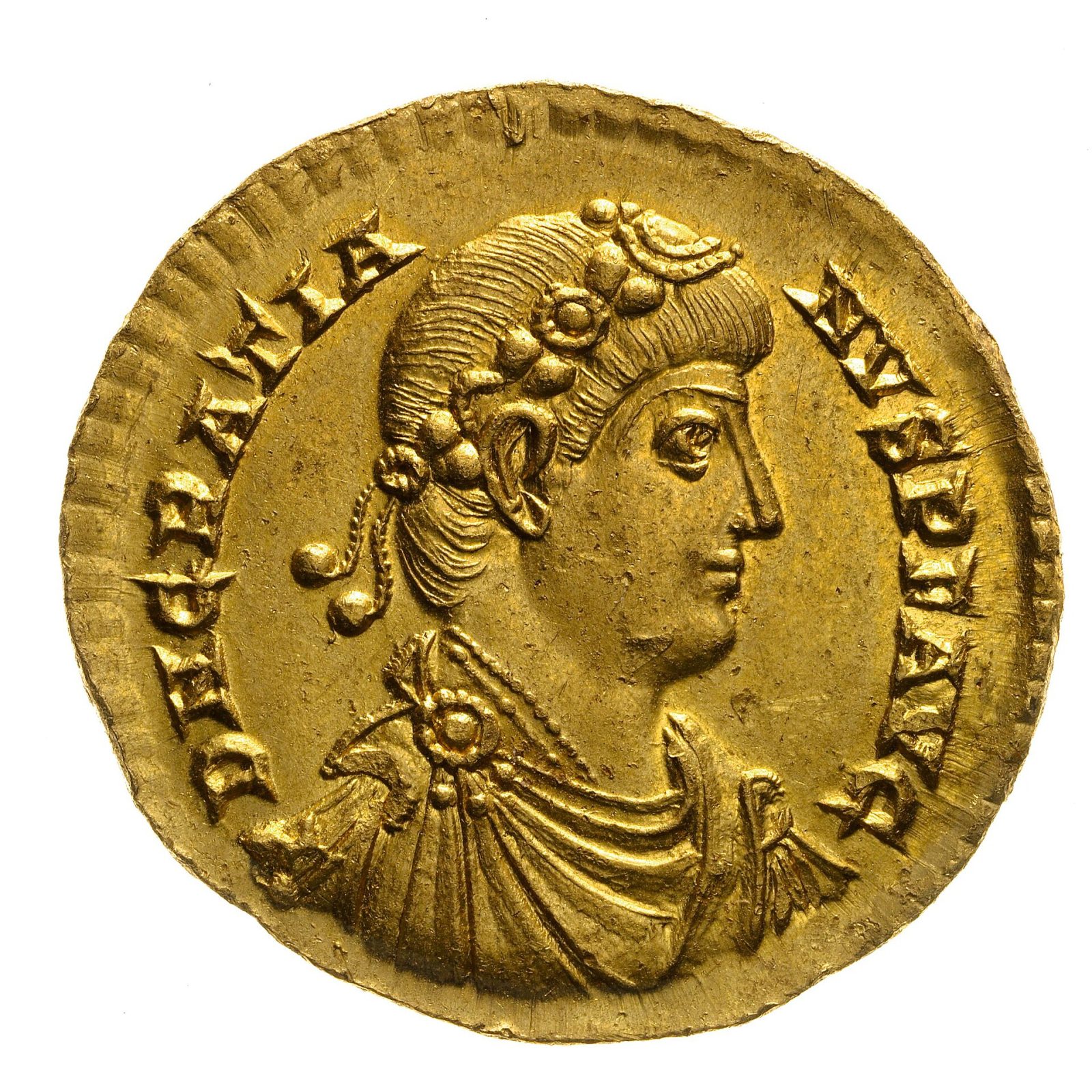
In May 2024 detectorist Linda Aarosin scraped away a little soil in a field in central Falster, Denmark, and saw an emperor's face looking up at her. It was a gold solidus of Constantius II, worn as a pendant, the first Roman gold coin found on the island.

FF 105

Made about AD 400 · found 1639

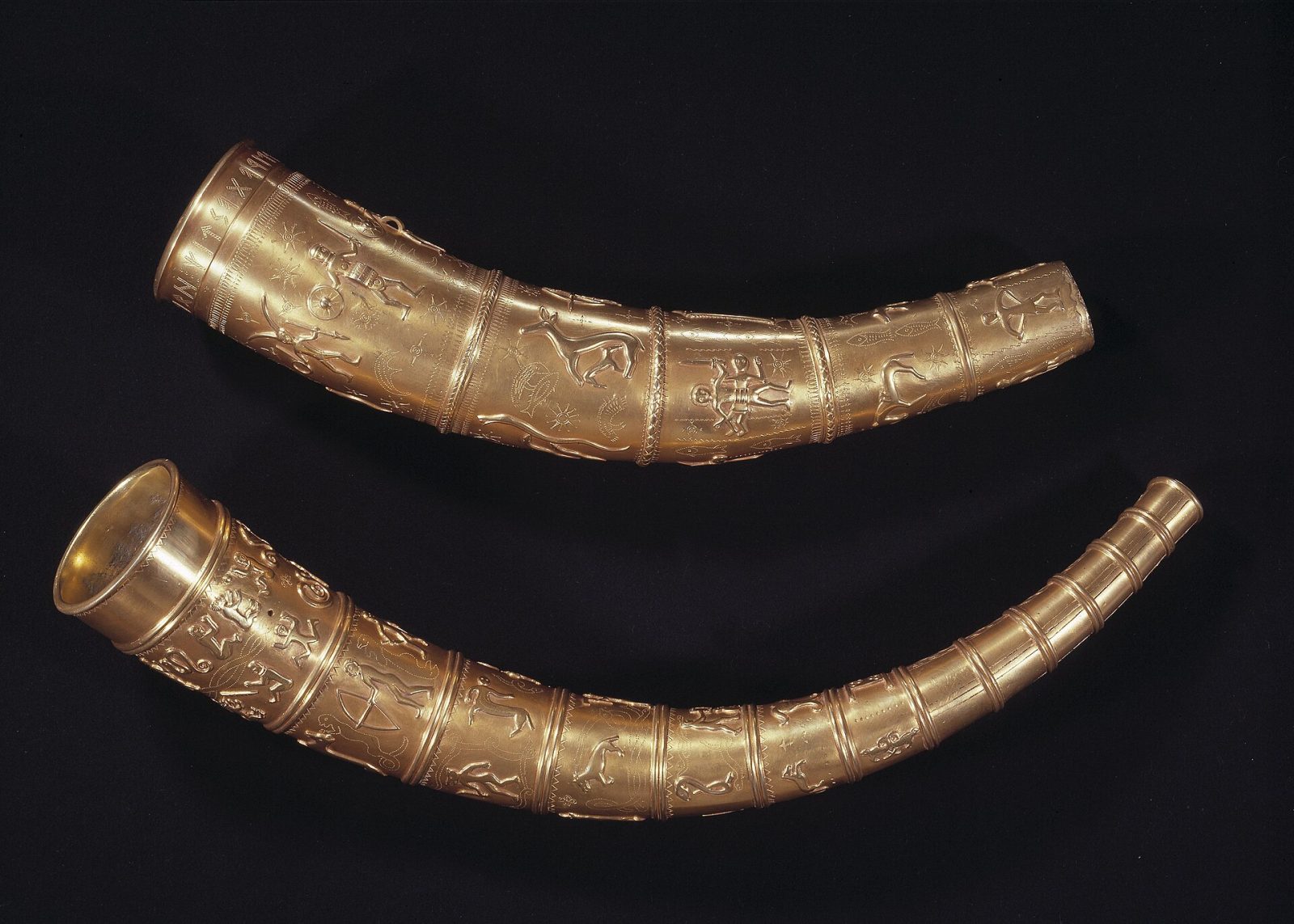
Golden Horns of Gallehus

Denmark · Artefacts

Two gold horns were found in the same Danish field nearly a century apart, one carrying one of the oldest sentences in a Germanic language. In 1802 they were stolen and melted down, and only drawings and copies survive.

FF 207

Hidden in the early 5th century AD · found 1797

Szilágysomlyó Treasure

Romania · Hoards

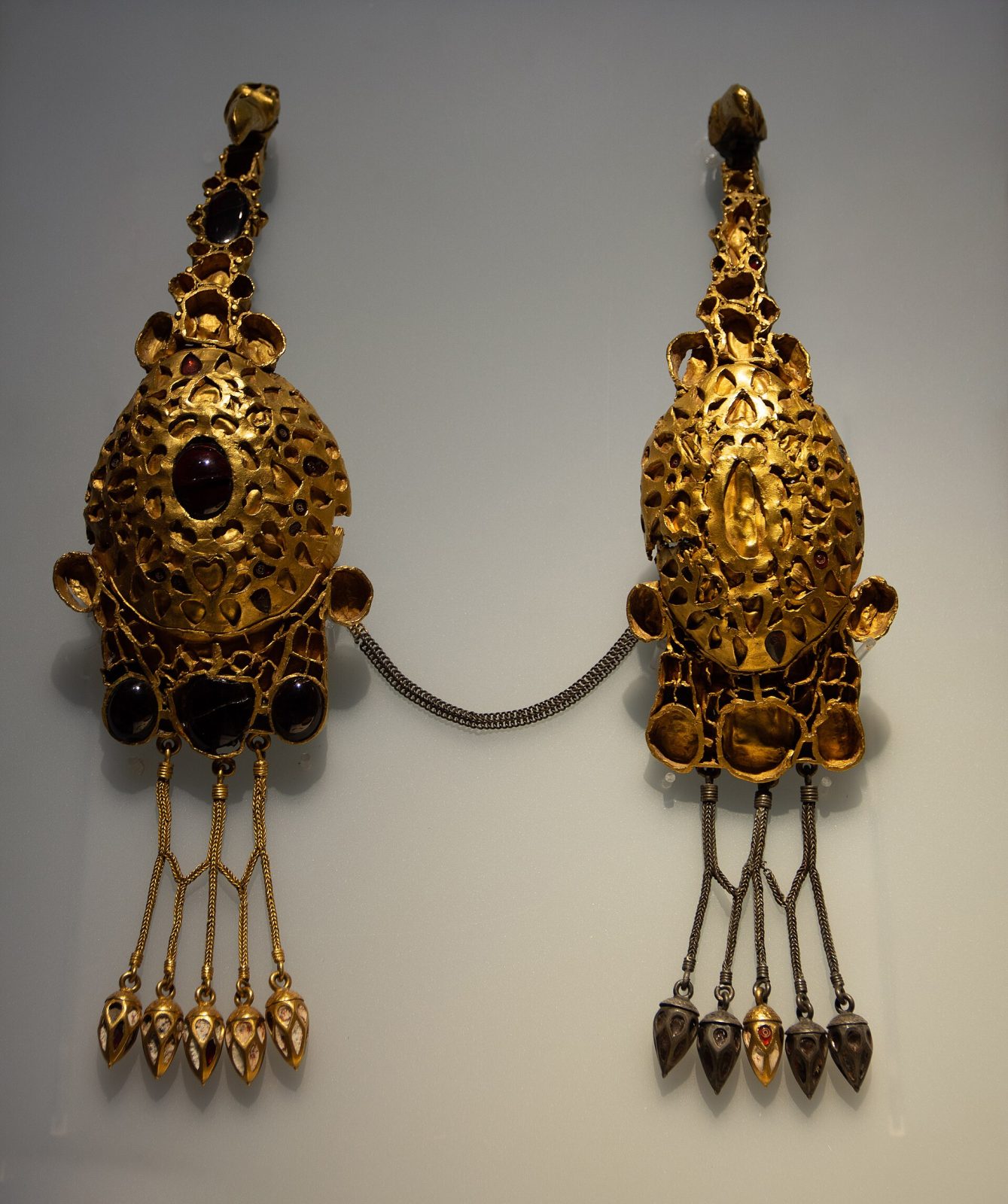
In 1797 two boys at Szilágysomlyó, now Șimleu Silvaniei in Romania, found Roman gold medallions and a chain of gold pendants. In 1889 labourers planting potatoes on the same hill found a second treasure of garnet brooches and gold cups. The two halves are now in Vienna and Budapest.

FF 580

Latest coins struck AD 375-378 · found 1958

Machtum Roman gold hoard

Luxembourg · Hoards

In April 1958 a dredger taking gravel from the Moselle between Ahn and Machtum, in Luxembourg, brought up more than 100 Roman gold coins and medallions. Mostly of the emperors Valentinian I, Valens and Gratian, they may have been an imperial gift lost in the river around AD 377.

FF 95

Buried around AD 390, or perhaps as late as 420 to 440 · found 1979

Thetford Treasure

England · Hoards

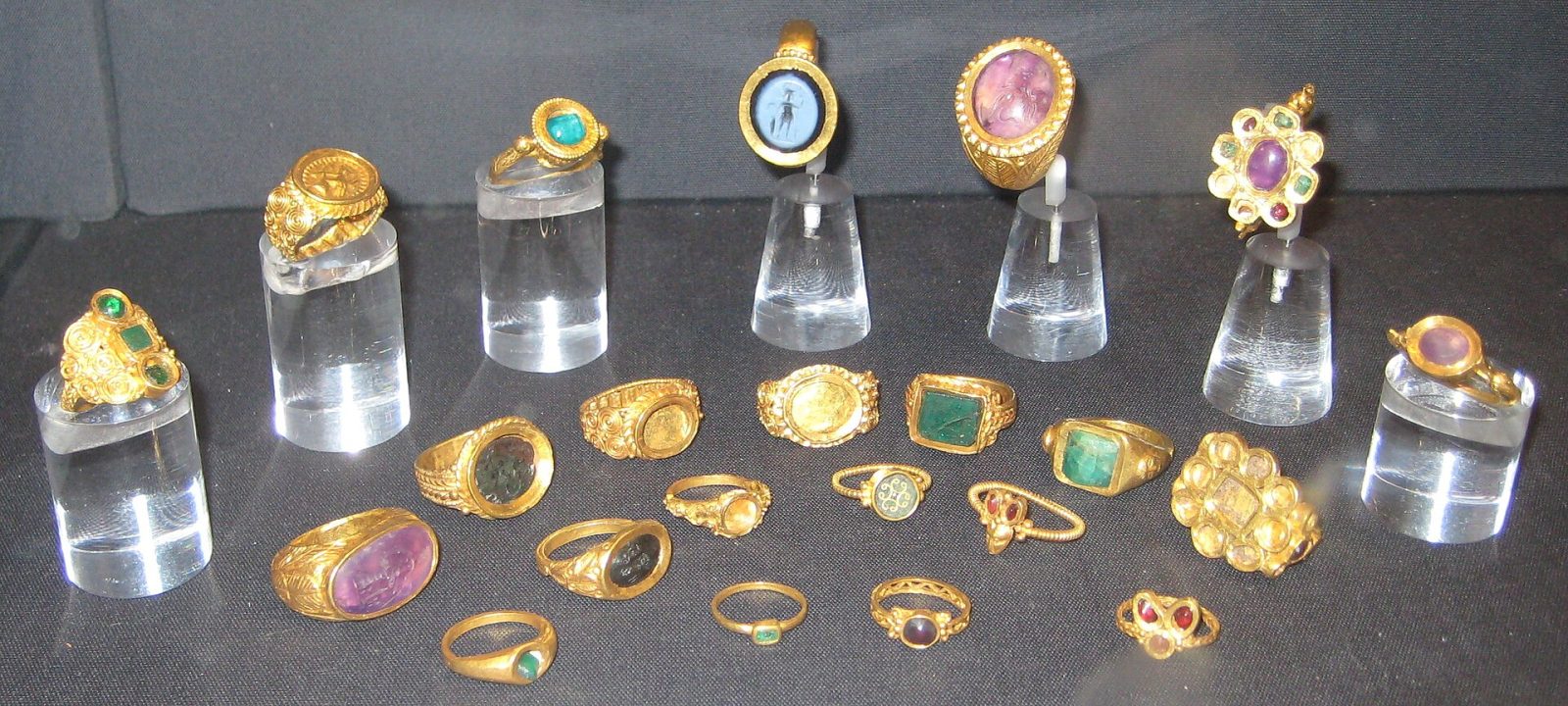
In 1979 a detectorist dug up a late Roman hoard of gold jewellery and silver spoons on a Thetford building site, and didn't report it. By the time archaeologists heard, the findspot had been built over.

FF 90

Buried in the early 5th century AD · found 1919

Traprain Law Treasure

Scotland · Hoards

In 1919 archaeologists digging a hillfort in East Lothian found more than 20 kilograms of late Roman silver, deliberately cut and crushed into pieces. It is the largest hoard of Roman hacksilver ever found.

FF 168

Migration Period, about AD 400 to 550 · found 1904

Timboholm Hoard

Sweden · Hoards

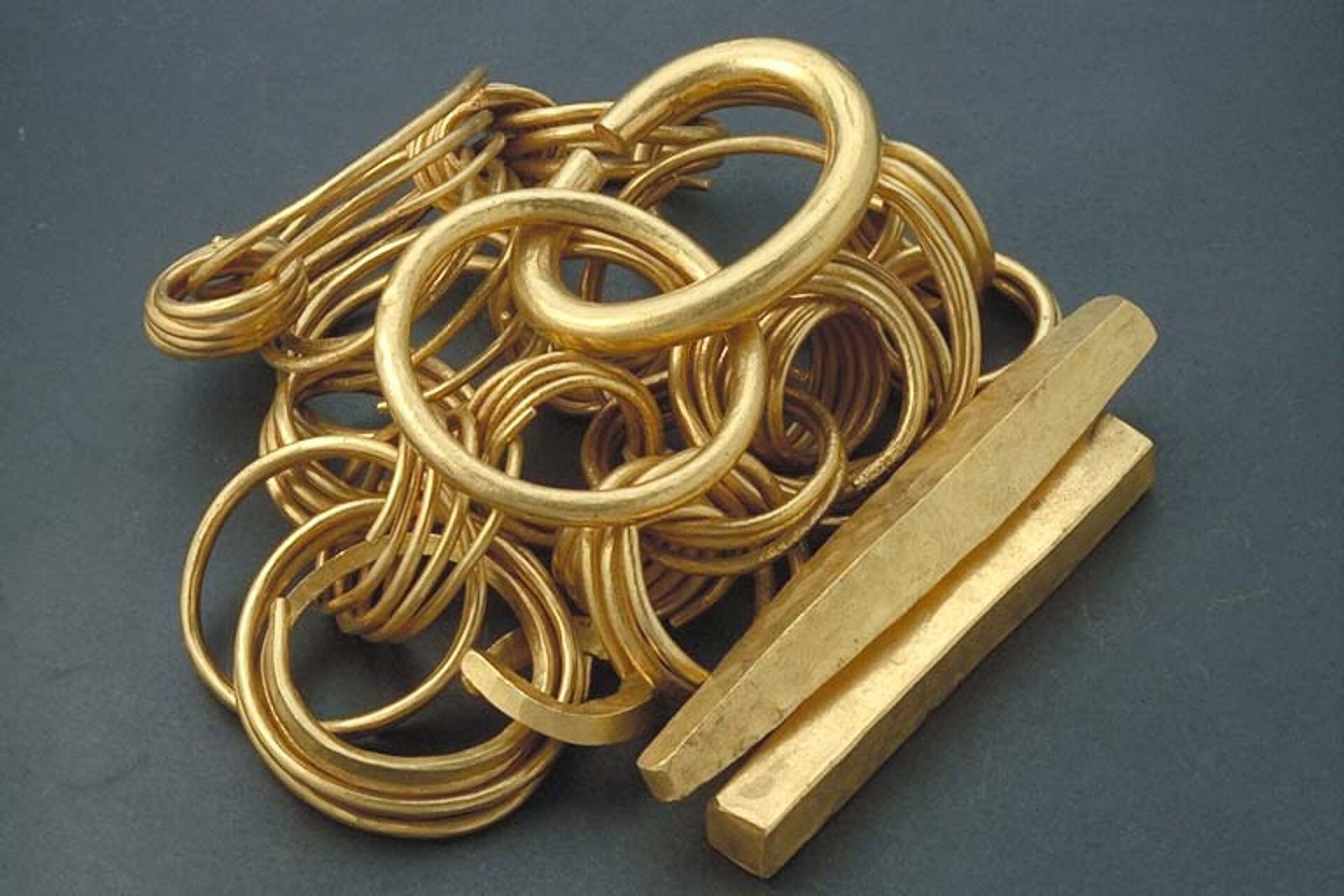
In 1904 workers levelling a small hill on the Timboholm estate near Skövde in Sweden found over seven kilograms of almost pure gold: ingots, spiral rings and heavy arm rings. It is still the largest gold hoard ever found in Sweden.

FF 183

5th to 6th century AD (date debated) · found 2009

Escrick Ring

England · Jewellery

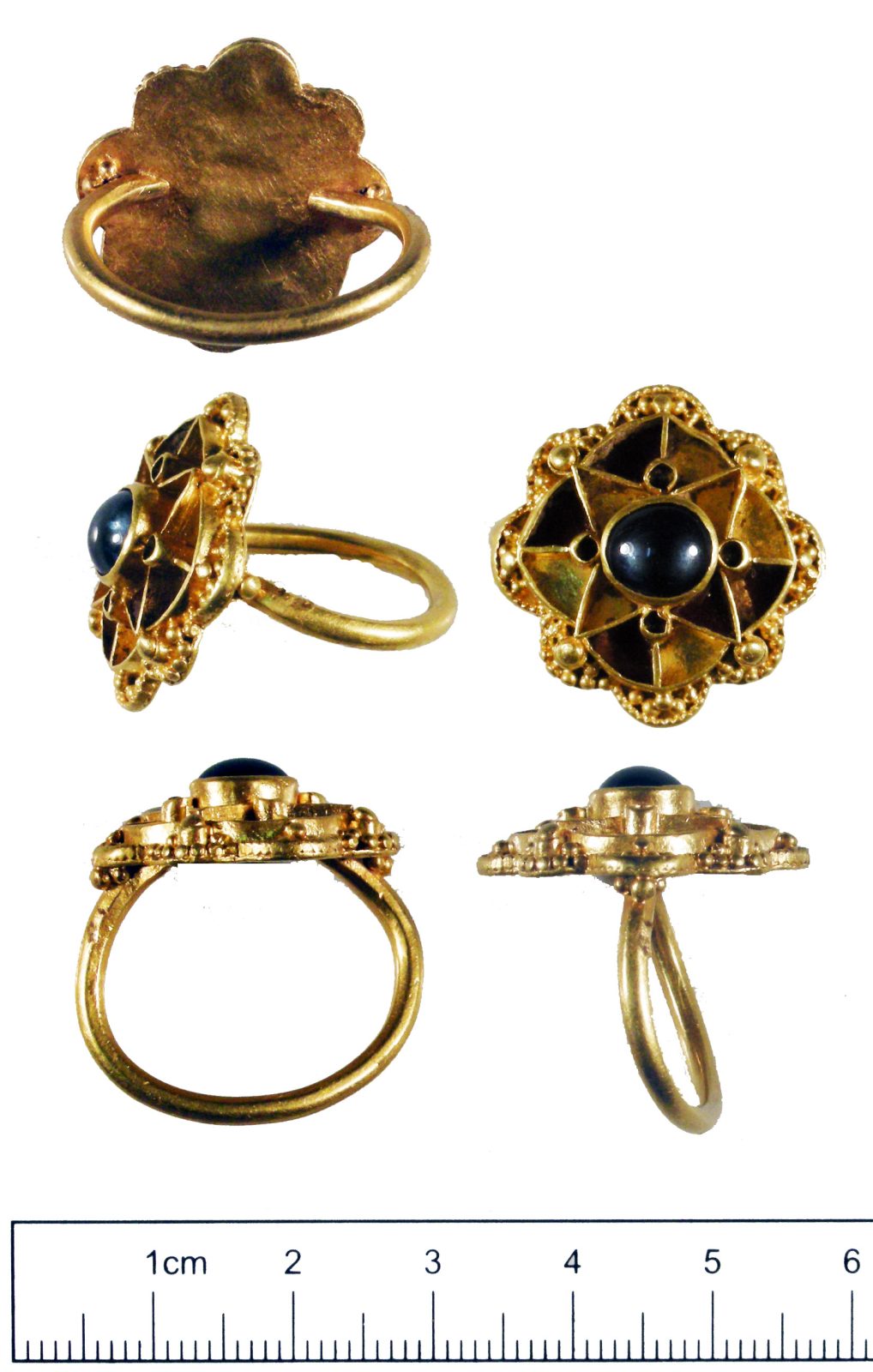
In 2009 a York detectorist found a gold ring set with a large sapphire in a field near Escrick. First thought to be a bishop's ring of around AD 1000, it is now believed to be centuries older, perhaps made for a king or queen of the 5th or 6th century.
FF 194

About AD 400 to 800 · found 1869

Whitecleuch Chain

Scotland · Jewellery

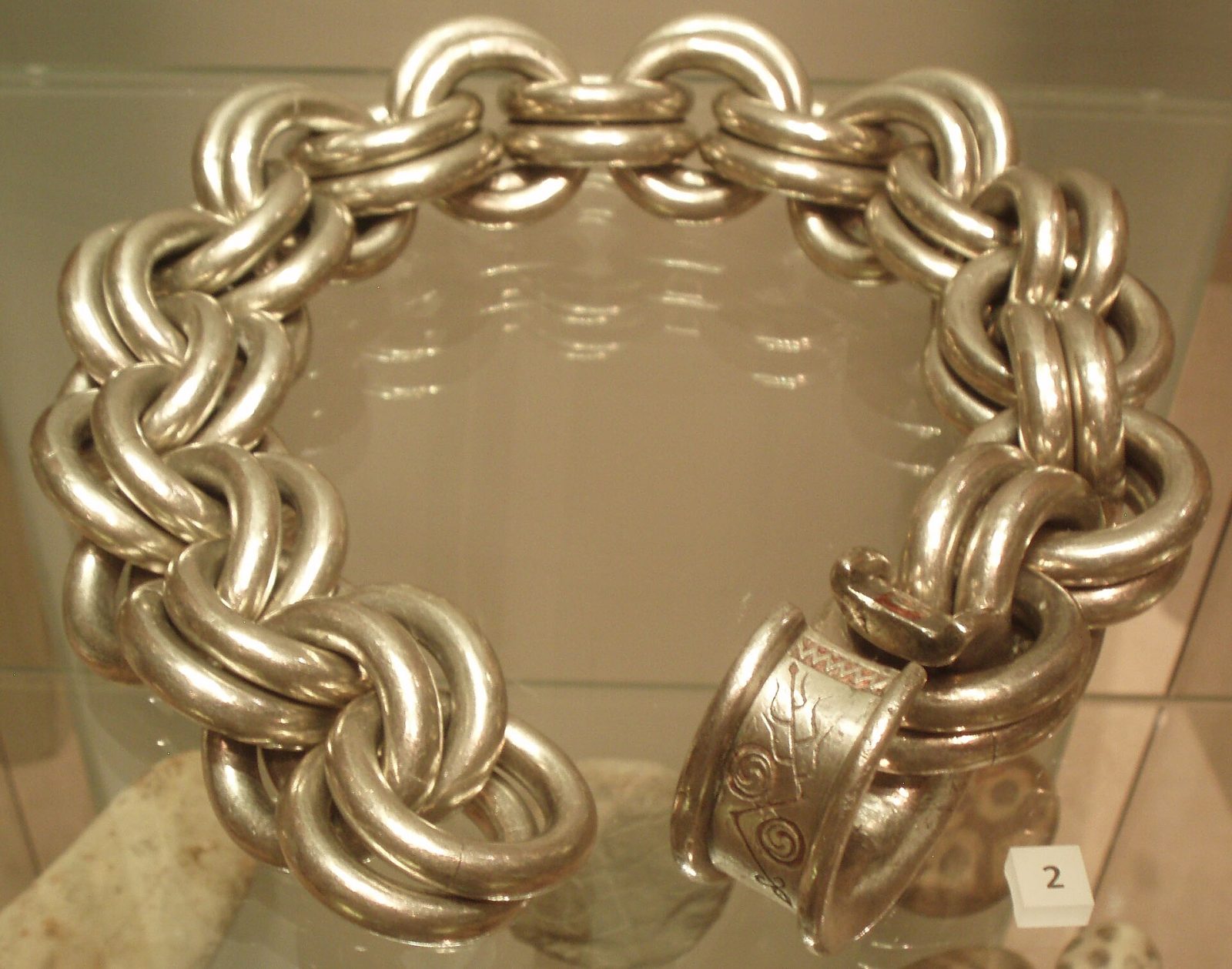
In May 1869 a Lanarkshire shepherd noticed silver rings sticking out of the side of a sheep drain and pulled out a massive chain of silver, closed by a ring carved with Pictish symbols. It is one of only about ten such chains known.

FF 319

Marajoara culture, about AD 400 to 1400 · found 1870

Marajoara burial urns

Brazil · Artefacts

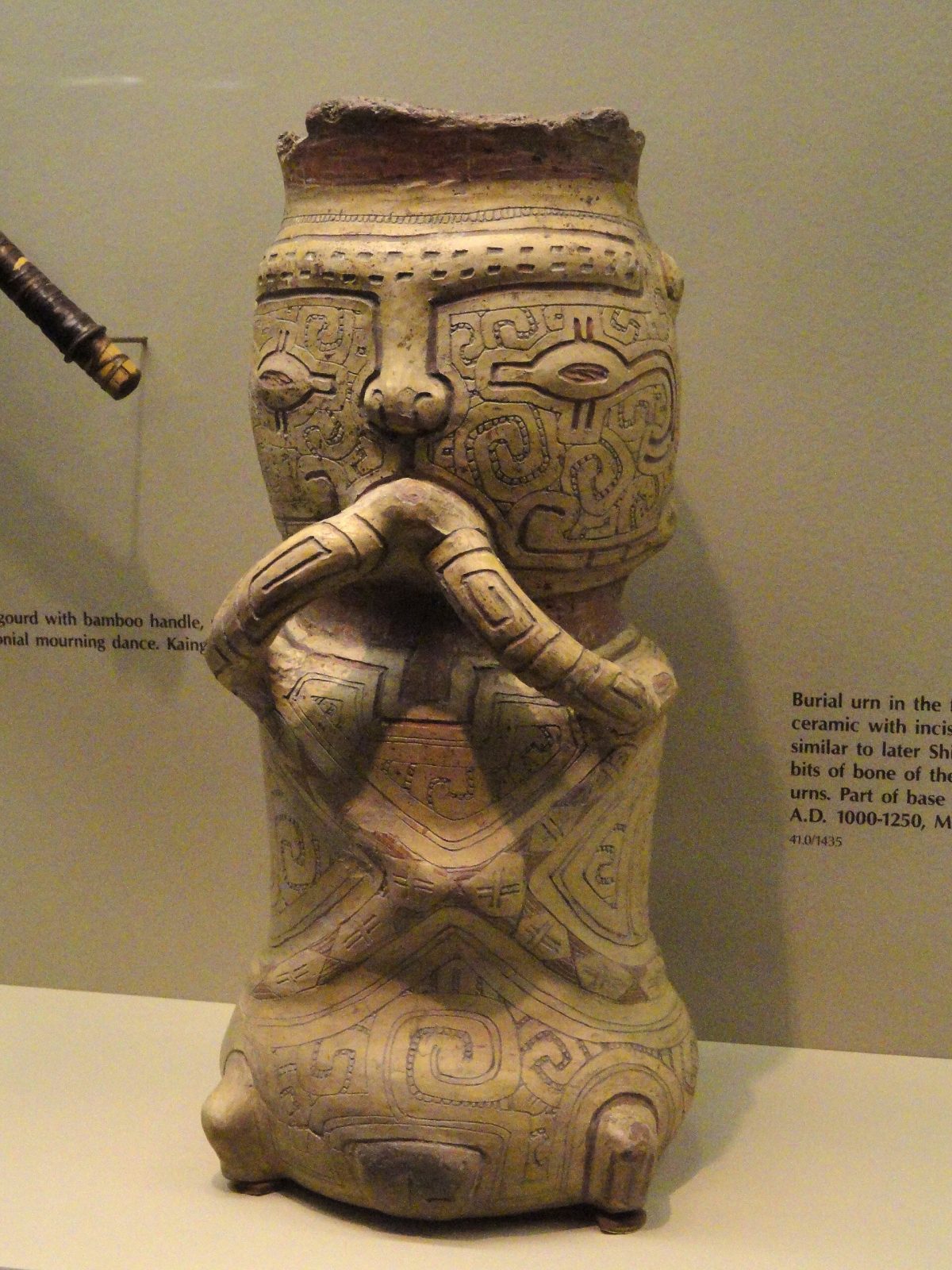
In October 1870 William Barnard, a Cornell student on Charles Hartt's expedition, dug into an earth mound on Marajó island at the mouth of the Amazon and found painted burial urns full of bones. They belonged to the Marajoara culture, which flourished from about AD 400 to 1400.

FF 391

Made about AD 400 to 550 · found 1774

Tureholm Treasure

Sweden · Hoards

In 1774, on the Tureholm estate near Trosa in Sweden, about 12 kilograms of Migration Period gold came out of the ground where an old storehouse had stood. Most of it was melted down. A kilo-weight gold neck ring and sword fittings survive in Stockholm.

FF 462

Made in the Migration Period, about AD 400 to 550 · found 1827

Ålleberg gold collar

Sweden · Jewellery

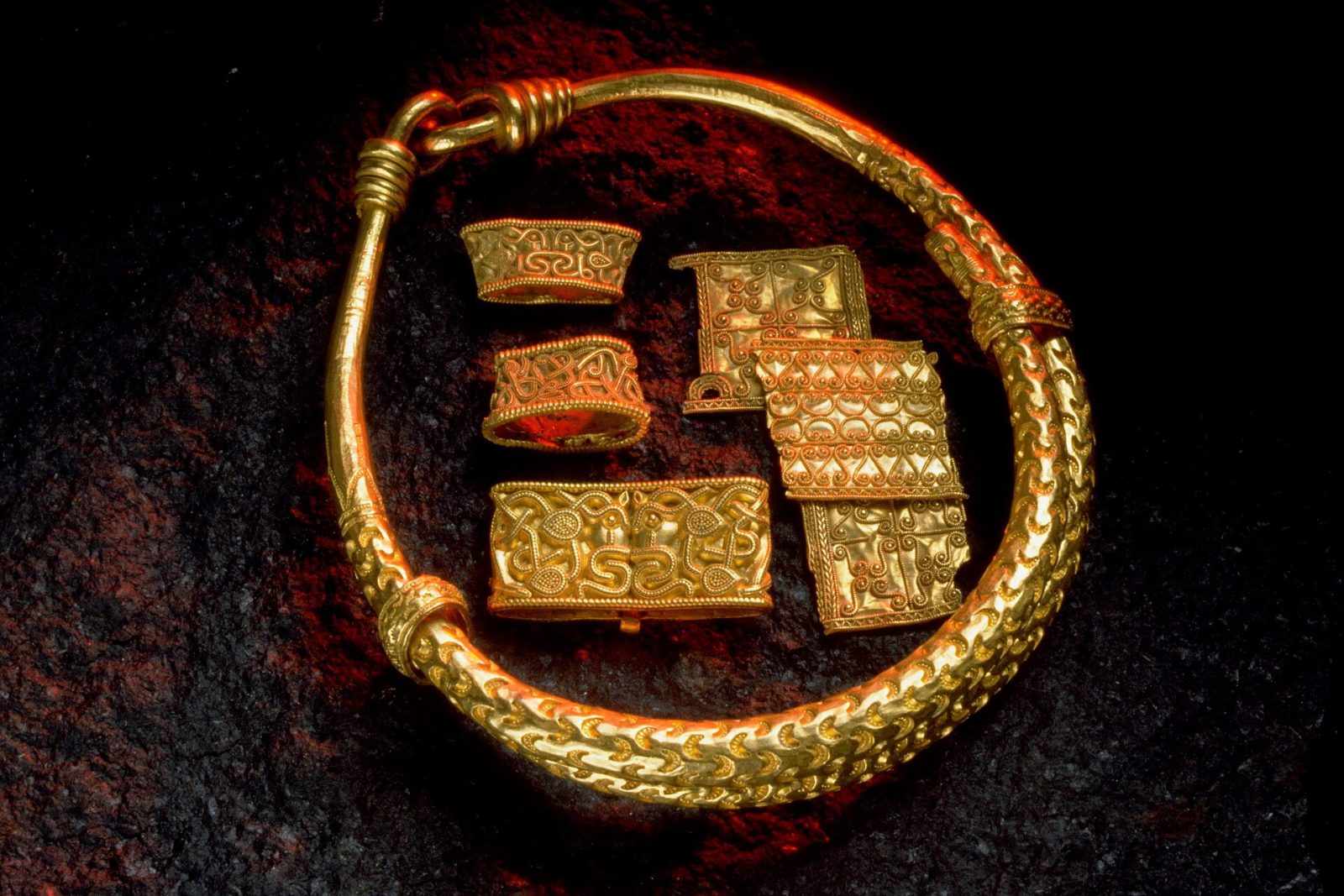
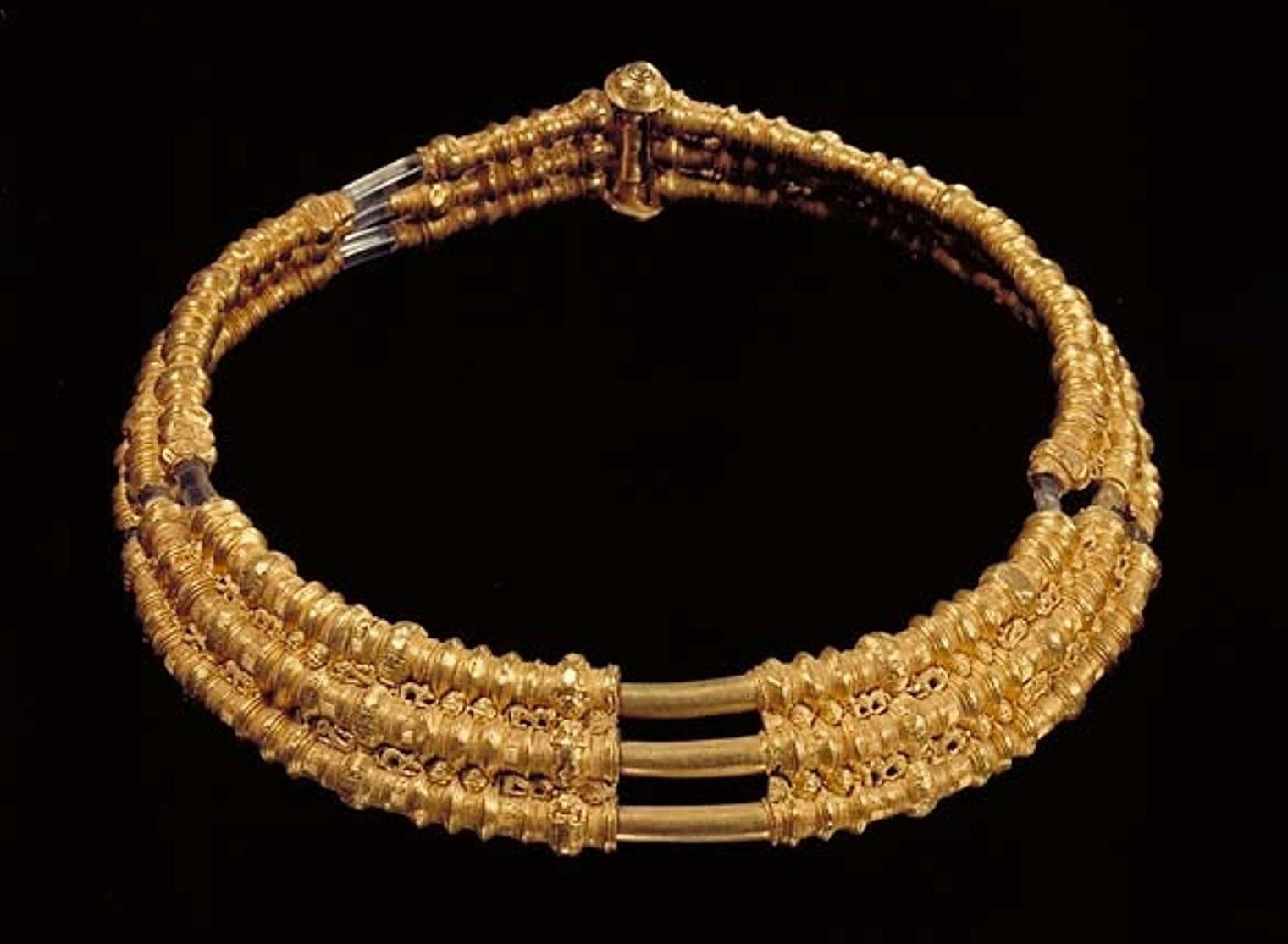
In 1827 two men searching the scree below Ålleberg mountain in Västergötland, Sweden, for a flat stone found a broken gold collar of the 5th century. Over 600 grams of gold, decorated with more than a hundred tiny figures, it is one of the finest objects in the Swedish History Museum.

FF 471

Made in the Migration Period, about AD 400 to 550 · found 1864

Möne gold collar

Sweden · Jewellery

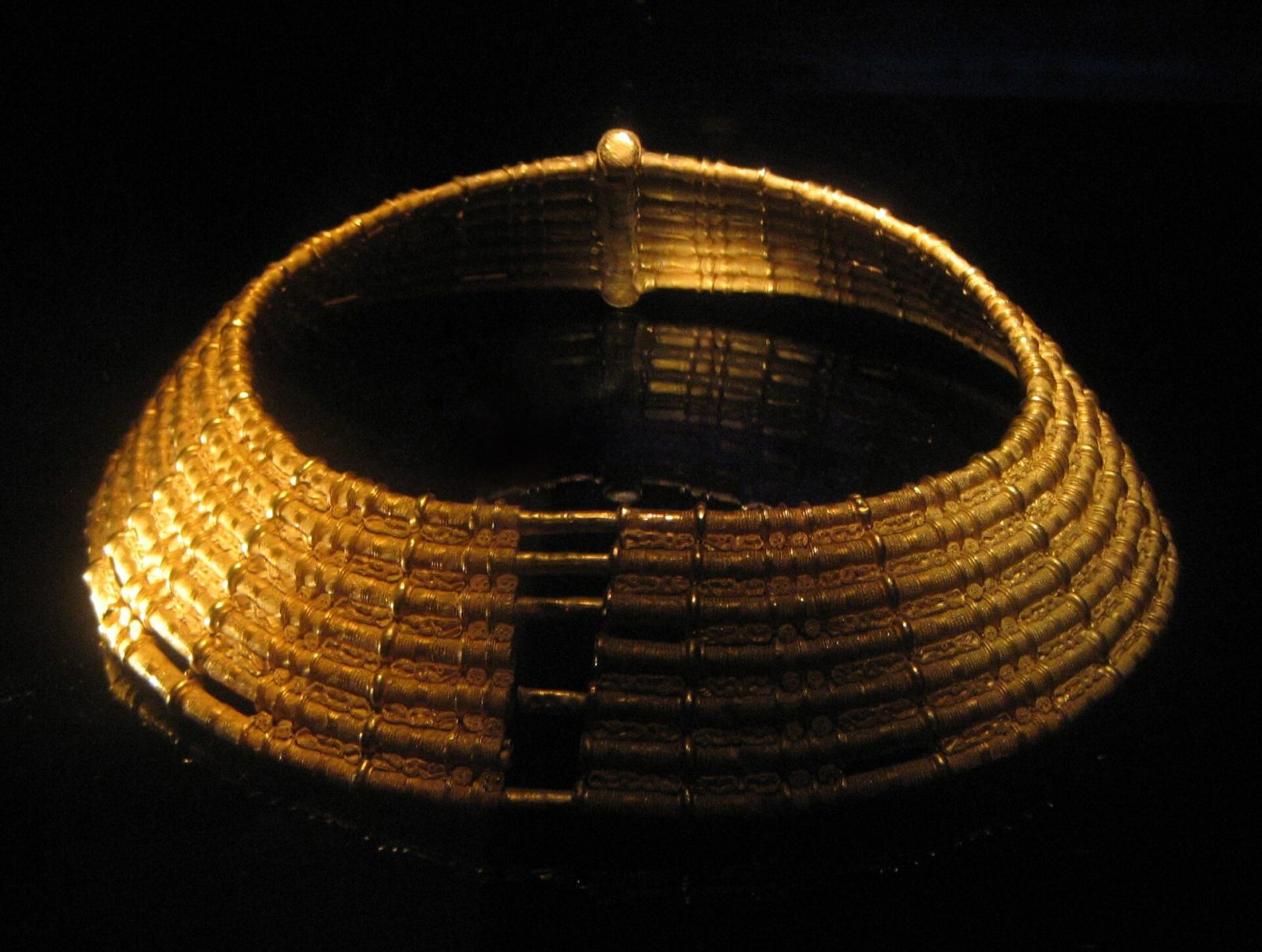
In 1864 the crofter Johannes Andersson was clearing a heap of stones beside Möne church in Västergötland, Sweden, when he uncovered four slabs set on edge. Inside lay a seven-ringed gold collar of the 5th century, covered with hundreds of tiny faces and animals.

FF 436

Struck in the reign of Theodosius II, AD 402 to 450 · found 2001

Ajanta gold solidus

India · Coins

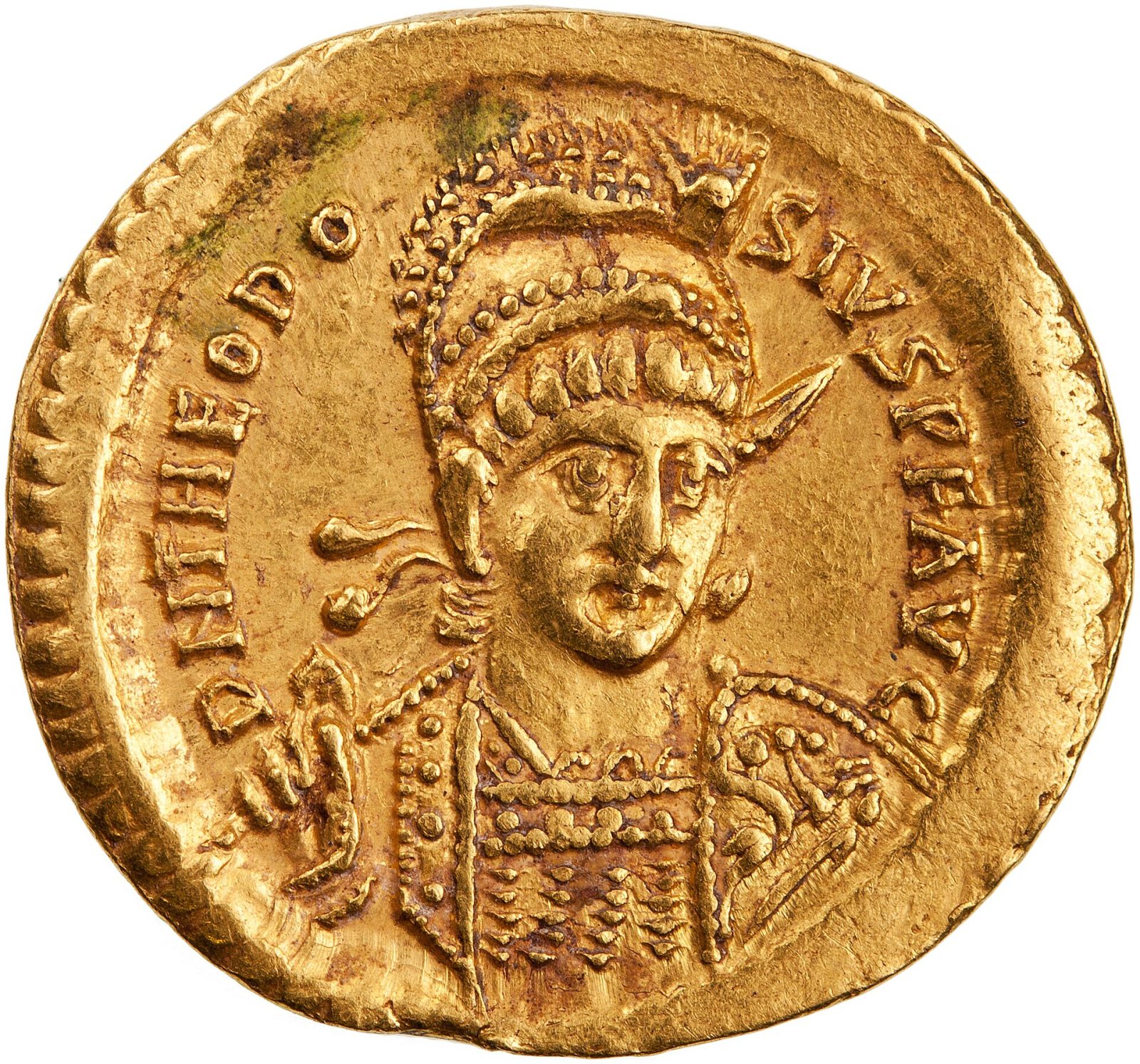
Around 2000 to 2001, Archaeological Survey of India excavators uncovered a brick Buddhist monastery facing the famous painted caves of Ajanta. In it lay a pierced gold solidus of the Roman emperor Theodosius II, the only datable coin from the site.